Canada15 May, 20263 min read
Mark Carney and Danielle Smith Sign Deal for Canadian Oil Exports to Asia
Carney-Smith carbon pricing framework to spur energy projects and emissions reductions. The deal secures federal approval for a Pacific export-capacity pipeline to Asia.
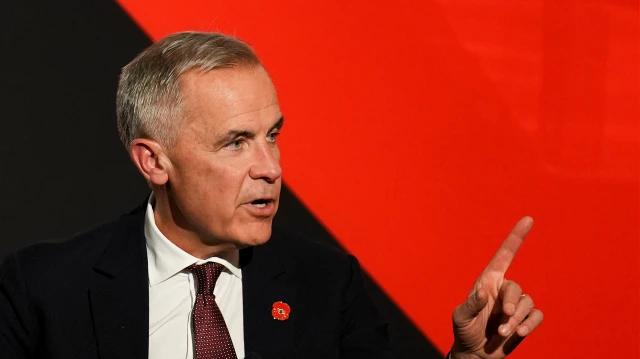
Deal in Calgary
Prime Minister Mark Carney and Alberta Premier Danielle Smith signed a carbon capture and pipeline agreement in Calgary on Friday, securing federal approval for new Pacific export capacity and setting a framework for federal-provincial energy cooperation. The accord imposes a CAN$130 (US$95) per ton carbon charge on oil sands emissions by 2040, increasing from the current $95 rate, while approving a privately funded pipeline to British Columbia's Pacific coast. The new conduit will transport approximately one million barrels of bitumen daily to port facilities on the Pacific Ocean for shipment to Asian markets, and Alberta committed to constructing a pipeline to Cold Lake to transport emissions from 20 oil sands facilities to permanent geological storage sites deep underground.
Carney described the agreement as addressing Asian nations' demand for reliable Canadian energy supplies, and he framed the energy partnership as a national unity project rather than a concession to separatist demands. Smith characterized the accord as a "major step forward" for relations between Edmonton and Ottawa during the signing ceremony, while the article notes she avoided any mention of the independence movement gaining traction within her United Conservative Party.
Competitiveness and Pathways
BNN Bloomberg quoted Mark Parsons, chief economist at ATB Cormark Capital Markets, saying the industrial carbon pricing framework resolves a major hurdle for energy investment and provides clarity on the industrial carbon price. Parsons said the effective price is $130 by 2040, adding that there is "a little bit of room or time for the industry to adjust to these higher prices." In the same BNN Bloomberg exchange, Parsons said progress on the Pathways carbon capture project remains critical because the federal government views it as tied to future pipeline development.
Parsons also raised competitiveness concerns, saying Canada is "much more aggressive on carbon pricing than our competitors" and that industries worry about additional cost to doing business in Canada. In the South China Morning Post, the article says Smith said the prohibitive rates set under Trudeau’s government had been "rolled back" as Ottawa and the provincial government agreed the rate would gradually rise to a fee of C$130 (US$96) per tonne of CO2 emitted by 2040.

Timeline and next steps
Todayville reported that Alberta and Canada finalized key elements of the Alberta-Canada energy MOU, advancing the design and construction of a new west coast oil pipeline as early as Sept. 1, 2027.
The implementation agreement, Todayville said, commits the federal government to facilitate the prompt review of the Alberta government’s submission to the federal Major Projects Office so it can be designated as a project of national interest by Oct. 1, 2026.
Todayville also said the agreement results in Alberta avoiding a significant increase to the federally mandated industrial carbon tax saving Alberta’s industry partners approximately $250 billion over the next two decades to 2050.
The South China Morning Post framed the pipeline step as part of PM Carney’s strategy to reduce reliance on the US under Trump, while noting plans face stiff resistance over environmental concerns.
It added that Trudeau had called for a rate of C$170 by 2030, contrasting with the agreed pathway to C$130 by 2040.