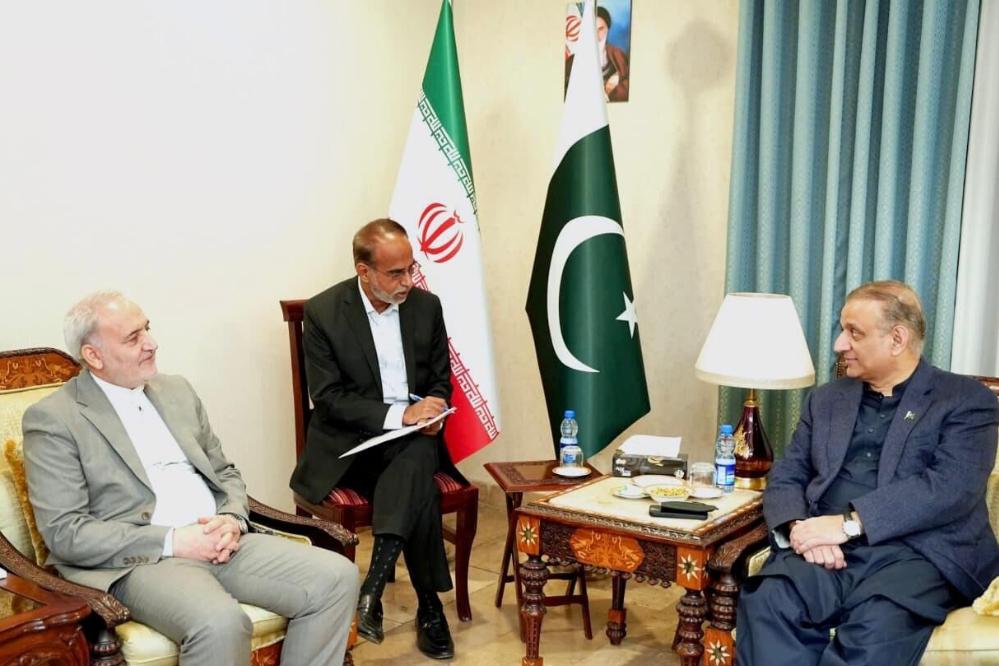
Masoud Pezeshkian Arrives in Islamabad, Thanks Pakistan’s Mediation for Peace
Key Takeaways
- Iranian President Masoud Pezeshkian arrives in Islamabad on an official visit.
- Pakistan hosted high-level discussions and facilitated talks toward a US-Iran peace agreement.
- Pezeshkian praised Pakistan's mediation and called for a united Muslim front on regional security.
Pezeshkian in Islamabad
Iranian President Masoud Pezeshkian arrived in Islamabad for an official visit and thanked Prime Minister Shehbaz Sharif and Pakistan’s mediation efforts during the recent crisis, saying the Pakistani nation had shown “strength and support” for Iran and remained “honest and adamant” in extending backing.
“The disagreement over nuclear inspections came as Iran's president met with Pakistani mediators and technical teams from the U”
At a joint press conference with PM Shehbaz, Pezeshkian praised Pakistan’s role in facilitating dialogue and said Islamabad had acted with “sincerity and consistency” to support peace.

Pezeshkian said relations between Iran and Pakistan were based on “mutual respect, goodwill and historical trust,” and he urged Muslim countries to form a “united front” to face shared challenges.
PM Shehbaz, speaking after delegation-level talks, praised Pezeshkian’s “visionary and sagacious leadership” and welcomed the signing of a Memorandum of Understanding (MoU), saying it would usher in “a new era of peace, stability and prosperity for this entire region.”
US-Iran talks and security
As Pezeshkian met Pakistan’s civilian and military leadership in Islamabad, the visit was framed around the Iran-US peace process and the implementation of the Islamabad Memorandum of Understanding (MoU).
Prime Minister Shehbaz said a US-Iran peace deal would shift the region’s outlook, and he told reporters, “God-willing, this arrangement will usher in a new era of peace, stability and prosperity for this entire region.”

On the nuclear and missile questions, Shehbaz said Iran’s ballistic missile programme was not discussed by the US and Iran, adding, “It is not possible that others have missiles and Iran does not have them,” while Pezeshkian said there was no mention of Iran’s missile program in the memorandum of understanding.
Pezeshkian also called for a new regional security structure among Muslim nations, saying, “Based on this fact, we stretch our hands of friendship to establish a common understanding and build a new security structure for the countries in the region,” and he said, “I believe Muslims shall form a united front against their enemies.”
What comes next
The sources tie the Islamabad visit to a broader effort to end the war and manage regional security, including technical-level negotiations after the US and Iran signed the Islamabad MoU on Thursday and agreed on a roadmap to reach a final deal within 60 days.
“Pakistan reiterates support for peace as President Zardari hosts Iranian counterpart Pezeshkian Iranian president is on one-day state visit to Pakistan, first such abroad trip since US-Israeli war Islamuddin Sajid, Aamir Latif 23 June 2026•Update: 23 June 2026 Pakistan on Tuesday reiterated its "principled" support for Iran’s peace, stability, national unity, sovereignty and territorial integrity, as President Asif Ali Zardari met the visiting Iranian counterpart, Masoud Pezeshkian, in the capital Islamabad”
In parallel, a United Nations agency said a plan was underway to move stranded ships and their thousands of crew members through the Strait of Hormuz, after Iran had blocked the strait following the US and Israel’s war on Feb. 28, and the International Maritime Organization said, “We have secured the necessary safety guarantees and have thoroughly verified the conditions for safe navigation to support these operations.”
The AP also reported a dispute over whether Tehran had agreed to allow U.N. inspections of its nuclear sites, with Iran’s Foreign Ministry spokesperson Esmail Baghaei telling reporters in Tehran that U.N. inspectors were not scheduled to examine nuclear sites bombed by the US last year.
Pezeshkian, speaking during the Islamabad visit, warned that outcomes depended on full commitment to the agreed obligations, writing, “Progress on this path will be measured by practical adherence to accepted responsibilities,” and he added, “Statements outside the agreed text do not help advance the negotiations.”
More on Iran

Iran Central Bank Governor Abdolnaser Hemmati Rejects Trump Claim Funds Must Buy US Goods
12 sources compared
US-Iran Agreement Restarts Strait of Hormuz Shipping, Kpler Shows 172 Vessels Crossing
13 sources compared

Naftali Bennett Says Israel Smuggled Starlink Receptors Into Iran To Aid Anti-Government Protesters
12 sources compared

Trump Accuses Tehran of False Statements as Pakistani PM Sharif Rejects Missile Talks
32 sources compared