Masoud Pezeshkian Praises Pakistan’s Mediation Role in Ending War and Securing Ceasefire
Key Takeaways
- Iran's president praised Pakistan's mediation as effective and responsible in brokering the ceasefire.
- Tehran publicly credited Pakistan with a decisive diplomatic role in securing the ceasefire.
- Talks occurred in Tehran with Asim Munir, underscoring ongoing Pakistani-Iranian mediation efforts.
Ceasefire praise in Tehran
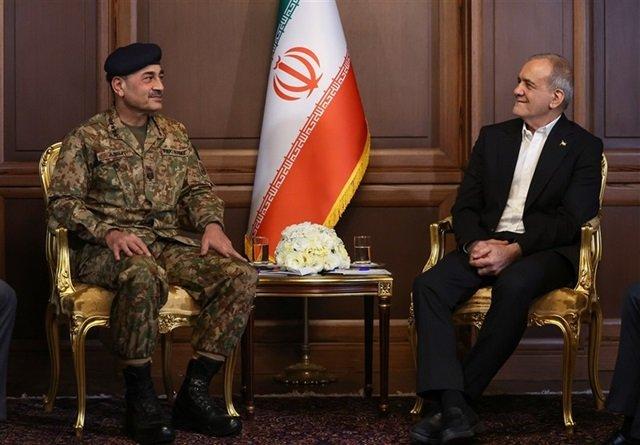
Iranian President Masoud Pezeshkian praised Pakistan’s role in ending a war and securing a ceasefire during a meeting in Tehran with Pakistan’s Chief of Army Staff Field Marshal Asim Munir on Thursday night, according to PressTV.
“Iranian President Masoud Pezeshkian has applauded Pakistan’s constructive mediation in brokering the ceasefire, describing Islamabad’s efforts as “effective and responsible” while reaffirming Tehran’s firm commitment to lasting peace and stability in the region”
Pezeshkian described Islamabad’s mediation as “effective and responsible” and said Iran reaffirms “the Islamic Republic of Iran seeks lasting peace and stability in the region and emphasizes the realization of the rights of the Iranian nation within the framework of international law,” in the meeting.
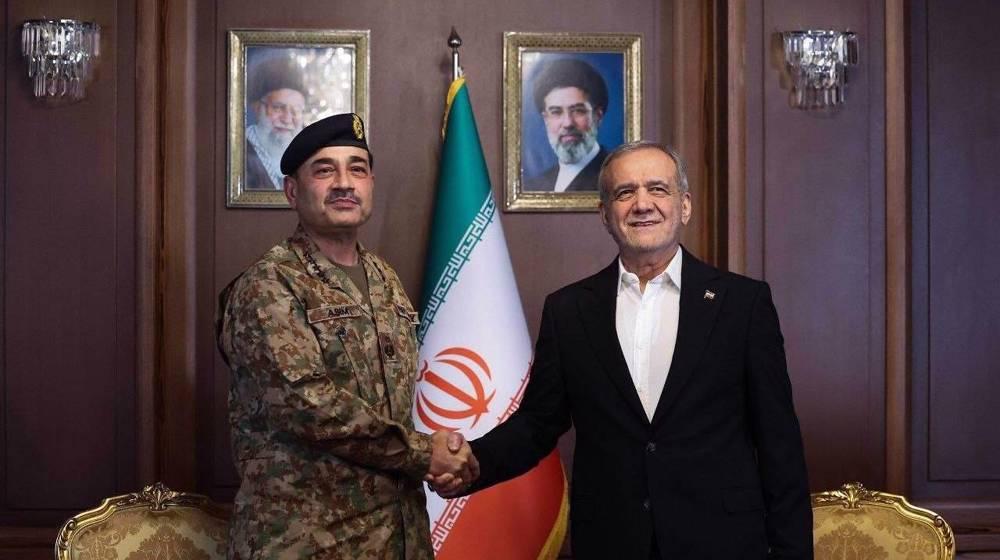
PressTV says Pezeshkian expressed appreciation for the role played by both Munir and Pakistani Prime Minister Shahbaz Sharif in facilitating the ceasefire and for “the warm hospitality extended to the Iranian delegation during the Islamabad talks.”
The same report says Pezeshkian made clear that Iran’s “recent targeting of US military bases in Persian Gulf Arab states” was carried out “strictly within the framework of legitimate self-defense in response to the aggression imposed on the country.”
PressTV also quotes Pezeshkian questioning the basis for US and Zionist actions, asking, “These actions were carried out with what authorization and for what reason?”
In the meeting, Munir expressed pleasure and thanked Iran and the Iranian nation for hospitality, while also conveying condolences from Pakistan’s prime minister and people over the “martyrdom of Ayatollah Seyyed Ali Khamenei, Iranian commanders, and citizens.”
Why Iran says it acted
Alongside praising mediation, Pezeshkian tied Iran’s actions during the confrontation to a defensive narrative and to what he described as the root causes of regional instability.
PressTV says Pezeshkian “made it clear that the recent targeting of US military bases in Persian Gulf Arab states by Iran’s armed forces was carried out strictly within the framework of legitimate self-defense in response to the aggression imposed on the country.”
In the same account, he argued that “the Zionist regime is behind many wars and acts of division among Islamic countries,” and he urged that “The Islamic Ummah must, through convergence and cooperation, prevent the Zionist regime from exploiting Islamic lands against Muslims themselves.”
Tasnim similarly reports Pezeshkian’s framing that Iran’s “recent actions targeting US military bases in the region were carried out within defensive necessities and in response to imposed conditions.”
Tasnim also says Pezeshkian questioned “under what authorization and for what reason such actions—resulting in the martyrdom of Iran’s Leader, the destruction of schools and hospitals, and the killing of innocent children and civilians—had been carried out.”
The Sri Lanka Guardian describes Pezeshkian’s remarks as crediting Pakistan for mediation during “its recent confrontation with the United States and Israel,” while emphasizing that Iranian strikes were “not acts of aggression but defensive responses to imposed conditions.”
Munir’s reconstruction and unity
Field Marshal Asim Munir’s response, as described by PressTV and Tasnim, emphasized that even if “the war will end,” the region would not return to its previous conditions and would require reconstruction and stability efforts.
“In a meeting with Chief of Army Staff of Pakistan Field Marshal Asim Munir, held in Tehran on Thursday, President Pezeshkian praised the commander’s effective role as well as that of Pakistani Prime Minister Shehbaz Sharif in the mediation process and facilitating the establishment of a ceasefire, and also appreciated the proper hosting of the Iranian delegation during the Islamabad negotiations with the US”
PressTV says Munir “expressed pleasure at the meeting and thanked Iran, the Supreme Leader of the Islamic Revolution, and the Iranian nation for their hospitality,” and it adds that he conveyed “deep condolences from the Pakistani prime minister and people over the martyrdom of Ayatollah Seyyed Ali Khamenei, Iranian commanders, and citizens.”
PressTV reports that Munir said “although the war will end, the region will not return to pre-war conditions,” and he stressed “the need for collective cooperation in reconstruction, stability, and peace.”
In the same account, Munir highlighted support for the diplomatic process from “countries such as China, Saudi Arabia, Egypt, and Turkey,” and he said “relations between countries become even more important during times of crisis and war than in peacetime.”
Tasnim likewise says Munir appreciated Iran’s hospitality and conveyed condolences over the “martyrdom of late Leader of the Islamic Revolution Ayatollah Seyed Ali Khamenei, Iranian commanders, and citizens.”
The Sri Lanka Guardian adds that Munir expressed “cautious optimism that negotiations could soon lead to a lasting agreement,” while also stating that “the region would not return to its previous conditions” and that reconstruction would be required.
Pakistan also backs Lebanon ceasefire
While the Iranian meeting focused on the US-Israel Iran ceasefire, Pakistan’s leadership also publicly welcomed a separate Israel-Lebanon ceasefire announcement, and the Express Tribune account ties that stance to efforts to reduce US-Iran tension.
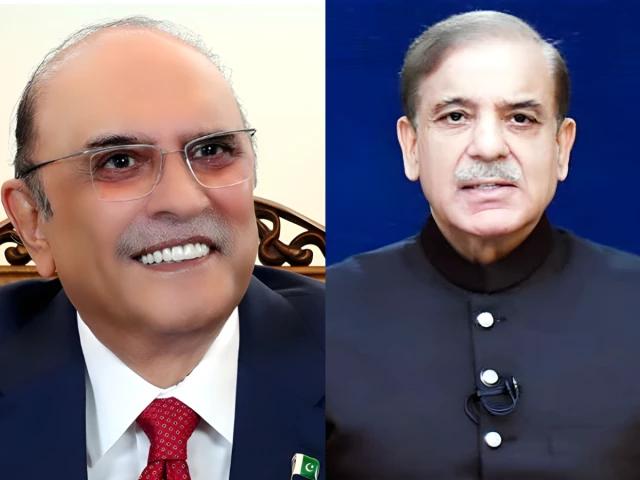
The Express Tribune reports that President Asif Ali Zardari and Prime Minister Shehbaz Sharif “welcomed the announcement of a ceasefire between Israel and Lebanon” and that Zardari’s office said he “welcomed the Lebanon ceasefire as a step towards de-escalation & regional stability.”
The same report quotes Zardari reaffirming Pakistan’s support for Lebanon’s sovereignty and “ongoing efforts to reduce US-Iran tension to achieve lasting peace in West Asia.”
It also records Shehbaz Sharif saying he expressed the “hope that it will pave the way for sustainable peace,” and it includes his X post: “Pakistan reaffirms its unwavering support for the sovereignty and territorial integrity of Lebanon, and will continue to support all efforts aimed at lasting peace in the region.”
The Express Tribune then adds that Iran welcomed the Lebanon ceasefire as well, stressing “the need for the "complete withdrawal of Israeli forces from occupied areas in southern Lebanon, the release of all prisoners, and the return of displaced persons to their homes."”
The Express Tribune also describes Lebanon’s army warning residents in the south not to return to villages because of “a number of violations” and “several Israeli acts of aggression,” while noting that there was “no immediate comment from the Israeli military.”
Different outlets, same meeting
Across the source set, the same high-level meeting in Tehran is described with overlapping themes—Pakistan’s mediation, Iran’s emphasis on international law, and the idea that the region will not revert to pre-war conditions—yet the outlets foreground different elements of the narrative.
“Iranian President Masoud Pezeshkian has applauded Pakistan’s constructive mediation in brokering the ceasefire, describing Islamabad’s efforts as “effective and responsible” while reaffirming Tehran’s firm commitment to lasting peace and stability in the region”
PressTV frames Pezeshkian’s praise as part of a broader argument about Islamic unity and defensive self-defense, stating “The Islamic Ummah must, through convergence and cooperation, prevent the Zionist regime from exploiting Islamic lands against Muslims themselves,” and it also stresses that “Iran does not seek instability in the region and wants to develop brotherly relations with neighboring countries.”
Tasnim similarly highlights the mediation process and includes Pezeshkian’s question about authorization for actions that included “the destruction of schools and hospitals” and “the killing of innocent children and civilians,” while also emphasizing that “Iran considers all Islamic countries as its brothers.”
The Sri Lanka Guardian, meanwhile, describes the moment as “rare” and says Pezeshkian credited Pakistan with a “decisive diplomatic role,” while also adding that Munir conveyed condolences and that negotiations could lead to “a lasting agreement.”
The Express Tribune shifts away from the Tehran meeting and instead places the ceasefire announcement in a wider regional context by reporting Zardari and Shehbaz Sharif welcoming the Israel-Lebanon ceasefire and by quoting Macron’s “concern that it may already be undermined by the continuation of military operations.”
Even within the Tehran-focused accounts, the language differs: PressTV says Pezeshkian asked Munir to convey “the warm greetings of the Iranian leadership and people to Pakistani Prime Minister Shahbaz Sharif,” while Tasnim says Pezeshkian asked Munir to convey “the warm greetings of the Islamic Republic of Iran to the prime minister and the noble people of Pakistan.”
More on Iran
Trump Tells Las Vegas Supporters Iran War Should End Pretty Soon
21 sources compared

US Naval Blockade Near Strait Of Hormuz Pushes Iran Into Broader Conflict Negotiations
11 sources compared

U.S. Implements Naval Blockade on Iran, Halting 13 Ships in Strait of Hormuz
10 sources compared

U.S. Central Command Enforces Iran Port Blockade, Halting Sea Trade Worldwide
28 sources compared