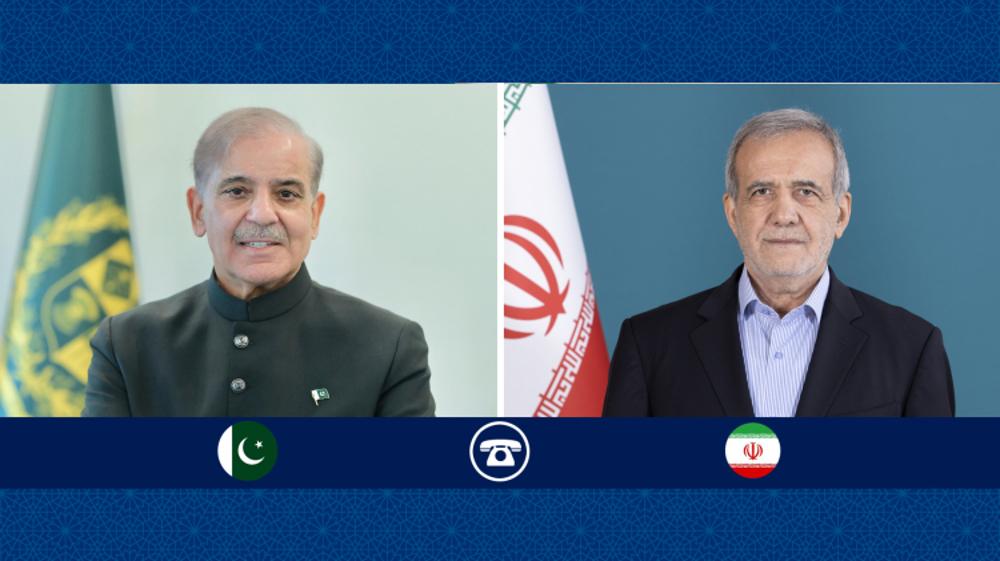
Masoud Pezeshkian Says Iran Won’t Enter Imposed U.S. Talks Under Pressure, Threats, Blockade
Key Takeaways
- Iran will not negotiate with the US under pressure, threats, or blockade.
- During a call with Pakistan PM Sharif, he highlighted Pakistan's mediation role.
- Tehran criticized US coercion, saying it undermines trust and the negotiating process.
Pezeshkian rejects imposed talks
Iranian President Masoud Pezeshkian said Tehran will not enter negotiations under pressure, threats, or blockade, framing the stance as a response to what he called contradictory U.S. tactics and a failure to create conditions for diplomacy.
Pezeshkian made the remarks in a telephone conversation with Pakistani Prime Minister Shehbaz Sharif, whose country has been engaged in mediation between the two sides, according to PressTV.

PressTV quoted Pezeshkian saying, "The Islamic Republic will not enter imposed negotiations under pressure, threats, or blockade."
The same theme appeared in multiple reports: The Express Tribune said Pezeshkian stressed Iran remains committed to strengthening ties with neighbouring countries in the phone call with Sharif, and Türkiye Today reported he would not enter “imposed negotiations” if the U.S. continues its pressure policies and military presence in the region.
Pajhwok Afghan News similarly said Pezeshkian told Sharif that Tehran will not enter “imposed negotiations” with the United States under pressure, threats, and blockade.
In the accounts, Pezeshkian tied the refusal to specific U.S. actions, including maritime restrictions and a blockade of Iranian ports, and he argued those measures undermine trust-building.
PressTV added that Pezeshkian said, "The contradiction has increased the level of mistrust [in Washington] among the Iranian people and officials of the Islamic Republic," while Mehr News Agency and IRNA-linked reporting echoed the same core message that dialogue cannot proceed while operational pressures continue.
Ceasefire talks and maritime blockade
The refusal to negotiate was presented in the sources as part of a broader dispute over a ceasefire and the implementation of U.S. maritime restrictions.
PressTV said that on April 7, U.S. President Donald Trump announced a two-week ceasefire in unprovoked aggression targeting Iran, and that talks ensued in the Pakistani capital Islamabad but stopped short of yielding an agreement amid U.S. maximalist demands.

PressTV also said Trump recently claimed he was unilaterally extending the ceasefire, while ordering continuation of an illegal blockade of Iranian vessels and ports.
In the same account, Pezeshkian argued that the Islamic Republic has categorically refused to rejoin the process unless the U.S. lifted the blockade, and Tehran asserted it has no intention of reopening the strategic Strait of Hormuz that it has shut down to all traffic in retaliation.
PressTV quoted Pezeshkian saying, "The continuation of hostile US measures, including a naval blockade, is inconsistent with its stated claims of pursuing a political resolution," and it added, "As long as the United States’ hostile actions and operational pressures do not cease, rebuilding trust and making progress on the path of dialogue will face serious difficulty."
Mehr News Agency and ANI presented the same logic, stating that Washington’s so-called maritime restrictions amounted to a clear breach of ceasefire understandings and were inconsistent with the United Nations Charter.
Israel National News added further detail by quoting Pezeshkian through IRIB, saying movement toward dialogue would remain unlikely unless “hostile actions and operational pressures" by Washington are brought to an end and that the U.S. must first remove “operational obstacles, including the blockade" of vessels traveling to and from Iranian ports.
Pakistan mediation and delegation visits
Several sources described Pakistan’s role in the diplomacy and the movement of Iranian officials around the talks.
The Express Tribune said Pezeshkian’s remarks came in a telephone call with Prime Minister Shehbaz Sharif that lasted 50 minutes, during which the two leaders discussed the regional situation and ongoing efforts to promote peace and stability in the region.
It reported that Sharif appreciated the participation of a high-level Iranian delegation in talks held in Islamabad on April 11–12, and it said he welcomed Tehran’s decision to send a delegation led by Foreign Minister Abbas Araghchi.
The Express Tribune further stated that Araghchi held important meetings, including a two-hour session with Sharif.
It also reported that Sharif expressed appreciation for discussions between the Iranian leadership and Field Marshal Syed Asim Munir during his recent visit to Tehran, and it said both leaders agreed to maintain close coordination.
Mehr News Agency added that Pezeshkian expressed appreciation for Pakistan’s sustained efforts to help restore peace in the region and thanked both the prime minister and Pakistan’s army chief for their active role in supporting diplomatic initiatives.
Israel National News described the delegation movement in more detail, saying the Iranian delegation departed Islamabad on Saturday and later arrived in Muscat, Oman, for additional regional discussions, and it also noted that U.S. special envoy Steve Witkoff and President Donald Trump’s son-in-law Jared Kushner had been expected to travel to Islamabad on Saturday but Trump canceled the visit at the last moment.
U.S. stance and Trump statements
The sources also set Iran’s refusal against U.S. statements about extending the ceasefire and maintaining a naval blockade until a deal is submitted.
PressTV said Trump recently said he was unilaterally extending the ceasefire, but ordered continuation of an illegal blockade of Iranian vessels and ports.
Israel National News reported that Trump announced on Tuesday that due to the division in Iran, the ceasefire in Iran would be extended for an unspecified amount of time, to allow the leadership time to submit a proposal for a deal, and it said Trump made clear that the U.S. naval blockade will remain in place until an Iranian proposal is submitted.
In that same account, Trump was quoted saying, "We’ve taken out their military. We’ve hit about 75 percent of our targets. We stopped a little early because they wanted to have some peace, and we have a blockade that’s 100 percent effective."
It also quoted Trump saying, "They want to make a deal. We have been speaking to them, but they don’t even know who’s leading the country. They’re in turmoil."
The account further included Trump’s comments about the Strait of Hormuz, quoting him as saying, "They came to us, and they said, 'We will agree to open the Strait,' and all my people were happy."
ANI and other accounts also described the sticking points in the negotiations, including that the U.S. wants to take custody of Iran’s stockpile of 400kg of highly-enriched uranium and that Iran is demanding sanctions relief and the unfreezing of assets worth USD 20 billion.
Nuclear, assets, and regional risk
Beyond the immediate call between Pezeshkian and Sharif, the sources describe the negotiation agenda and the consequences each side attaches to renewed confrontation.
“Iran’s President Masoud Pezeshkian told Pakistan’s PM Shehbaz Sharif that Tehran will not negotiate with the US under pressure”
ANI said the U.S. wants Iran to suspend its nuclear programme, but Iran said the restriction should be for just a limited period, and it said the U.S. wants to take custody of Iran’s stockpile of 400kg of highly-enriched uranium.

ANI also reported that Iran insists it will maintain restrictions on shipping in the Strait of Hormuz until the U.S. lifts its blockade on Iranian ports, while Trump says the blockade will remain in place until a deal is reached.
The same ANI report said Iran is demanding sanctions relief and the unfreezing of assets worth USD 20 billion as part of any lasting agreement, and it said Iran has also sought compensation for damages caused by U.S. and Israeli attacks, amounting to about USD 270 billion, as per Al Jazeera.
In the Iranian accounts of the call, Pezeshkian warned that any renewed confrontation involving the United States and Israel could have serious consequences for both regional and global stability, and he reiterated Iran’s determination to defend its national security.
The Express Tribune said Pezeshkian warned that any renewed confrontation involving the United States and Israel could have serious consequences for both regional and global stability, and it reported that he also stressed Iran’s commitment to strengthening ties with neighbouring countries, including those along the southern shores of the Persian Gulf.
Türkiye Today similarly said Pezeshkian told Sharif that dialogue would not produce results while policies of pressure and threats continued, and it quoted Sharif warning that wrong steps could drag the region into a larger crisis.
More on Iran

Netanyahu Orders IDF To Vigorously Strike Hezbollah Targets In Lebanon
17 sources compared
Iranian Foreign Minister Abbas Araghchi Meets Oman’s Sultan Haitham bin Tariq in Muscat
14 sources compared

Iran FM Abbas Araghchi Meets Pakistan PM Shehbaz Sharif as Trump Cancels Envoys
127 sources compared
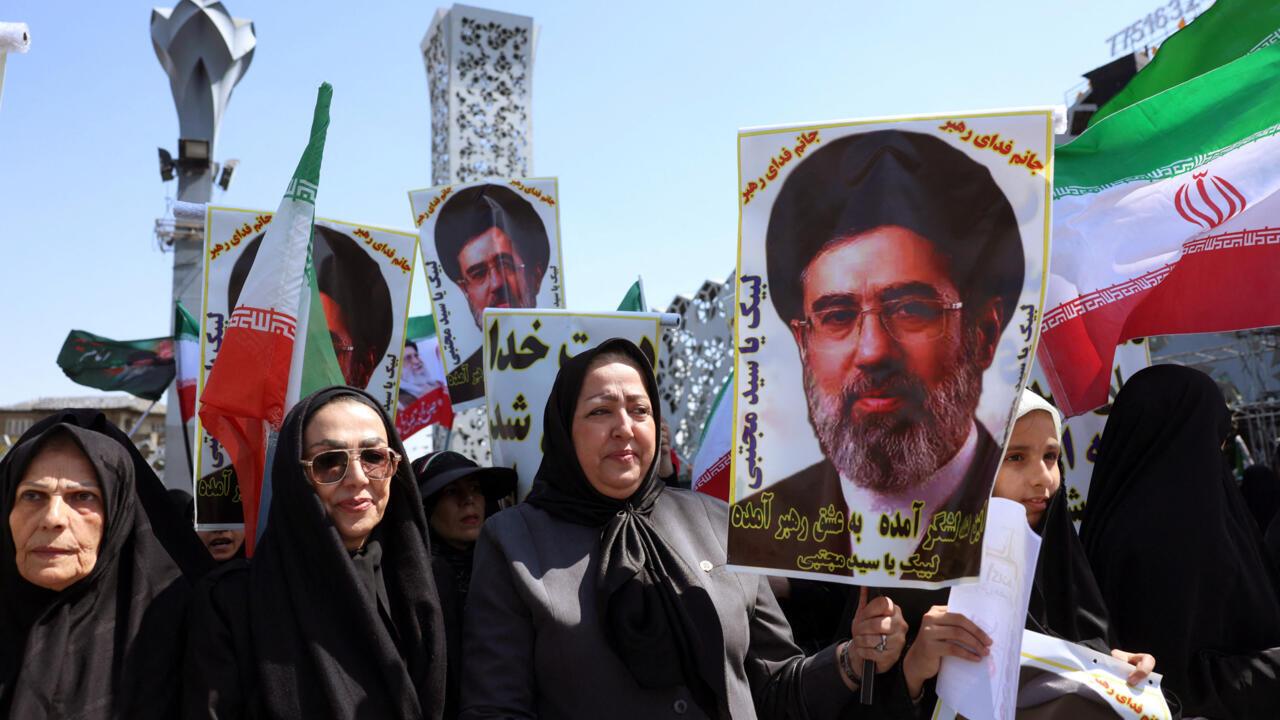
IRGC Calls The Shots In Iran As Mojtaba Khamenei Stays Out Of Public View
10 sources compared