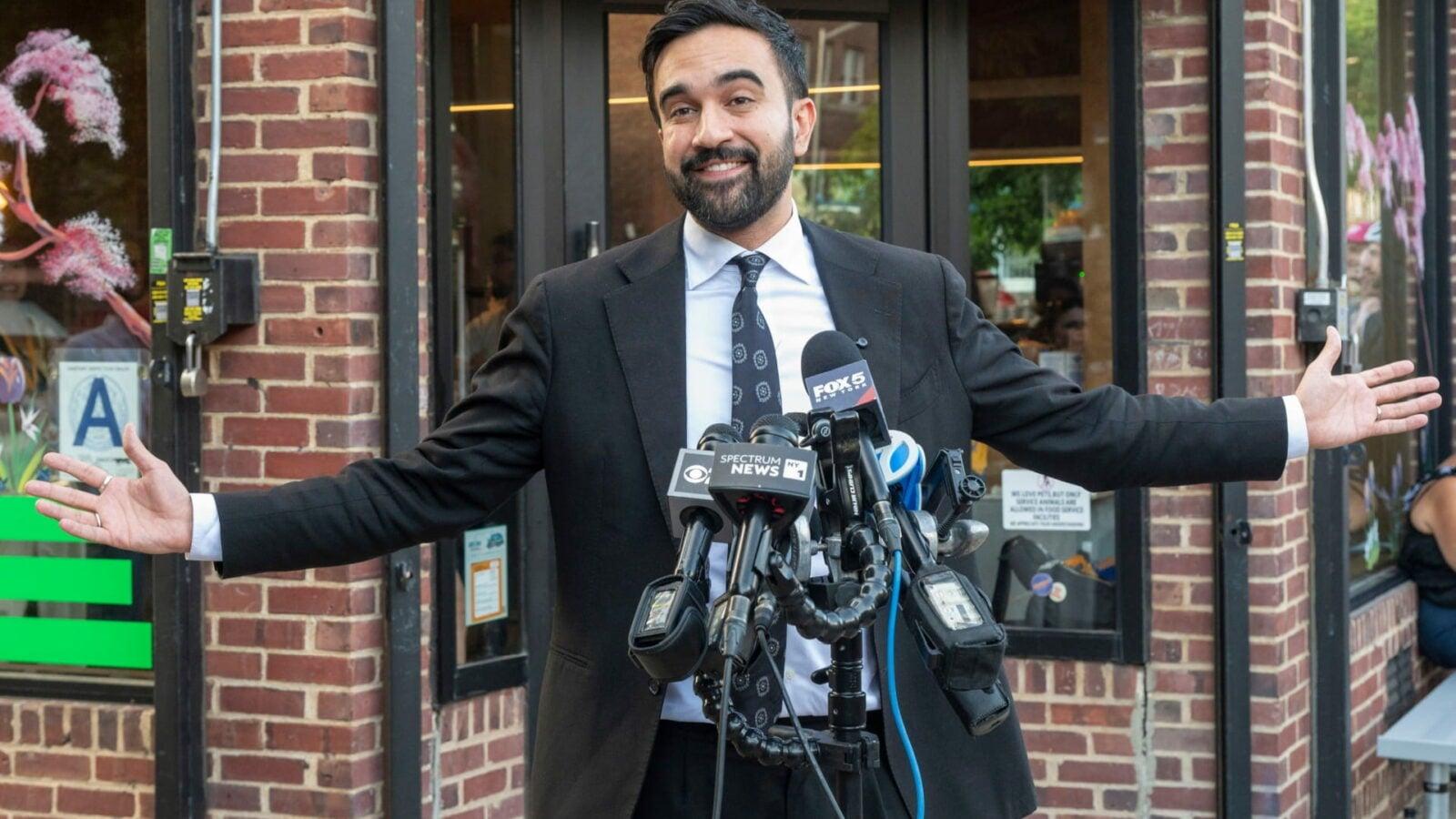
Mayor Zohran Mamdani Hosts Tax Day Forum With Economists Gabriel Zucman and Joseph Stiglitz
Key Takeaways
- Mamdani hosted Tax Day forum with economists Gabriel Zucman and Joseph Stiglitz.
- Wealth taxation and anti-inequality proposals were central to the discussion.
- Coverage highlighted Mamdani's alliance with Zucman and Stiglitz on taxing the ultra-rich.
Tax Day forum in NYC
New York City Mayor Zohran Mamdani used Tax Day to frame the city’s tax debate as part of a broader “global crisis of extreme inequality,” hosting a forum with economists Gabriel Zucman and Joseph Stiglitz.
“SUBSCRIBE TO OUR FREE NEWSLETTER Daily news & progressive opinion—funded by the people, not the corporations—delivered straight to your inbox”
In a transcript posted by NYC.gov, Commissioner Ana María Archila, Mayor’s Office of International Affairs, opened by asking why “so many of us are feeling so squeezed” and why “so many of us are having such a hard time paying the rent and affording childcare and groceries.”

Archila said the conversation is “about what it takes to actually address the growing, urgent, global crisis of extreme inequality,” and she described the event as including “representatives of more than 40 countries.”
She also tied inequality to democracy, saying “the concentration of wealth also leads to the concentration of power” and that the discussion must be “in the context of what it does to not just people, but to our democracy.”
The forum positioned Stiglitz and Zucman as central voices on inequality policy, with Archila calling Stiglitz “a Nobel Prize-winning economist” and Zucman “the founder of the International Tax Observatory.”
Stiglitz then responded by saying, “We have a global inequality crisis,” and he referenced the G20’s difficulty reaching agreement while noting “one of the things that there was a broad consensus” on the crisis.
He also described a committee he was asked to chair after President Ramaphosa of South Africa asked him “to chair a committee to look at inequality globally.”
A proposed “Zucman tax”
The finance debate around Mamdani’s agenda centers on a “Zucman tax” concept that, as Presse-citron put it, was rejected by the Senate in France but “today it’s in New York.”
Presse-citron described Mamdani’s participation in a roundtable with Gabriel Zucman and Joseph E. Stiglitz on taxes, and it said the three speakers “publish an op-ed denouncing inequalities in the United States, and in the world, on The Guardian.”
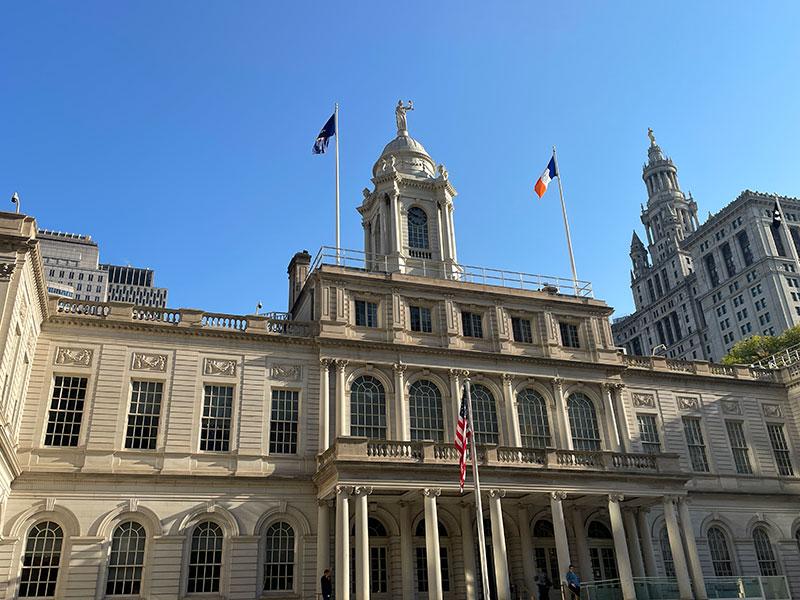
The same article reported that the op-ed points to New York’s concentration of wealth, saying it “concentrates one-fifth of the ultrarich in the United States” while becoming “fundamentally unaffordable” for some residents.
It also quoted a figure for household income, stating that “The median household income in New York is $131,000,” and it argued that without “extreme inequalities” residents “could live comfortably.”
Presse-citron further said the op-ed denounces a “regressive system” in which the ultrarich would contribute “less than the rest of the population,” and it described the authors’ claim that the United States is “the most unequal developed country” while also calling it “a global problem.”
The article then turned to the political mechanics, saying “American mayors do not have the power to raise taxes on incomes or on corporations,” and that Mamdani instead would “pressure the State of New York.”
It added that Governor Kathy Hochul “opposes a tax on the ultrarich” but “recently proposed a tax on second homes in New York City,” and it reported that Donald Trump reacted on his Truth network, writing, “Unfortunately, Mayor Mamdani is destroying New York!”
Inequality numbers and tax breaks
Common Dreams connected Mamdani’s Tax Day message to specific inequality and tax figures, arguing that while “most Americans are paying more in taxes this year,” “the wealthiest 1% are saving an average of $9,000 thanks to Trump's tax legislation.”
“While the 'Zucman tax' was rejected by the Senate in France, today it's in New York and on the pages of a British newspaper that the French economist defends his ideas”
The outlet said Mamdani used Tax Day to remind Americans that the tax code is “rigged” to protect the superrich while pushing for “a more equitable system.”
It described a Guardian op-ed co-written by Mamdani, Nobel laureate Joseph Stiglitz, and Paris School of Economics professor Gabriel Zucman, and it claimed that “just 0.0001% of the global population” holds “the equivalent of 16% of global wealth—more than the bottom half of humanity.”
Common Dreams also said the authors attributed the global surge in inequality in large part to America’s “regressive” tax system, which it described as becoming “dramatically more favorable to the wealthy over the past half-century.”
It then offered a historical comparison, stating that “Compared to 1960, when the 400 richest Americans paid roughly half their incomes in taxes, they now pay about 24%.”
The article tied the current situation to the “massive GOP tax law signed by President Donald Trump last year,” citing an Americans for Tax Fairness report that the wealthiest 1% of households received “an average tax break of $9,000.”
It also quoted a line from the op-ed itself—“there is no justification for a regressive system in which the superrich contribute less than the rest of us”—and it described how the authors framed the issue as inequality being “deepened and sustained.”
Common Dreams further referenced a “pied-à-terre tax” in New York City, saying that on Wednesday “Democratic New York Gov. Kathy Hochul announced that she was backing” it, with a surcharge for second homes valued over “$5 million in New York City,” and it reported Mamdani’s office estimated it “will raise $500 million annually.”
Global tax proposals and polling
Beyond New York, Common Dreams described the “2% tax on the wealth of those with more than €100 million ($117 million)” as an initiative championed by Zucman, and it said a version of the measure “was passed last year by France's National Assembly but stalled in the Senate after being blocked by centrist and right-wing parties.”
The outlet said the initiative still had “momentum around the world,” adding that “This weekend, Spanish Prime Minister Pedro Sánchez and Brazilian President Luiz Inácio Lula da Silva will meet with the leaders of several other nations, including Mexico, Colombia, and South Africa, to discuss adopting similar taxes.”
It also described a U.S. ballot initiative for “a one-time 5% billionaire tax in California—aimed at recouping losses from Trump's Medicaid cuts,” and it claimed the measure “appears overwhelmingly popular, with around two-thirds support according to a poll last month.”
Common Dreams said Mamdani had pushed for a similar measure in New York City “to help balance the city budget and fund universal childcare and affordable housing,” and it framed the policy push as responding to economic pressures, stating that “In early 2026, consumer prices and housing costs have soared far faster than wages can match.”
The outlet cited a January poll from KFF, saying “82% of adults said their overall cost of living had increased over the past year,” and it added that “around two-thirds” worried about affording “healthcare for themselves and their families.”
It also reported that “nearly a quarter” said they were worried about affording “food and rent,” and it said that “more than 62% of Americans said in a January YouGov survey” in response to that precarity.
In the same narrative, Common Dreams returned to the op-ed’s argument that “Taxing billionaires is not radical,” contrasting it with what it called “What is radical” about allowing “extreme wealth” alongside “widespread hardship.”
Stakes: budgets, policy power
The sources frame the stakes of Mamdani’s tax push as both institutional power and budgetary outcomes, with multiple articles emphasizing limits on what a mayor can directly do while still pressing for state-level action.
“Commissioner Ana María Archila, Mayor’s Office of International Affairs: Thank you so much, Professor Brumberg”
Presse-citron said “American mayors do not have the power to raise taxes on incomes or on corporations,” but it described Mamdani’s strategy as pressuring “the State of New York,” with Governor Kathy Hochul opposing “a tax on the ultrarich” while proposing “a tax on second homes in New York City.”
Common Dreams described Hochul’s backing of a “pied-à-terre tax,” saying it applies a surcharge to second homes valued over “$5 million in New York City,” and it reported Mamdani’s office estimated it “will raise $500 million annually.”
In the NYC.gov transcript, Archila linked the tax debate to democracy and governance, saying the “global crisis of extreme inequality” is the result of “policies of decades of economic and political decisions” and that “the concentration of wealth also leads to the concentration of power.”
Stiglitz’s remarks in the same transcript placed the issue in an international governance context, saying “the last two meetings of the G20 focused on” the difficulty of agreement while still reaching “a broad consensus” on the inequality crisis.
The finance debate also includes political pushback, with Presse-citron reporting Donald Trump’s Truth network message that “This excessive tax policy is absolutely catastrophic,” and it quoted Trump’s claim that “The situation will only get worse.”
Common Dreams added that the tax legislation debate is occurring alongside cost-of-living pressures, citing KFF’s “82% of adults” figure and describing worries about “healthcare” and “food and rent,” while also arguing that the wealthiest 1% are “saving an average of $9,000.”
Taken together, the sources depict a policy fight over how much revenue and leverage the city and state can extract, and how that interacts with inequality, institutional trust, and the political feasibility of tax measures.
More on Finance

IMF And World Bank Resume Dealings With Venezuela Under Interim President Delcy Rodriguez
10 sources compared

IMF Warns Global Public Debt Will Surpass 100 Percent Of GDP By 2029
15 sources compared
Bernstein Projects Prediction Markets To Reach $1 Trillion By 2030 Led By Robinhood And Coinbase
14 sources compared
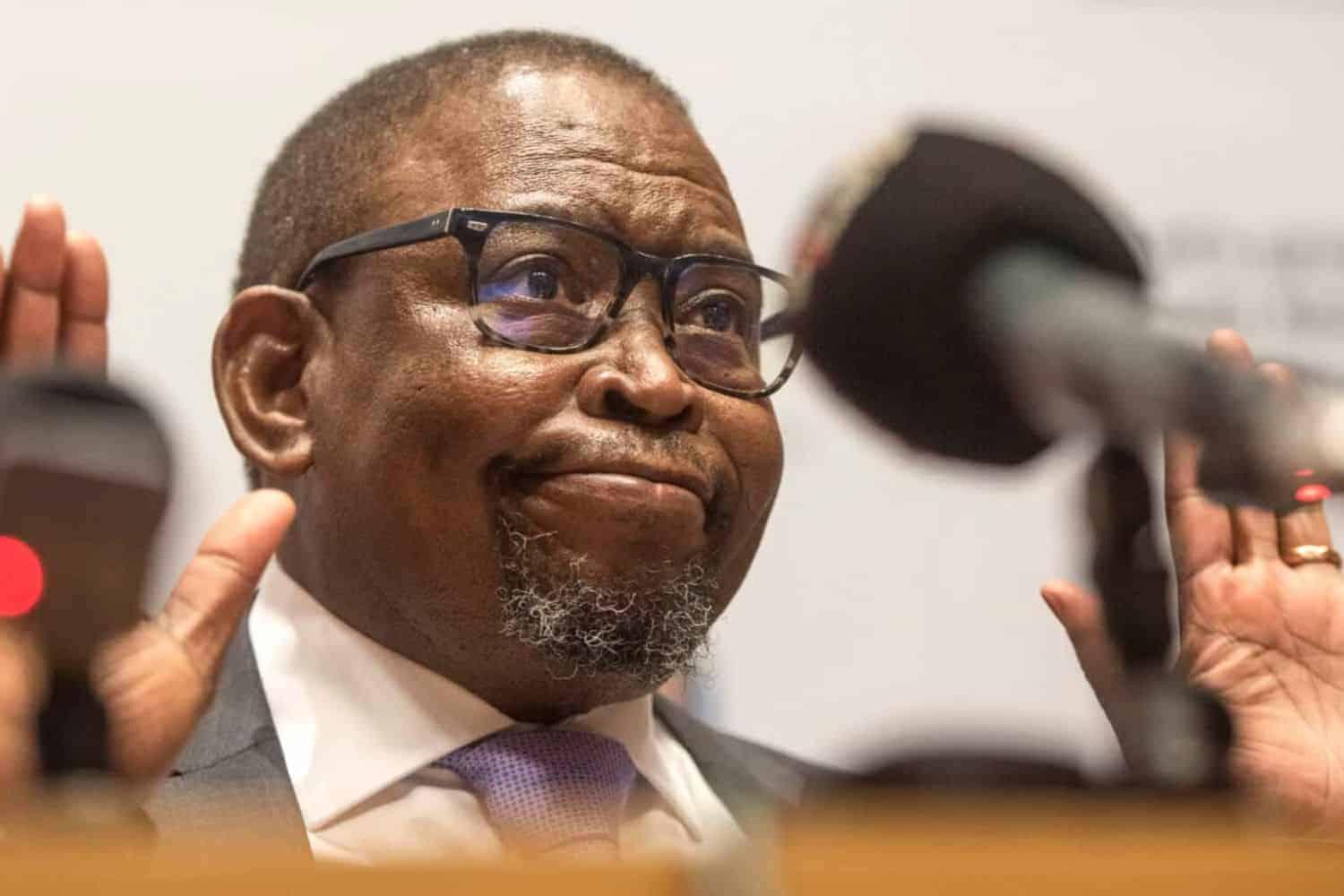
US Excludes South Africa From 2026 G20 Finance Meetings Amid Diplomatic Rift
13 sources compared