Full Analysis Summary
NGOs Halt Cooperation with Libya Coast Guard
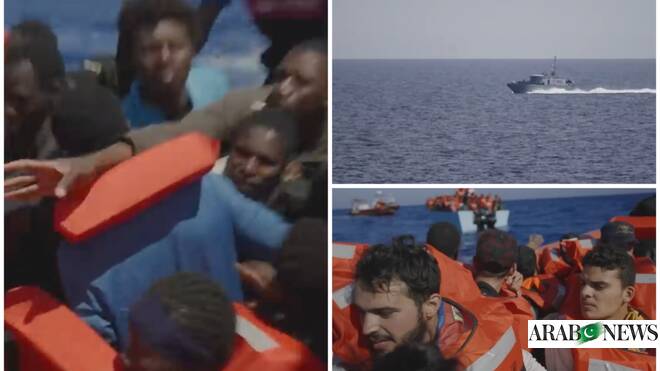
Thirteen Mediterranean search-and-rescue NGOs say they have halted cooperation with Libya’s EU-backed coast guard.
They allege a pattern of violent interceptions at sea and abuses after forced returns to Libyan camps.
The groups reject what they describe as EU pressure to share operational information with Libyan authorities.
They argue the coast guard violently prevents migrants from reaching Europe and that returnees face rape, torture, and slavery.
The NGOs point to documented incidents, including a 2021 UN investigation and a recent Sea-Watch study detailing shootings and assaults on rescue vessels.
They frame the Libyan coast guard as part of a violent regime enabled by the EU.
The NGOs have launched a new Justice Fleet initiative to coordinate documentation and legal action around such incidents.
Coverage Differences
tone
Arab News PK (West Asian) uses sharper language on abuses and EU complicity, underscoring that NGOs accuse the Libyan coast guard of being part of “a violent regime enabled by the EU” and that returnees face “rape, torture, and slavery.” Arab News (West Asian) mirrors the core claims but slightly varies phrasing (e.g., “detaining them in camps” rather than “returning them to camps”), while still reporting the same allegations and evidence references.
narrative
Both sources align on the core narrative—NGOs are suspending cooperation due to violent conduct and systemic abuse—but Arab News PK foregrounds the claim that the EU “enabled” the Libyan coast guard’s violence, while Arab News emphasizes operational consequences (ending information‑sharing and cooperation) within the same allegation set.
Libyan Coast Guard Incidents
Both reports cite converging evidence to substantiate the NGOs’ claims.
A 2021 UN investigation and a recent Sea-Watch study detail numerous violent incidents by the Libyan coast guard, including shootings and assaults on rescue vessels.
The NGOs say such incidents occur during at-sea interceptions designed to block departures to Europe.
Libya’s coast guard is allegedly attacking or endangering civil rescue ships as well as those carrying asylum seekers.
Coverage Differences
alignment
Arab News (West Asian) and Arab News PK (West Asian) are closely aligned on evidentiary support, each explicitly referencing the same UN and Sea‑Watch documentation and the same types of violent incidents (shootings, assaults). There is no substantive divergence in the way these two sources report the evidence base.
NGO Views on Libya Coast Guard
The coalition frames Libya’s coast guard not as a legitimate rescue service but as an arm of a violent system.
One source reports the NGOs will refuse to recognize it as a legitimate rescue authority.
Another source says they feel a moral and legal duty to treat the coast guard as an armed militia rather than a rescue entity.
This reframing underpins their operational halt and rejection of EU-mediated information-sharing.
They argue that such information-sharing risks complicity in human rights abuses.
Coverage Differences
tone/emphasis
Arab News PK (West Asian) emphasizes a stronger legal framing—NGOs’ “moral and legal duty to treat the coast guard as an armed militia”—while Arab News (West Asian) underscores a broader ethical stance—“moral duty to cease operational communication.” Both report the same bottom line: the NGOs reject recognizing Libya’s coast guard as a rescue authority.
NGO Coordination and Challenges
Operationally, the NGOs say they will stop sharing information with Libyan authorities and instead coordinate through the Justice Fleet to document incidents and pursue related legal actions.
The groups stress that, despite years of lifesaving work—over 155,000 people rescued in a decade—they face mounting hurdles, particularly in Italy, ranging from restrictions to broader political and legal challenges.
Coverage Differences
wording/scope
Arab News PK (West Asian) highlights “increasing restrictions, especially in Italy,” whereas Arab News (West Asian) widens the description to “increasing political and legal challenges, especially in Italy.” Both report the Justice Fleet’s role in monitoring and documenting incidents and legal actions.