Full Analysis Summary
Tapalpa raid on El Mencho
Mexican security forces said they carried out a predawn raid in Tapalpa, Jalisco, that wounded Nemesio “El Mencho” Oseguera Cervantes and that he died while being airlifted to Mexico City.
Authorities reported seizures of armored vehicles, rocket launchers and other heavy weapons and said the operation involved coordinated military and intelligence elements.
AP News reported the raid was carried out 'with U.S. intelligence assistance but no U.S. troops'.
Al Jazeera summarized the operation as one that 'killed El Mencho … yielded armored vehicles and heavy weapons'.
CNN likewise reported that Mexican forces killed El Mencho during a military raid in Tapalpa.
DW described the action as an intelligence-led strike that 'killed several members including high-profile leader' El Mencho.
There is a contradiction between accounts: Mexican security forces said he was wounded and died while being airlifted, while AP News, Al Jazeera, CNN and DW reported he was killed during the raid or strike.
Coverage Differences
U.S. role
Sources differ in how they present U.S. involvement. AP News (Western Mainstream) states the operation was done “with U.S. intelligence assistance but no U.S. troops,” while some outlets emphasize only ‘complementary’ or ‘reported’ support (Al Jazeera, West Asian) and others cite White House or U.S. praise. Those differences reflect how outlets either foreground U.S. support (Fox News, CNN) or stress Mexican command and sovereignty (RTE.ie quoting Sheinbaum).
Detail emphasis
Some sources give operational specifics (weapons seized, number killed at the scene) while others focus on the claim about El Mencho’s fate and defer to forensic confirmation. For example, CNN and many mainstream outlets report the leader was mortally wounded and died en route, while Al Jazeera and AP note weapons and seizures; BBC and The Guardian highlight pending verification.
Tone
Tone varies: outlets such as Fox News and some Western mainstream pieces present the action as a decisive law‑enforcement success, while other outlets (BBC, The Independent) adopt a more cautious frame that stresses verification and the limited public details.
Violence and travel disruptions
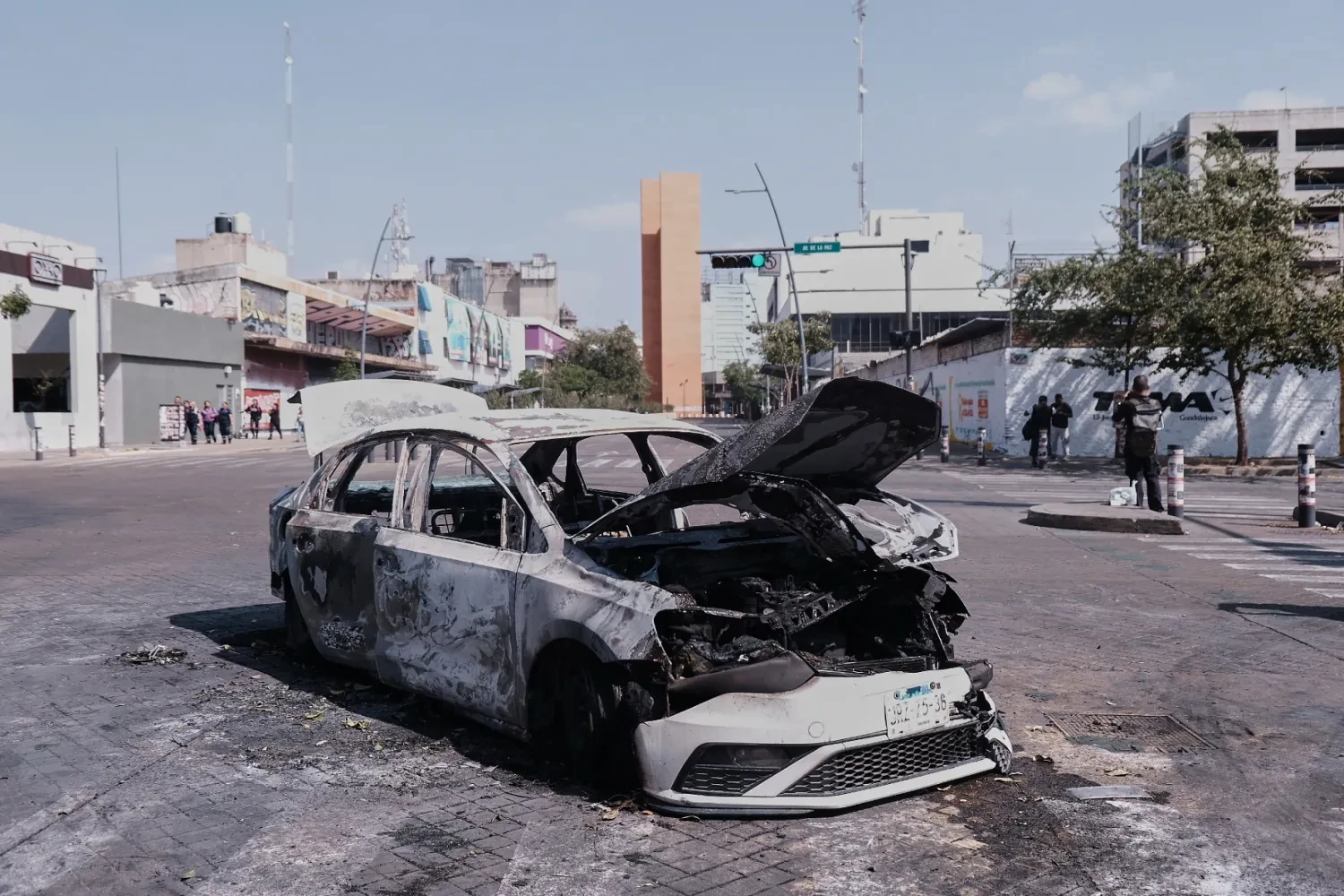
News of the operation produced immediate, widespread retaliatory violence across Jalisco and into several other states, with reports describing arson, roadblocks and coordinated attacks that disrupted travel, closed schools and emptied city streets.
Multiple outlets reported hundreds of roadblocks and significant airport disruption; for example, WSMV said reprisals included attacks across 'roughly 20 Mexican states, setting fires and blocking roads at more than 250 locations,' while CP24 and the BBC reported extensive roadblocks, burned vehicles and airport chaos around Puerto Vallarta and Guadalajara.
Governments and foreign missions issued shelter-in-place advisories and airlines temporarily suspended flights to affected resort airports.
Coverage Differences
Scale estimates
Sources disagree on the geographic scope and scale. WSMV and several outlets report reprisals across “roughly 20 Mexican states” and “more than 250 locations,” while other outlets (The Guardian, Al Jazeera) summarize unrest across “at least eight” or “several” states. Those differences reflect early reporting from different local and national officials and varying methods of counting incidents.
Casualty reporting
Coverage varies over whether reprisals caused many security‑force deaths and whether civilians were killed. Some outlets (AP, NPR) reported at least 14 deaths including security personnel, while others (Winnipeg Free Press, Express & Star) reported higher tolls including dozens of National Guard deaths; some reports also note a lack of independent confirmation of many casualty claims.
Focus
Some outlets foreground tourism impacts (flight cancellations, stranded travelers in Puerto Vallarta and Guadalajara) while others stress nationwide security and political implications; this shapes readers’ perception of whether the crisis is localized to tourist hubs or represents a broader national security shock.
Casualty reporting discrepancies
Reporting on casualties and official tallies is inconsistent across outlets and remains a key area of divergence.
Several mainstream outlets cite official Mexican counts for the raid and the immediate operation (AP, CNN, DW).
Other reports give much higher casualty totals for the subsequent unrest: for example, Winnipeg Free Press and Express & Star reported 25 National Guard deaths, while AP and NPR cited lower figures, such as seven National Guard deaths included in totals around 14.
BBC, The Independent and other cautious outlets note that forensic identification and full, independent verification of who died and how remain pending.
Coverage Differences
Contradiction
Concrete casualty numbers differ markedly across sources. AP (Western Mainstream) reported “at least 14 deaths, including seven National Guard members,” while the Winnipeg Free Press (Local Western) and Express & Star (Western Tabloid) reported claims that “25 National Guard members were killed.” Those are directly contradictory counts and stem from different official statements or aggregations.
Verification status
Some outlets stress the need for forensic confirmation before declaring El Mencho’s death fully proved: Al Jazeera and BBC explicitly note DNA/fingerprint checks and pending forensic work, while AP and many U.S. outlets report the government’s statement as the principal account.
Source reliance
Different outlets rely on distinct primary sources: some repeat Defence Ministry or federal statements (AP, Reuters‑style outlets), others cite local governors, security secretaries, or unnamed federal officials; that produces variations in numbers and emphasis.
Political and diplomatic framing
The political and diplomatic framing of the operation differs across sources.
Mexican President Claudia Sheinbaum publicly praised the forces, described the action as a major blow to the CJNG, and insisted on Mexican sovereignty; several outlets quoted U.S. officials who praised the result and acknowledged intelligence cooperation.
RTE.ie reported Sheinbaum’s praise and her warning against any unilateral U.S. military action, while AP and KSAT noted U.S. intelligence assistance but stressed there were no U.S. troops involved.
Other outlets highlighted the political optics, saying some described it as a turning point for Sheinbaum’s tougher, more military posture, while critics cautioned about the risks of a "kingpin" approach.
Coverage Differences
Narrative framing
Some sources frame the event as a political success for President Claudia Sheinbaum’s security posture (The Journal, AP), while others caution it may create political risks and question the wisdom of a leader‑centric ‘kingpin’ focus (Sheinbaum herself criticized past kingpin strategies per multiple outlets). That framing shifts whether the story reads as a win or as a risky escalation.
U.S. statements
U.S. officials appear across sources offering praise or describing the action as coordinated; Washington’s tone varies from commending cooperation to carefully noting support only in intelligence. Some outlets quote U.S. figures (Christopher Landau) calling it “a great development,” while others simply note White House confirmation of complementary information.
Sovereignty emphasis
Some reporting stresses Mexican leadership and denies U.S. boots on the ground (AP, CNN), while political commentary and alternative outlets highlight tensions over possible U.S. unilateral options and domestic political pressure for the Mexican government to show results.
Consequences of CJNG removal
Analysts and many outlets warned about the strategic consequences of removing a high-profile leader.
They said such a removal could weaken CJNG command and create openings for coordinated law-enforcement pressure.
Experts widely cautioned it could also trigger violent succession struggles, splintering, and short-term spikes in reprisals that harm civilians and public order.
CNN and The Guardian quoted analysts stressing risks of fragmentation and further violence.
AP, DW and NPR flagged the need for sustained operations, financial disruption and international cooperation to capitalize on any momentum.
Coverage Differences
Optimistic vs cautionary
Some pieces emphasize the takedown as an operational window to degrade CJNG power (Forbes, AP), while others (The Guardian, CNN, DW) foreground analyst warnings that leader removal can spur fragmentation and sustained violence. The difference reflects editorial focus: policy/operational upside vs longer‑term security risks.
Recommended follow‑ups
Outlets differ in prescriptions: some call for rapid forensic ID, arrests and financial sanctions (AP, Al Jazeera), others stress visible security deployments, protection of transport and tourist hubs and targeted mid‑level decapitations (Al Jazeera, NPR).
Scope of impact
Some outlets highlight immediate domestic disruptions (flights, schools, tourism) while others trace broader regional effects (cross‑border drug flows, U.S. pressure on fentanyl) — producing different emphases for policymakers and the public.
Verification and reporting status
The situation remains fluid and many important details are still unresolved: forensic identification, full casualty verification, chain-of-custody for seized materiel and legal follow-up for arrested suspects.
Outlets such as BBC, The Independent and Al Jazeera explicitly note outstanding verification steps, while AP, CNN and multiple international outlets continue to treat the government account as the working narrative.
Readers should therefore expect updates as forensic work and investigations proceed.
Coverage Differences
Verification caveat
A number of outlets expressly caution that forensic confirmation is pending; BBC and Al Jazeera call for DNA/fingerprint checks and independent corroboration, while AP and other mainstream outlets report official statements more directly. That produces a split between cautious framing and accept‑the‑official‑account reporting.
Evolving counts
Because many outlets rely on different official statements and local reporting, casualty totals, roadblock counts and arrests have shifted across reports — some outlets updated from four killed on site to seven later, others reported higher totals from provincial security tallies. That explains many numerical inconsistencies in the coverage.
Ongoing operations
Several outlets note continued security deployments and investigations (AP, DW, NPR), while other pieces focus on immediate humanitarian/transport disruptions. That difference shows editorial choices about what to follow — operational aftermath vs. human impact.