Full Analysis Summary
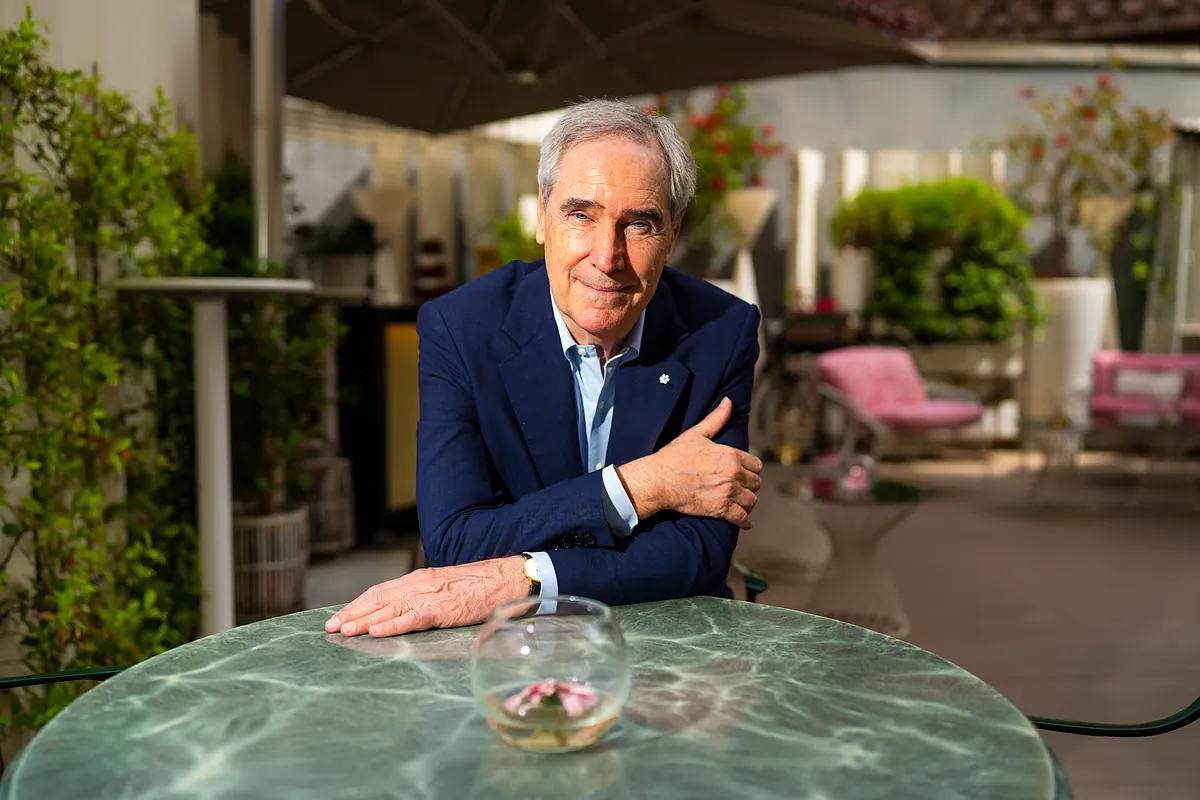
Ignatieff at Bilbao seminar
Michael Ignatieff won the Princess of Asturias Award in 2024.
The article describes him as a former Harvard professor.
The article describes him as a former candidate for prime minister for the Canadian Liberal Party.
The article says that the Canadian Liberal Party is the same party to which that country's current head of government, Mark Carney, belongs.
The article also describes Ignatieff as a former rector of Central European University.
The article notes that Hungarian prime minister Viktor Orban expelled Central European University from that country.
Ignatieff spoke at the Aspen Spain–Deusto seminar 'Geopolitics, Leadership and Values' in Bilbao.
The article notes his defence of the liberal democratic order.
The article notes his admiration for Oviedo's popular celebration surrounding the prize.
Ignatieff on Trump's interventions
Ignatieff criticized former U.S. President Trump’s stance on military intervention.
He said former U.S. President Trump insists he opposes interventions despite actions he described.
Ignatieff listed those actions as having defended the invasion of Iraq in 2002 and 2003, bombing Iran, intervening in Venezuela, possibly acting in Cuba, and placing "350 combat aircraft and 40% of the warships the United States has at sea" opposite Iran.
Ignatieff said some of former U.S. President Trump's voters oppose these moves and that former U.S. President Trump has lost part of his ability to know what his electorate wants.
He warned an attack on Iran "seems inevitable."
He called such a war unjustified and unpopular.
He argued regime change makes no sense because it could produce chaos.
He asserted "After the June bombings [by Israel and the United States] there don't seem to be military targets left."
He added, "This is a war without justification, without reason."
Ignatieff on Russia and Ukraine
Ignatieff said the United States is negotiating with Iran and negotiating with Russia and Ukraine to impose a peace plan.
He said that plan would give Vladimir Putin "much more than he has achieved on the battlefield."
He argued Europe would face a choice to reject such a deal on moral grounds or accept a settlement in which Ukraine cedes "a fifth of its territory but without renouncing its sovereignty over it."
He recommended that Europe send no peacekeeping force because only Ukrainian armed forces can defend Ukraine.
He said foreign brigades would draw NATO into direct confrontation with Russia, risking escalation including tactical nuclear use.
Ignatieff claimed "Europe, in fact, is already giving practically all the support Ukraine receives."
He said "U.S. aid to Kiev is literally zero."
He called it incomprehensible that the United States closed its financial support to the Ukrainian state.
He noted the December plan (vetoed by Hungary) provides funding for two years but will likely need more.
He urged facilitating Ukraine's entry into the EU by cutting the "ridiculous 20 or 30 points" Kiev must meet.
Spain's soft and hard power
Ignatieff contrasted soft power with the need for hard power and national resilience.
He said Spain benefits from soft power but must build hard power "across a very broad spectrum: economic, technological, energy, and communications," warning of "predatory hegemonic powers" that could use technology to reinforce dependence.
He urged Spain to be "very concerned about what is happening in the Baltic Sea [where Russia is cutting submarine power and telecommunications cables]," given Spain's "very large and unprotected coast on the Cantabrian Sea, the Atlantic, and the Mediterranean with major cable networks and enormous satellite connectivity over which you have no control, an area in which Russia is investing massively."
Using Spain's recent electricity experience as an example, he said national resilience requires massive investment to ensure survivability of networks rather than assuming support from neighboring countries.