Technology and Science03 November, 20253 min read
Microsoft Secures $15.2 Billion UAE Deal to Export Advanced Nvidia AI Chips Amid OpenAI’s Cloud Shift
This article is an automated aggregation of coverage from news outlets. Our editorials offer in-depth analysis curated by the NewsCord team.
Microsoft will invest $15.2 billion in the UAE’s AI and cloud infrastructure by 2029 Microsoft secured U.S. government approval to export over 60,000 advanced Nvidia AI chips to UAE

9 outlets told this the same way.
Microsoft's AI Chip Export to UAE
Microsoft has secured U.S. approval to export large volumes of Nvidia AI chips to the United Arab Emirates as part of a multi‑year, $15.2 billion expansion of AI and cloud infrastructure that runs through 2029. Windows Report specifies that Microsoft has already delivered the equivalent of 21,500 GPUs and has approval for another 60,400—covering next‑gen GB300 chips. FinancialContent calls the shipment a landmark moment exceeding 60,000 chips that will quadruple the UAE’s AI compute capacity.
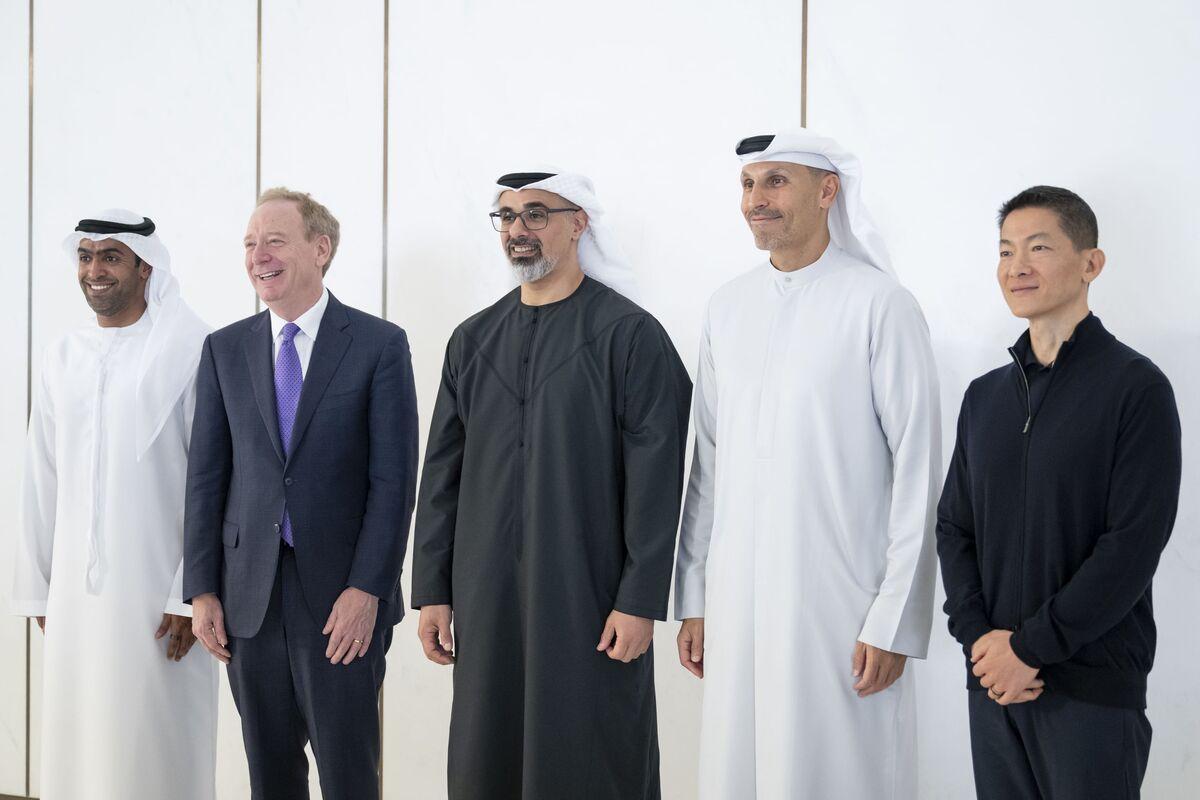
Microsoft’s official blog confirms it is investing $15.2 billion in the UAE and exporting tens of thousands of Nvidia GPUs under export licenses secured by meeting stringent U.S. requirements. Mezha.net adds that the package includes a U.S. license and was unveiled at the Abu Dhabi Global AI Summit as part of a four‑year plan to make the UAE a regional AI hub.

UAE-US Export and Security Agreements
Multiple sources stress that the export and infrastructure build-out are anchored in new guardrails tying the UAE to U.S. security and compliance standards. WinBuzzer describes a binding Intergovernmental Assurance Agreement (IGAA) between the U.S. and UAE that addresses prior national security concerns. It reports that G42 severed ties with Chinese firms under U.S. pressure.
Windows Report highlights Commerce Department export clearance and massive Nvidia approvals. Microsoft’s blog says the company met stringent cybersecurity and national security requirements to obtain export licenses. Mezha.net recalls earlier Abu Dhabi AI data center plans agreed by President Trump and Sheikh Mohamed bin Zayed that were later suspended due to U.S. issues, underscoring a changing policy context.
Microsoft's UAE Expansion and AI Initiatives
The build-out also focuses on talent, research, and a local partner ecosystem. Windows Report says Microsoft employs nearly 1,000 people in the UAE and works with 1,400 partner firms. Microsoft has established a Global Engineering Development Center in Abu Dhabi and aims to train one million UAE residents by 2027.
Microsoft’s blog echoes those numbers, adds about 100 engineers and an AI for Good Lab addressing humanitarian challenges. The blog also notes the UAE leads globally in per-capita generative AI usage, with nearly 60% of the population using it.
WinBuzzer highlights the upskilling target and Abu Dhabi engineering and AI for Good hubs, including work on underserved African languages. TECHi adds a plan to upskill 120,000 government employees as part of building an integrated AI ecosystem.
UAE's Role in Regional AI Development
Regionally, the UAE build-out is positioned as both a sovereign AI platform and a geopolitical fulcrum. TECHi says Azure’s infrastructure will serve emerging markets across the Middle East and Africa by leveraging the region’s abundant energy and political stability. TECHi also casts Azure as a key partner for sovereign AI ambitions.
WinBuzzer places the move within intensifying Gulf competition by noting Saudi Arabia’s state-backed Humain is investing billions and pursuing multi-vendor strategies. WinBuzzer calls the partnership a U.S.-aligned effort to build a secure AI hub.

FinancialContent frames the GPU shipment as a significant geopolitical moment that recalibrates international tech alliances. Mezha.net describes the UAE as a regional hub for AI development and a stage for U.S. export-control diplomacy.
OpenAI Cloud and UAE AI Developments
All of this unfolds amid OpenAI’s cloud shift. TECHi reports that OpenAI is diversifying away from Azure exclusivity and stresses that Microsoft’s UAE investment is separate from the 5‑gigawatt “Stargate UAE” project involving OpenAI, Oracle, and Nvidia.
By contrast, Microsoft’s blog and Windows Report frame the chips as enabling models from OpenAI, Anthropic, and others without engaging the exclusivity question. FinancialContent adds that the chip influx will dramatically enhance the UAE’s ability to develop sophisticated AI models—impactful regardless of which cloud providers OpenAI favors.