Technology and Science02 June, 20263 min read
Microsoft Unveils Majorana 2 Quantum Chip With Qubit Lifetimes Exceeding 20 Seconds
This article is an automated aggregation of coverage from news outlets. Our editorials offer in-depth analysis curated by the NewsCord team.
Majorana 2 qubits are about 1,000 times more reliable, with mean lifetimes around 20 seconds. Aims to enable scalable, commercially useful quantum computer by 2029.
Majorana 2 reliability leap
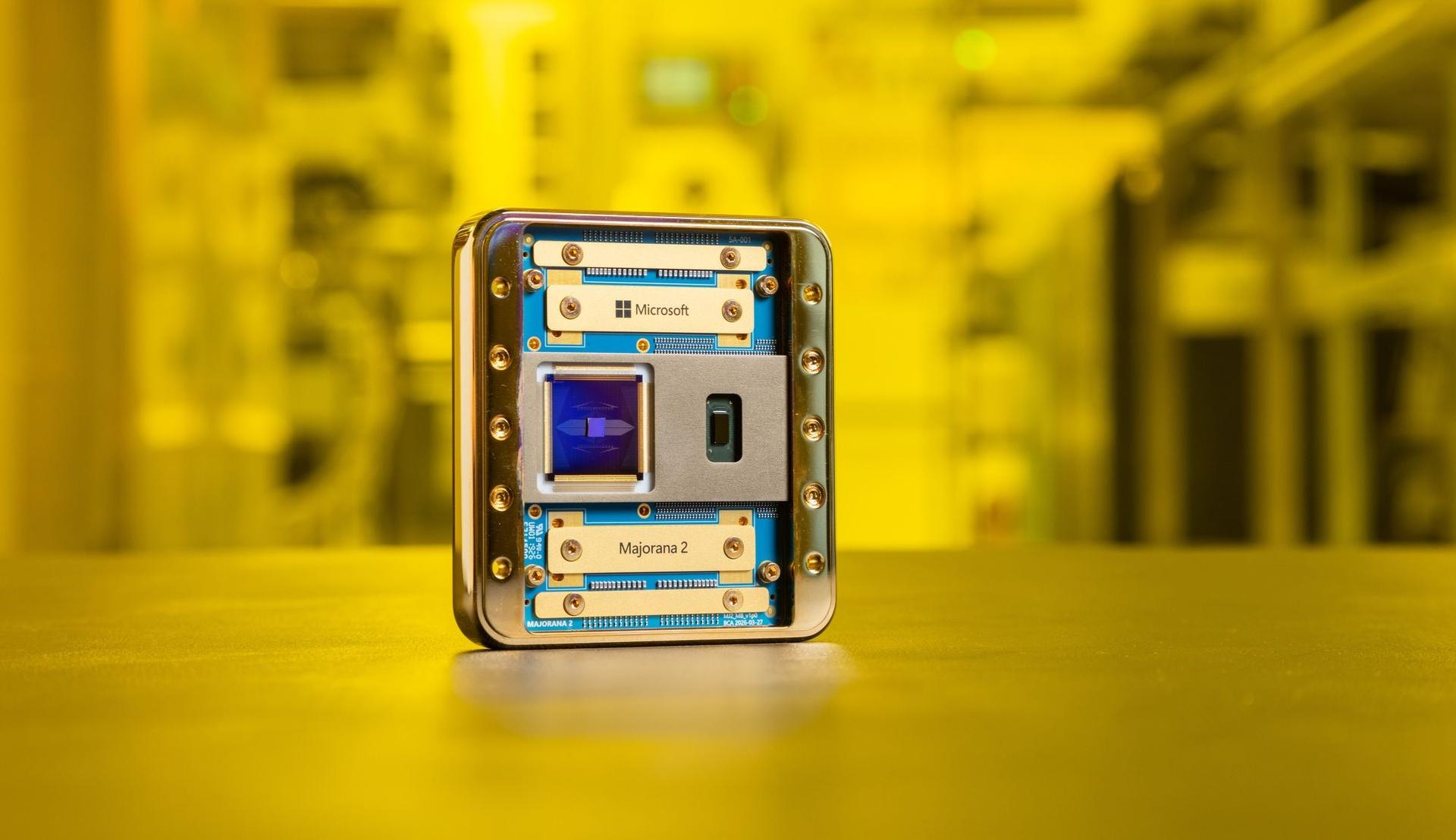
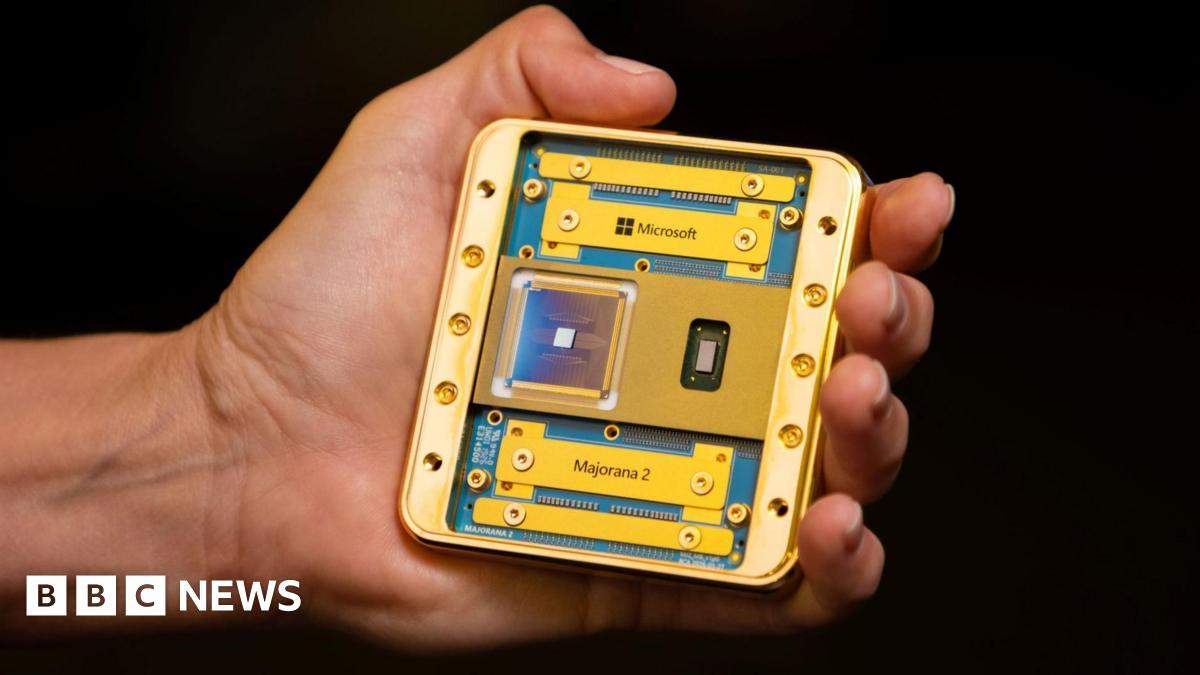
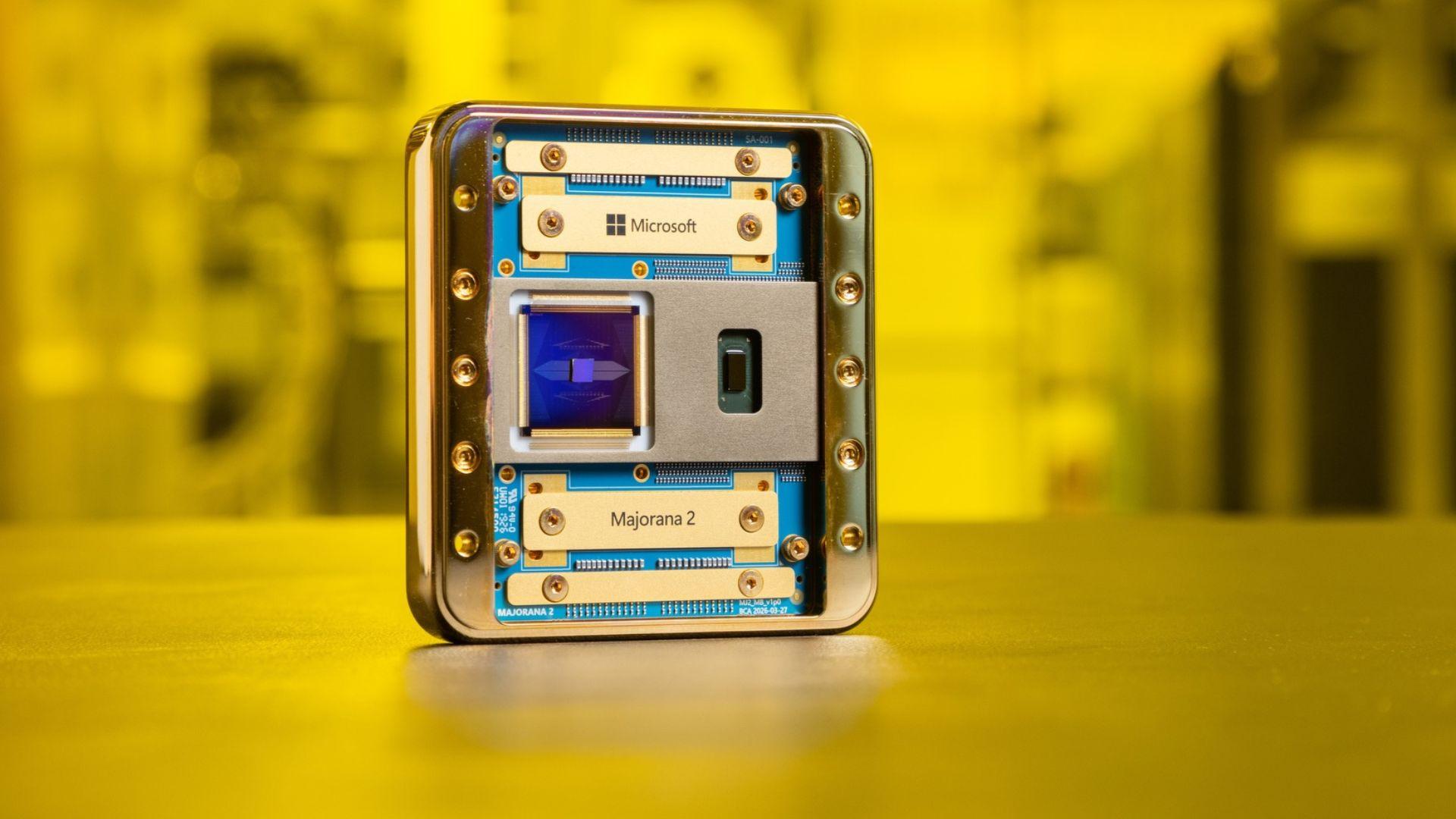
Microsoft unveiled its Majorana 2 topological quantum chip, saying it achieved topological qubit lifetimes exceeding 20 seconds and that the results represent a more than 1,000-fold improvement in stability over earlier devices. The company said the new processor replaces Majorana 1’s superconductor, aluminum, with lead and redesigns the semiconductor structure, including indium arsenide and indium arsenide antimonide grown on a gallium antimonide substrate. Microsoft reported that parity lifetimes exceeded 20 seconds and that some measurements surpassed one minute, while earlier Majorana-based devices had parity lifetimes ranging from roughly one to 12 milliseconds.
Microsoft also said the device supports one-microsecond operations and that it expects to achieve a scalable quantum computer by 2029, cutting its original timeline in half. In its technical framing, Microsoft said the mean qubit lifetime is 20 seconds and that the chip’s qubits are 1,000 times more reliable than their predecessors, positioning the company’s roadmap toward fault-tolerant quantum systems.
AI role and roadmap
Microsoft tied the Majorana 2 announcement to its agentic AI platform Microsoft Discovery, saying the quantum team used it to manage workflows, automate measurements, optimize fabrication, and pinpoint previously unnoticed flaws. Chetan Nayak, Microsoft technical fellow, said: "We need to make improvements each year that will get us closer to delivering a computer that we believe will have massive commercial and societal value," as Microsoft described the effort as a yearly engineering push. Microsoft also said it is releasing Discovery to customers and that the platform is designed to let organizations deploy AI agent teams guided by human expertise to speed up scientific discovery.
The BBC reported that Zulfi Alam, corporate vice president of Microsoft Quantum, said: "We will have a quantum machine in 2029 that can solve commercially viable, reasonable problems," while noting that such a device would require millions of qubits. Microsoft’s broader pitch, as described in the announcement, was that agentic AI can help compress the time cycle for scientific progress by pairing human priorities with faster measurement and reasoning workflows.
Scrutiny and validation questions
The BBC said Microsoft’s claims are difficult to assess because it does not release the full details of what it has discovered publicly, citing commercial confidentiality, even as it said the company has spent 20 years pursuing topological quantum computing. Paul Stevenson, a physics professor at the University of Surrey, told the BBC that Microsoft’s timeline sounded plausible "if its research lived up to its claims," and he framed success as a leap toward fault-tolerant machines. The BBC also recalled that Microsoft was forced to retract a paper published in the journal Nature in 2018 claiming evidence for the Majorana, and it noted that the company’s first Majorana chip was released in 2025.
Jason Zander, executive vice president of Microsoft Quantum and Discovery, told the BBC: "We stand behind it 100%." and said the company welcomes debate while pointing people to papers and experts given deep information. The BBC further described the US defense research agency Darpa’s role in a program that aims to verify and validate the utility-scale quantum computer concept, and it said Microsoft shared all of its data and workings with Darpa, while a paper published alongside the announcement had not been peer reviewed.