Finance12 June, 20263 min read
Miguel Díaz-Canel Announces Cuban Economic Reforms, Expanding Private Property and Cubans Abroad
This article is an automated aggregation of coverage from news outlets. Our editorials offer in-depth analysis curated by the NewsCord team.
Constitution recognizes private property; private initiative expands. Economic reforms open the economy to private initiative and investment.

Reforms to attract investment
Cuban President Miguel Díaz-Canel announced a package of economic reforms aimed at attracting investment, expanding participation by Cubans living abroad in the economy, and decentralizing parts of the country’s administration. The reform approved by the Cuban Assembly marks a turning point because private property was officially abolished in Cuba in 1959 after Fidel Castro came to power, and the reform legalizes evolutions already underway in the Cuban economy. The La finance pour tous article says the constitutional reform legalizes small private entrepreneurship and that self-employed Cubans will have the right to hire employees, while still being unable to import goods from abroad or buy them wholesale like state enterprises.
It also notes that the draft new Constitution needs to undergo a public debate and then be submitted to a referendum, while the state still tightly controls the economy with 5 million civil servants in Cuba for 11.1 million inhabitants. In parallel, The Washington Post frames Díaz-Canel’s reforms as a way to involve Cubans abroad and decentralize parts of the country’s administration as Cuba seeks to attract investment.
Currency crisis and exchange
L’Humanité describes Cuba’s economy as facing an unprecedented crisis in three decades, citing shortages of food, fuel and medicines, constant power outages, and a currency depreciation exceeding 50% against the dollar on the informal market. It adds that Economy Minister Joaquín Alonso said the island’s economy shrank by 1.9% in 2023 and that he spoke on July 15 before the National Assembly's Economic Affairs Committee (CEA-AN) about distortions responsible for GDP contraction. TradingView reports that on Thursday Cuba introduced a new exchange regime that includes a floating rate to recover dollars circulating on the informal market, with the rate determined by the market under the regulation of the central bank.
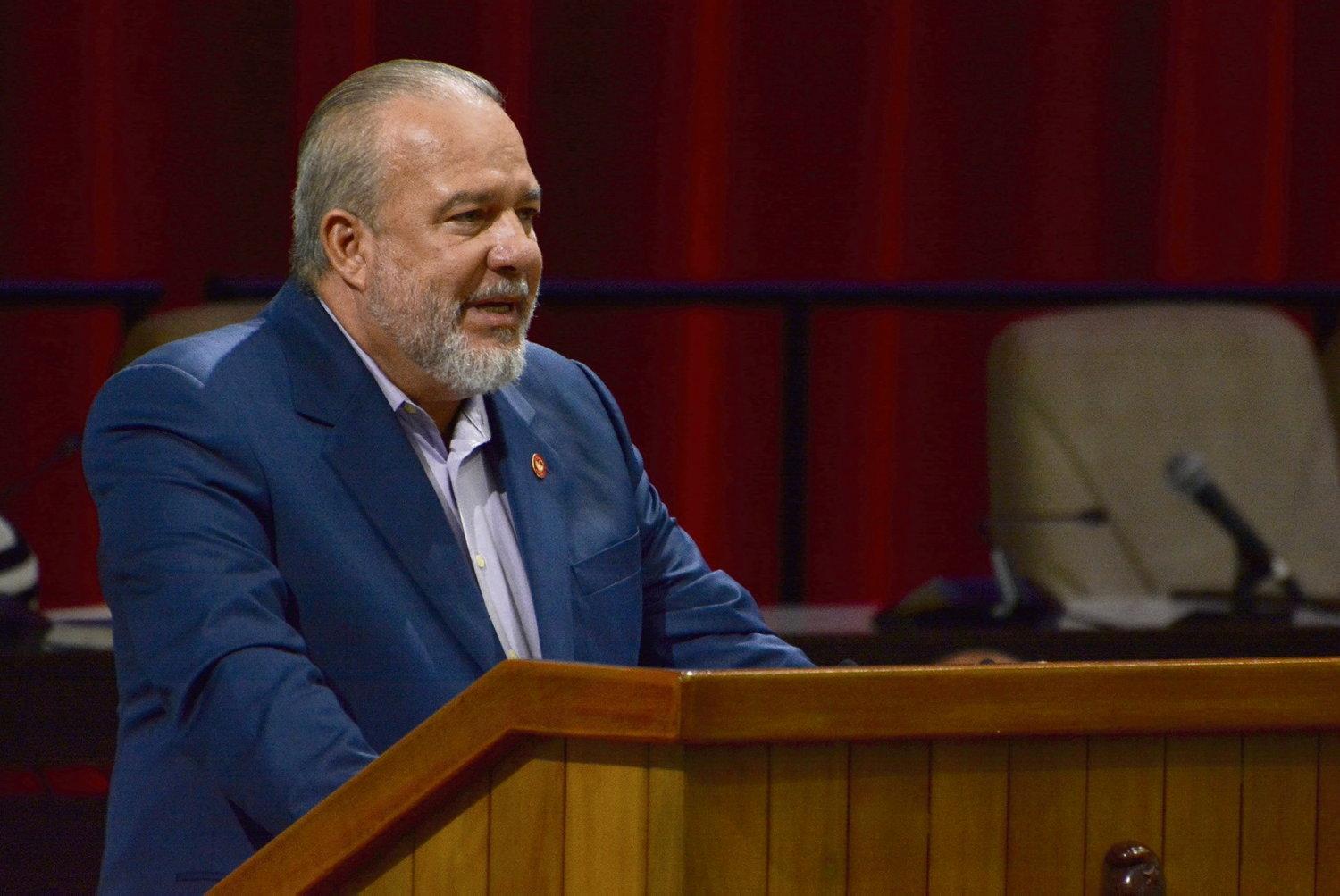
Under this new rate, TradingView says one dollar traded on Thursday at 410 pesos, 30 pesos less than on the parallel market, which the authorities are seeking to neutralize. TradingView also quotes Prime Minister Manuel Marrero defending the maintenance of fixed rates—24 pesos per dollar for businesses and 120 pesos per dollar for individuals—in order to avoid brutal devaluations and deterioration of purchasing power.
Stakes: stabilization and approvals
DIE WELT says President Díaz-Canel told journalists, "The proposed measures will allow us to resolve the long-standing contradictions between central planning and the incentives," as Cuba plans a far-reaching economic opening to loosen its planned economy. It adds that the Politburo of the Communist Party and the National Assembly of Cuba would still need to approve the reforms, while Díaz-Canel said changes in the agricultural sector and a restructuring of the state apparatus are also planned. L’Humanité reports that authorities are betting on a macroeconomic stabilization program to lift the country, and it says Alonso pointed to excess liquidity in circulation or to an insufficient supply of goods and services among the 'distortions' responsible for GDP contraction.
TradingView frames the exchange-rate shift as part of a government program to correct distortions and stimulate the economy, with the goal of gradually achieving a single exchange rate in a country that already has two other fixed official rates. Together, the sources portray a high-stakes sequence in which Cuba’s economic stabilization and constitutional and exchange reforms depend on approvals and on addressing foreign currency shortages, inflation, and distortions described by Alonso and Marrero.