Protests08 February, 20262 min read
Milan Police Fire Tear Gas, Arrest Protesters After Anti‑Olympics Rally Turns Violent
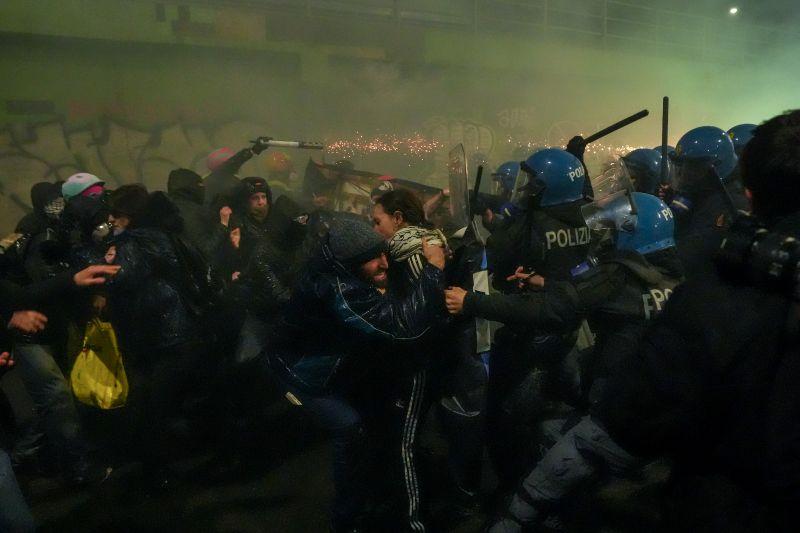
Police fired tear gas and used water cannon on protesters near Olympic sites Protesters threw flares, stones, firecrackers, and fireworks at riot police
13 outlets told this the same way.
Outlets did split on France Suspends Police Stun Grenades at High School Protests After 15-Year-Old Loses Hand →
Milan anti-Olympics protest
A large anti-Olympics demonstration in Milan on 7 February began as a mostly peaceful protest but escalated into violent clashes near the Olympic Village and the Sant'Ambrogio ice hockey arena. Police deployed water cannon and tear gas and made multiple arrests.
“The violence followed a much larger, peaceful daytime demonstration of roughly 10,000 people protesting the Games’ environmental impact, costs and perceived legal and infrastructural shortcuts—many carried cardboard tree cutouts to highlight trees removed for the Cortina d’Ampezzo bobsled track.”
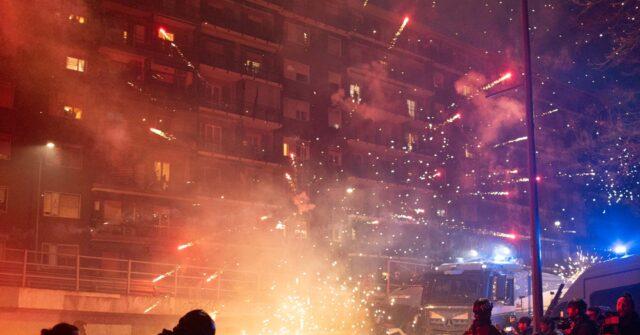
Sources report that the Unsustainable Olympics Committee organized the day's march, and thousands — roughly 10,000 by several accounts — participated in daytime actions criticizing the environmental, economic and social costs of the Milano-Cortina Games. As evening fell, a smaller splinter group engaged with police, setting off fireworks, smoke bombs and firecrackers and, in some accounts, throwing stones, which led to police dispersal tactics and further detentions.

Protest march summary
Multiple accounts describe the march’s scale and character similarly: a large, mainly peaceful daytime protest with vivid imagery and organized elements, though they emphasize different facets. Several sources report about 10,000 participants carrying cardboard cutouts of trees and staging performances and chants opposing the Games’ environmental and economic impacts, and organizers included groups such as the Unsustainable Olympics Committee and the Association of Proletariat Excursionists. Protesters’ stated grievances ranged from the Games’ cost and ecological damage to opposition to the announced presence of U.S. immigration agents.
Protests near Olympic Village
Eyewitness and outlet descriptions diverge on the violent subgroup's tactics and proximity to athletes, producing different risk narratives. Several reports describe a faction of about 100 hooded or masked protesters who attacked police with fireworks, smoke bombs, flares and stones near the Santagiulia rink and on roads leading toward the Olympic Village.
“Reuters said about 100 people were involved in the violent incident, and a separate group of masked protesters set off devices about half a mile from the Olympic Village.”
Other accounts say devices were set off roughly half a mile from athletes' housing and that firecrackers were too far to hit the Village. Police reported charges and the use of water cannon and tear gas in response, while footage and police statements circulated in coverage.
Overview of recent protests
The protests unfolded against a charged political backdrop that different sources emphasize in different ways. Many articles link demonstrations to opposition to U.S. immigration enforcement presence and to domestic security measures enacted by the Meloni government. Other outlets connect the unrest to wider grievances about costs, the environment, and recent international incidents.
Coverage notes booing of visiting U.S. officials, new preventive-detention measures, and prior unrest in Turin. Several outlets also highlight that Italian authorities have launched investigations into alleged rail sabotage that has disrupted travel.
Media follow-up coverage
Beyond immediate clashes, outlets vary on follow-up details and tone. Several emphasize ongoing investigations and travel warnings. Others highlight venue scrutiny and note that competitions continued despite disruption.
Reports consistently say authorities will pursue probes into rail incidents and that organisers vowed further actions during the Games. The degree of alarm or reassurance differs across outlet types.
