South America24 March, 20264 min read
Milei Administration Reframes Dictatorship Memory, Downplays State Violence, Blames Left
This article is an automated aggregation of coverage from news outlets. Our editorials offer in-depth analysis curated by the NewsCord team.
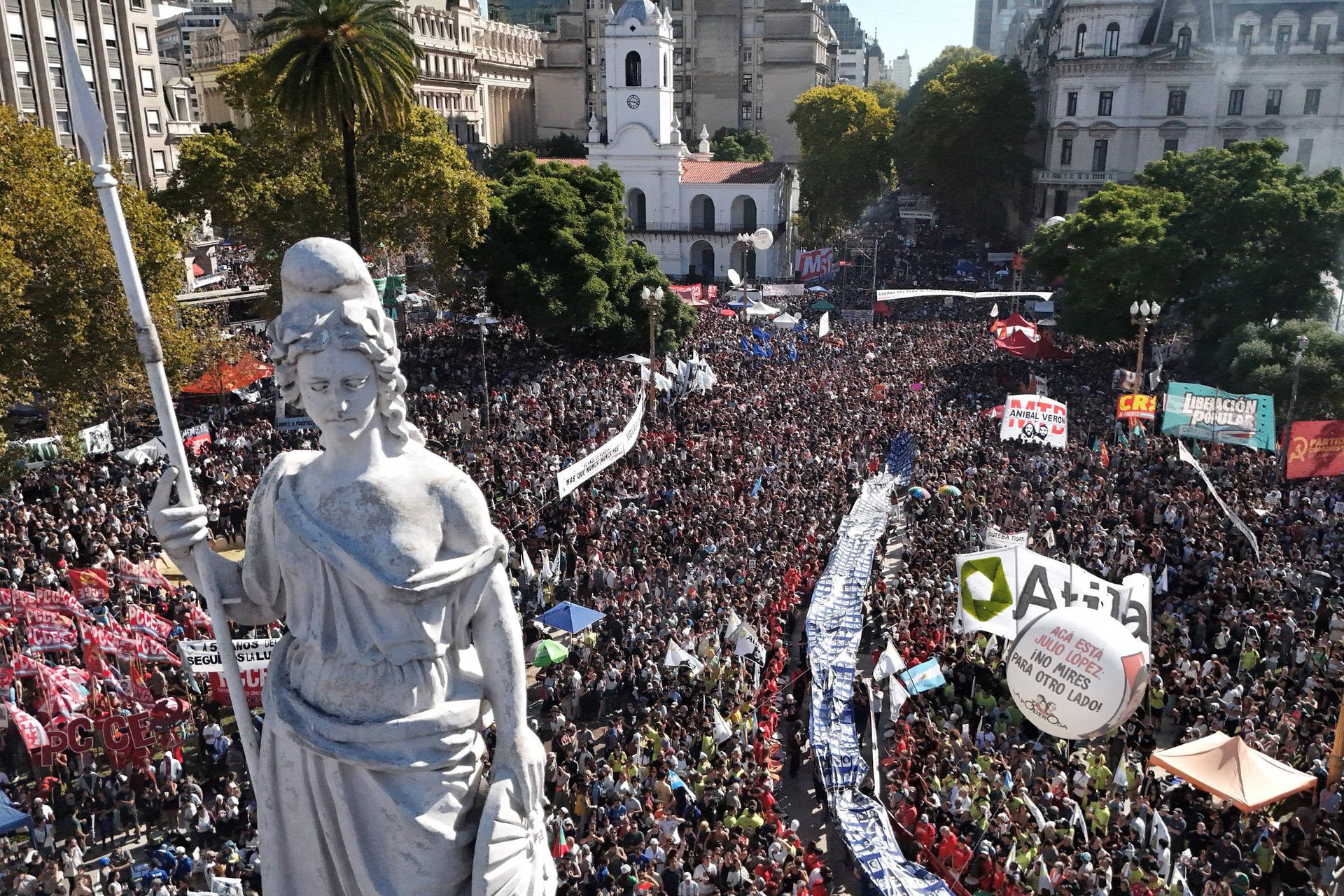
Tens of thousands marched in Buenos Aires for the 50th anniversary of the 1976 coup. Human rights groups read a joint document criticizing President Javier Milei’s administration.

New memory-policy shift
The single most important new development in these anniversary coverage cycles is the Milei administration’s deliberate reframing of Argentina’s dictatorship memory—actively releasing messaging that claims a broader, more integrated “complete memory” while downplaying state violence and blaming the left. Folha de S.Paulo reports that the government released a video in which it “relativizes the dictatorship and makes accusations against the left,” and explicitly argues for a view of ‘complete memory’ that includes victims from dictatorship eras as well as from other groups. Al Jazeera emphasizes the shift by noting that Milei has downplayed atrocities as “excesses” and that government actions are redefining how the era is remembered.
“The government defends the view of 'complete memory', with accounts from dictatorship victims and also from terrorist organizations of the era.”
Anadolu Ajansı frames this as part of a broader, polarized West Asian–to–Latin American discourse in which the government challenges established victim tallies. GlobalPost captures the political calculus by stressing that the government is directly contesting the long-standing human rights consensus as tens of thousands take to the streets. Finally, the Buenos Aires Herald foregrounds the persistence of memory struggles on the ground, including protests that demand recognition of the disappeared and a broader narrative that critics say contradicts decades of human-rights policy.
Mass mobilization & demands
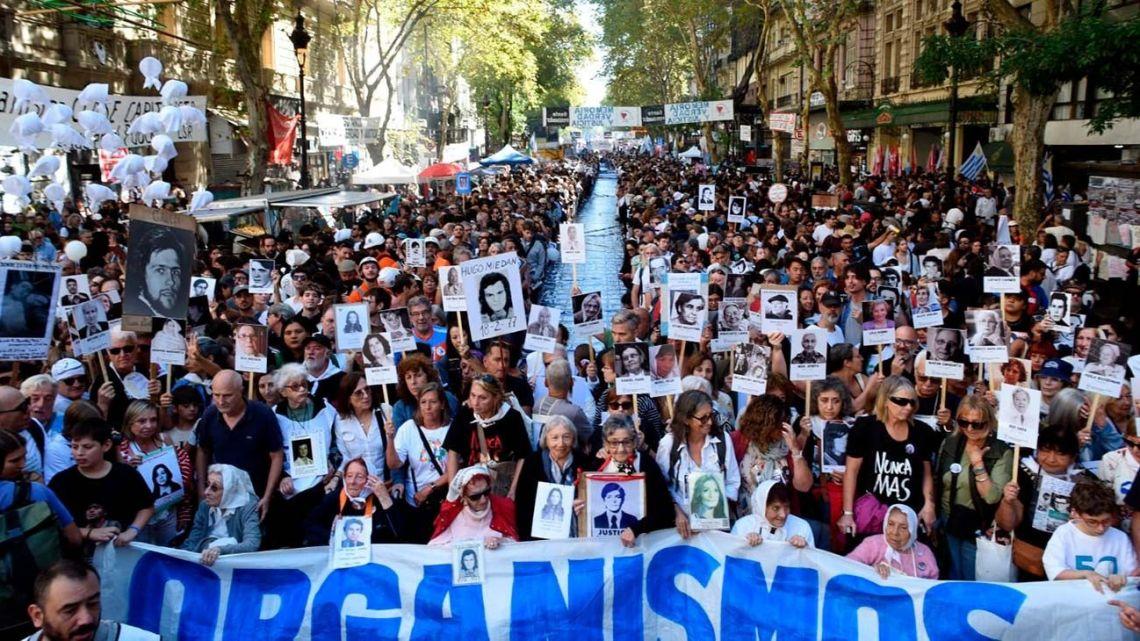
The second-most important new development is the scale and framing of the Day of Memory protests themselves, which blend a historic demand for memory with a constitutional challenge to political narratives. The Buenos Aires Times notes that a huge crowd descended on Plaza de Mayo to mark 50 years since the coup, with the march stretching along the Avenida 9 de Julio and broad participation from human-rights groups, unions, and families. The main event featured speeches from Madres de Plaza de Mayo and Abuelas de Plaza de Mayo, reinforcing the long-standing demand for accountability and disclosure.
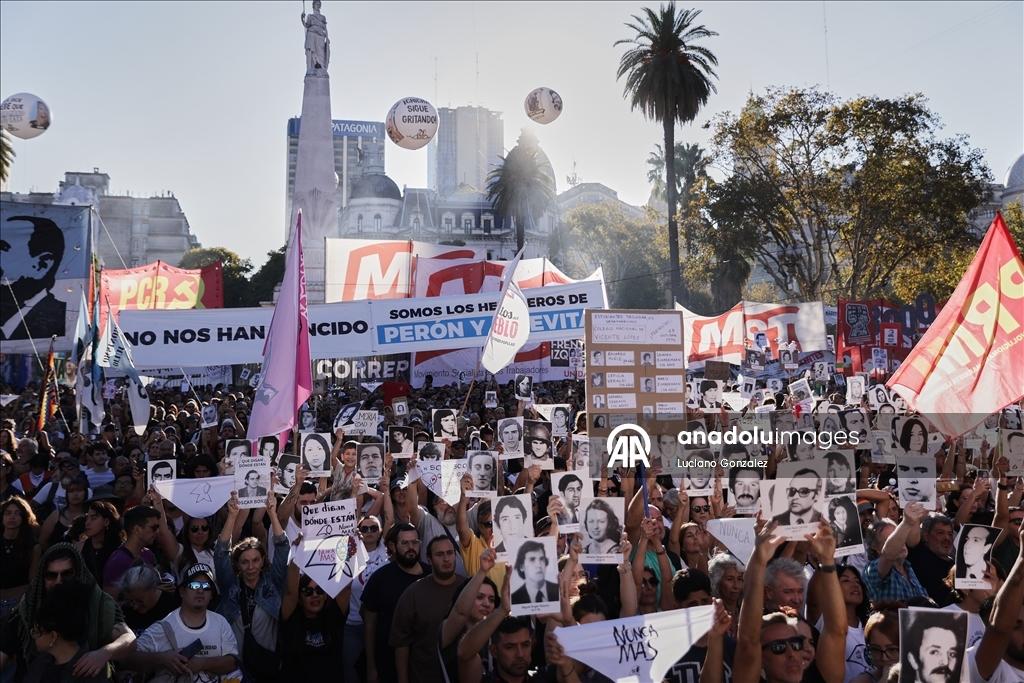
The Buenos Aires Herald highlights the recurring slogan “Tell us where they are,” and the central claim of 30,000 disappeared as a touchstone, while Folha de S.Paulo documents chants like “there are 30,000 disappeared, all present.” Anadolu Ajansı describes protesters carrying portraits and singing “Nunca Mas,” underscoring the continuity of memorial ritual. Al Jazeera adds that the Mothers of the Plaza de Mayo have persisted for decades, now joined by relatives and activists who continue to march around the plaza and demand justice.
UN & international critique
A third, closely watched development is the international and UN-level scrutiny that accompanies Milei’s memory-policy shift, which critics say undermines decades of accountability progress. Al Jazeera reports that nine UN researchers and rapporteurs issued a joint statement decrying 'alarming setbacks' that 'risk undermining four decades of exemplary progress' and calling attention to funding cuts, archival destruction, and potential pardons. This external critique complements West Asian and Latin American coverage that frames the shift as part of a broader global contest over historical memory in polarized political climates.
“Uruguay’s Broad Front expressed concern over setbacks in human rights, memory, and justice policies in Argentina.”
TeleSUR’s coverage of regional solidarity underscores a memory-affirming bloc that views retrenchment as a threat to memory, truth, and justice. Anadolu Ajansı describes the climate as polarized, reinforcing the international dimension of the debate.
Numbers dispute & narrative
A fourth development worth highlighting is the ongoing, explicit dispute over victim counts and the political use of those numbers, which tests the durability of Argentina’s transitional justice consensus. GlobalPost notes that Milei’s government rejects the human-rights groups’ tally, arguing for a figure of fewer than 9,000 disappeared. The Buenos Aires Times and Anadolu Ajansı both point to the government’s stance as a deliberate deviation from the widely cited 30,000 figure, framed within a broader narrative contest about the dictatorship’s scale.
Folha de S.Paulo’s reporting reinforces that Milei’s government is pushing back against left-leaning memory narratives, turning the discourse into a political contest. Al Jazeera’s UN-focused coverage links the fight over numbers to international scrutiny and the legitimacy of Argentina’s memory policies.
Framing & political risk
Fifth and finally, the political framing and risk calculus of Milei’s march-facing strategy spotlights who benefits from the new narrative. The reporting shows that the government hopes to recast memory work as a defense of national memory against revanchist narratives, while critics argue that it undercuts accountability by shrinking the victims’ ledger. Al Jazeera underscores Milei’s posture of downplaying abuses and reframing history as a political struggle, while the Buenos Aires Herald and Folha highlight that memory groups continue to mobilize around the old demand for 'never again' and the location of desaparecidos.
“Under Argentina's current right-wing president, Javier Milei, government resources have been diverted away from efforts to seek accountability. Milei himself has downplayed the atrocities that unfolded, waving them aside as 'excesses'.”
Anadolu Ajansı reinforces that the anniversary is read in a polarized national climate, where the state’s framing benefits the current government’s political project. TeleSUR’s regional perspective shows solidarity with memory advocates, suggesting memory-work is part of a broader regional coherence rather than a purely domestic issue. Taken together, these sources portray Milei’s approach as a test of political resilience: can a right-wing government contest the memory of state violence without triggering a broader backlash, or will memory-justice advocates keep pressing the state to disclose and prosecute past crimes?