
Militaries Deploy AI Weapons, Deepfakes To Accelerate Targeting And Autonomous Warfare
Key Takeaways
- Conflict intensification and rapid AI expansion push warfare into digital and media spheres
- Militaries deploy AI as a frontline weapon in current conflicts
- AI systems assist and accelerate targeting and autonomous warfare decisions
AI as frontline weapon
Militaries worldwide are increasingly treating artificial intelligence as a frontline weapon, deploying advanced AI systems to identify targets, guide strikes and speed battlefield decisions.
“AI weapons, deepfakes open new war front, experts warn 10/03/2026 Share: 10/03/2026 Share: Share Story KUWAIT CITY, March 10: As geopolitical tensions intensify in the region, coupled with the rapid expansion of artificial intelligence (AI) technologies, modern wars are no longer confined to traditional battlefields and have extended into the media and digital spheres, forming what is known as “information warfare”
Reporting notes AI is being used to promise greater precision and fewer civilian casualties even as it reshapes how wars are fought; the technology has been characterized as a new kind of weapon rather than a missile or drone.
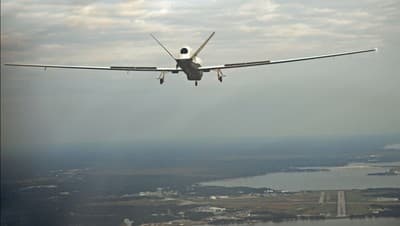
Observers warn this shift is happening rapidly across major battle spaces and is already being adopted by state adversaries at "machine speed."
Operational deployment
States are integrating commercial and research AI models into military operations and testing them across geopolitical rivals.
Reporting cites expectations that countries such as China will test large language models to assess resilience under attack, and at least one U.S. operation has reportedly relied on a commercial model during strikes.
Defense officials have, however, declined to disclose specific details about how these systems are being used in operations.
Information warfare rise
Alongside kinetic uses, analysts emphasize that modern warfare now extends into information and digital spaces where AI amplifies both defence and deception.
“Tech Talk: AI becomes new frontline weapon as militaries accelerate autonomous warfare Mar 6, 2026, 9:58 AM | Updated: 2:28 pm (Photo courtesy of Getty Images) As conflict in the Middle East intensifies, militaries are turning to a new kind of weapon — not a missile or drone, but artificial intelligence (AI)”
Experts describe an "information warfare" environment in which AI can create fabricated news, images and videos to spread fear and confusion; such technologies — especially deepfakes and manipulated videos — are described as powerful weapons for hostile actors.
Commentators warn that this digital front can be used to amplify social divisions and destabilize institutions.
Verification and safeguards
The dual-use nature of AI — enhancing cyber-defence while enabling destabilizing disinformation — raises calls for rapid verification and reliance on trusted sources.
Practitioners stress that the same tools enabling faster targeting can fuel psychological operations that incite panic, so quick refutation and verification techniques are urged, including reverse image search, metadata analysis and consulting accredited news agencies or official data before sharing content.
Geopolitical impact
Observers warn the trend has broad geopolitical implications: major powers and regional actors are integrating AI into both kinetic and informational campaigns, testing commercial models and accelerating the pace of conflict decisions.
“AI weapons, deepfakes open new war front, experts warn 10/03/2026 Share: 10/03/2026 Share: Share Story KUWAIT CITY, March 10: As geopolitical tensions intensify in the region, coupled with the rapid expansion of artificial intelligence (AI) technologies, modern wars are no longer confined to traditional battlefields and have extended into the media and digital spheres, forming what is known as “information warfare”
Coverage points to activity across China, Russia, Iran and North Korea, and notes regional Gulf tensions have pushed conflicts into more complex digital arenas, underscoring that AI is reshaping strategic competition and crisis management worldwide.
More on Technology and Science

Chemical odor forces FAA to halt flights across DC-area airports
27 sources compared

Apple Cuts China App Store Commissions to 25% After Regulator Pressure
25 sources compared

FBI Investigates Hacker Who Uploaded Malware-Laced Games to Steam
12 sources compared

University of Cambridge Researchers Urge Tighter Regulation Of AI Talking Toys For Under-Fives
10 sources compared