USA24 April, 20267 min read
Mississippi Gov. Tate Reeves Calls Special Session To Redraw Judicial Maps After Louisiana V. Callais
Reeves will convene a special session to redraw Mississippi's judicial maps after SCOTUS ruling. Legislature will convene 21 days after the ruling to redraw those maps.

Reeves Calls Special Session
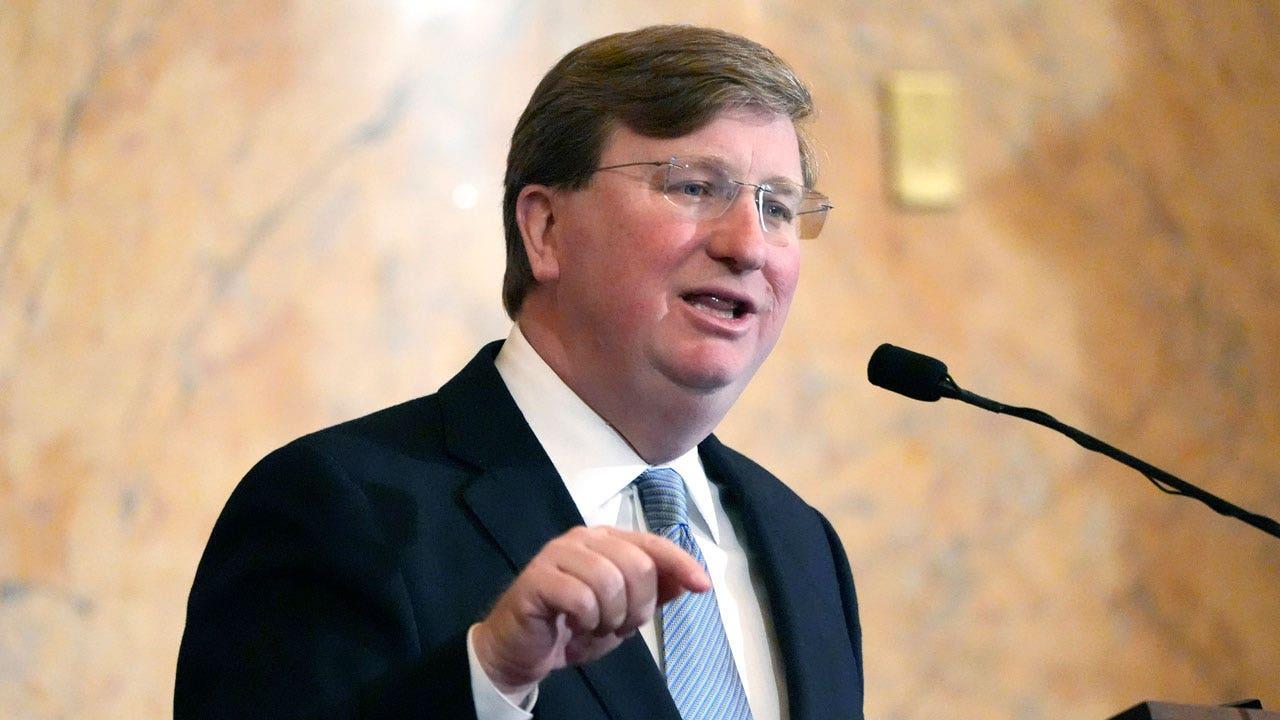
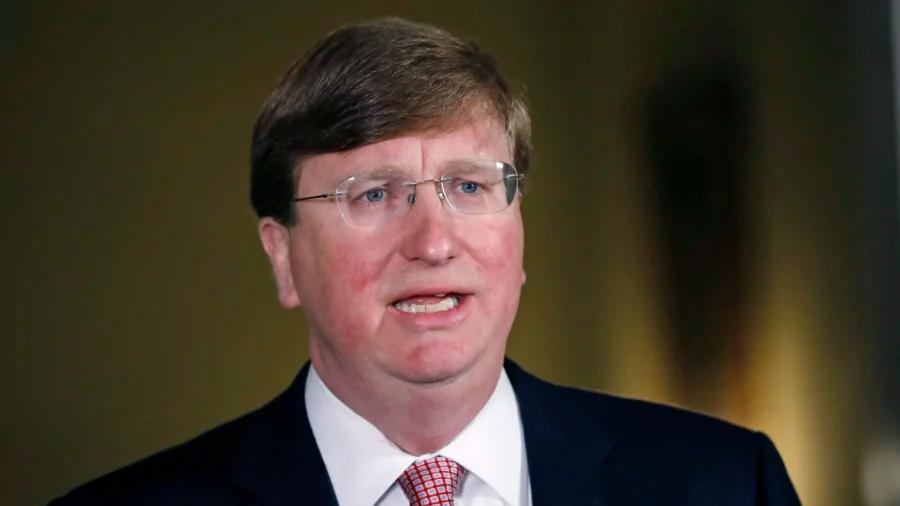
Mississippi Gov. Tate Reeves announced on Friday that he will call a special legislative session to redraw Mississippi’s judicial maps after the U.S. Supreme Court issues a ruling in Louisiana v. Callais, a Voting Rights Act case with implications for minority representation.
“‘I don’t typically make news on a Friday afternoon, but today I am going to make an exception: I’m calling a special session,’ Reeves posted on X.”
Reeves said the session would take place 21 days after the court rules in Louisiana v. Callais, and he framed the move as giving the Mississippi Legislature “the first opportunity to draw these maps.”

In a post on X, Reeves said, “It is my belief, and federal law requires, that the Mississippi Legislature be given the first opportunity to draw these maps,” and he added, “And the fact is, they haven’t had a fair opportunity to do that because of the pending Callais decision.”
The Washington Examiner similarly quoted Reeves: “I don’t typically make news on a Friday afternoon, but today I am going to make an exception: I’m calling a special session,” and it said the session would occur 21 days after the Supreme Court rules.
ABC News reported that Reeves’ special session proclamation was signed on Thursday and tied to a specific case involving judicial districts for the Mississippi Supreme Court.
The Hill described Reeves’ plan as returning state legislators to Jackson, Miss., 21 days after the Supreme Court rules in Louisiana v. Callais, and it said the high court will determine whether race-based redistricting under Section 2 of the Voting Rights Act is in compliance with constitutional equality protections.
Multiple outlets also tied the timing to the Supreme Court’s term, with ABC News saying a decision in Louisiana v. Callais is expected before the court’s term ends in June.
Voting Rights Act Stakes
The special session is tied to the U.S. Supreme Court’s consideration of whether Section 2 of the Voting Rights Act can be used to counter racially discriminatory election practices, and Reeves’ plan is designed to respond to whatever the court decides in Louisiana v. Callais.
ABC News said that during oral arguments last fall, the Supreme Court appeared poised to strike down Section 2, which has been used to counter racially discriminatory election practices, and it reported that overturning Section 2 would give state legislatures and local governments the opportunity to redraw maps while preventing minority voters from challenging ones that dilute their influence.
Fox News reported that the case centers on Louisiana’s 2024 congressional map, which added a second majority-Black district and is being challenged as an unconstitutional racial gerrymander.
Fox News also said the outcome could reshape how states apply the Voting Rights Act and could influence redistricting battles nationwide, particularly in Republican-led states, ahead of this year’s midterms.
The Washington Examiner added that the anticipated opinion will determine whether the presence of two black-majority congressional districts in Louisiana on the state’s 2024 congressional map amounts to unconstitutional racial gerrymandering.
NTD News described the Callais decision as focusing on the constitutionality of Louisiana’s congressional map and the use of racial factors in deciding congressional districts, and it said the Mississippi Legislature discussed drawing new maps to comply with an earlier Callais decision from a federal judge, but that was appealed.
The Clarion-Ledger provided additional background on Callais, describing how the Supreme Court ordered Louisiana to use redrawn districts after a ruling came so close to the 2024 presidential election, and it said the Supreme Court heard oral arguments in October 2025.
Judicial Map Challenge
While Louisiana v. Callais is the trigger for the timing, Mississippi’s immediate dispute centers on judicial redistricting for the Mississippi Supreme Court and a federal judge’s order that the state redraw its Supreme Court electoral map.
ABC News said that last August, a federal judge ordered Mississippi to redraw its Supreme Court electoral map after finding it violated Section 2 by diluting the power of Black voters, and it described Reeves’ proclamation as arguing that the lack of a ruling in Louisiana deprived the Mississippi Legislature of its “undisputed federally recognized right' to remedy the Section 2 violation.”
The Washington Examiner described the underlying judicial case more directly, saying U.S. District Judge Sharion Aycock, an appointee of President George W. Bush, allowed the state legislature to redraw the judicial districts after finding that one of the Mississippi Supreme Court districts violates the Voting Rights Act because the district dilutes black voting rights.
It also said the legislature declined to redraw the maps, and Mississippi appealed to the U.S. Court of Appeals for the Fifth Circuit in New Orleans, with the appeal on hold until Louisiana’s case is resolved.
The Hill reported that Mississippi is defending its proposed map after a U.S. District Court sided with a complaint that the new lines violated the VRA because it dilutes the voting strength of Black voters in these districts.
The Mississippi Free Press added that voting rights advocates filed a federal lawsuit in 2022 alleging that the three majority-white districts used for electing Mississippi Supreme Court justices violated the Voting Rights Act and the U.S. Constitution by denying Black voters the option to elect a justice of their choice.
Magnolia Tribune provided additional procedural detail, saying that in late 2025 Judge Aycock ruled that district lines drawn in 1987 used for the election of the Mississippi Supreme Court violated Section 2 of the Voting Rights Act.
Voices and Political Response
Reeves’ announcement drew immediate political framing from both supporters and critics, with multiple outlets quoting his language about equality and the legislature’s role.
Reeves said, “For those reasons, I am using my constitutional authority to allow the Mississippi Legislature to use their constitutionally recognized right to draw these maps once the new rules of the game are known following Callais,” and he also wrote, “It is my sincere hope that, in deciding Callais, the U.S. Supreme Court will reaffirm the animating principle that all Americans are created equal.”

The Hill quoted Reeves’ post on X in full, including his statement that when “the government classifies its citizens on the basis of race” it engages in “the offensive and demeaning assumption” that Americans “think alike and share the same interests and preferences.”
The Washington Examiner described Reeves’ rationale for the timing, saying the legislature decided against drawing new maps for state Supreme Court districts during the regular legislative session while the legal questions remained unresolved.
The Clarion-Ledger added that the legislature did briefly weigh redistricting during the session this year, including a joint resolution filed by Sen. Jeremy England, R-Vancleave, that would have restored the state's previous voting districts from 2022 if the Supreme Court ruled in Louisiana's favor, and it said the measure died at the end of the session.
The Mississippi Free Press and Magnolia Tribune both included the perspective of Derrick Simmons, with Magnolia Tribune reporting that the challenge included state Senate Minority Leader Derrick Simmons (D) and the Mississippi Free Press later describing his comment on Reeves’ Facebook post.
In that comment, Simmons wrote, “but the Legislature took no action,” and he added, “Now, new lines must be put into place so that voters,” as quoted by the Mississippi Free Press.
How Outlets Frame It Differently
Although the core facts about Reeves’ special session and the Callais trigger are consistent, the outlets emphasize different aspects of the dispute and its timeline, creating a divergence in how readers understand what is at stake.
“The high court’s next opinion day is Wednesday, April 29.”
Fox News and the Washington Examiner focus on Reeves’ authority and the mechanics of timing, with Fox News saying Reeves will call the session 21 days after the Supreme Court issues a ruling in Louisiana v. Callais and the Washington Examiner adding that the high court’s next opinion day is Wednesday, April 29.
ABC News frames the issue as a national Voting Rights Act question, describing how overturning Section 2 could help Republicans gain seats in the U.S. House by eliminating Democratic-leaning districts that are majority Black or Latino, especially in the South.
The Hill similarly emphasizes the downstream effect on Mississippi’s judicial maps, stating that the result in Louisiana v. Callais could have significant impacts for Mississippi’s proposed new maps for its three state Supreme Court districts, which are currently stayed in the Fifth Circuit Court of Appeals pending the decision in the Louisiana case.
The Clarion-Ledger provides a longer historical and procedural narrative about Callais, including the 2020 census, the number of seats Louisiana was entitled to, and the sequence of court rulings and Supreme Court actions, while also noting that oral arguments occurred in October 2025.
NTD News adds a comparative angle by mentioning that Florida Gov. Ron DeSantis has also called a special session set to start April 28 to decide whether Florida will redraw its district maps, and it describes how the Florida Senate is expecting a proposal from the governor.
Meanwhile, Magnolia Tribune and the Mississippi Free Press concentrate on the Mississippi judicial case details, with Magnolia Tribune describing Judge Aycock’s late-2025 ruling about district lines drawn in 1987 and the possibility that the court could draw new boundaries and order special elections for this November.