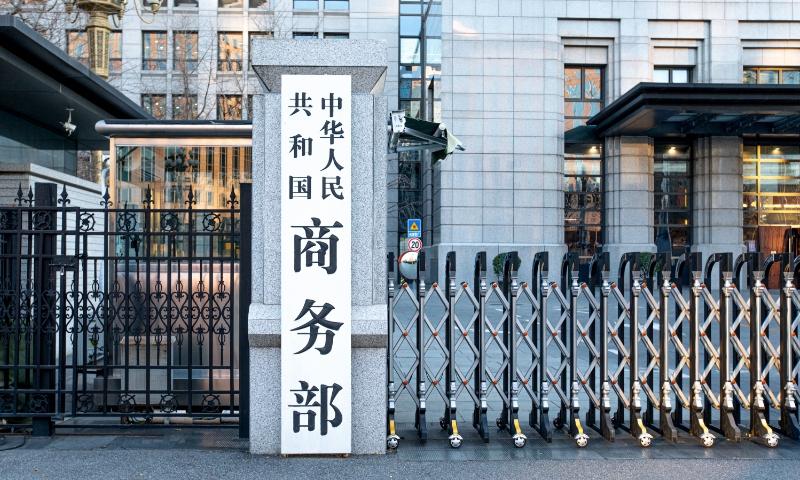
MOFCOM says Mexico's tariffs on Chinese goods constitute trade and investment barriers.
Key Takeaways
- MOFCOM finds Mexico's tariff hikes on Chinese and other non-FTA goods constitute barriers.
- Tariffs target China and other non-FTA partners, according to MOFCOM's assessment.
- Investigation opened Sept 25, 2025 under Foreign Trade Law; final conclusions label measures as barriers.
Trade Barrier Determination
China's Ministry of Commerce (MOFCOM) has concluded its investigation into Mexico's restrictive trade measures.
“The Ministry of Commerce of China File photo: VCG China's Ministry of Commerce (MOFCOM) said on Wednesday that it has determined that measures taken by the Mexican government — such as raising import tariff rates on products from China and other countries that are not its free trade partners — constitute trade and investment barriers”
The ministry determined that Mexico's tariff hikes on goods from non-free trade agreement partners constitute trade and investment barriers against Chinese products, services, and investment.
The investigation was initiated in September 2025 following escalating pressure from Washington under US President Donald Trump.
MOFCOM found that Mexico's measures have restricted and impeded the entry of Chinese products into the Mexican market.
These measures have undermined the competitiveness of Chinese enterprises according to the investigation.
Beijing's formal designation marks a significant escalation in growing friction between the two trading partners.
China is now positioned to pursue either bilateral negotiations or escalate to multilateral dispute resolution bodies like the World Trade Organization.
Legal Framework
The investigation was conducted under China's legal framework for addressing foreign trade barriers.
MOFCOM acted pursuant to China's Foreign Trade Law and its specific rules on foreign trade barrier investigations.

The ministry's spokesperson emphasized that the investigation followed established legal procedures.
The findings were made in accordance with Chinese law according to the official statement.
The authorization for implementing corresponding measures provides Beijing with legal backing for potential retaliatory actions.
These measures would be implemented if Mexico fails to address concerns through diplomatic channels.
This legal approach demonstrates China's systematic method of addressing trade disputes.
It shows China's commitment to protecting economic interests through established institutional mechanisms.
Economic Impact
Mexico's tariff increases have significant economic repercussions amid the global energy crisis.
“BEIJING, March 25 (Xinhua) -- China's Ministry of Commerce on Wednesday released the final conclusions of a probe into Mexico's restrictive measures against China and other non-free trade agreement (FTA) partners, stating that these measures constitute trade and investment barriers”
Tariffs directly translate into higher prices that exacerbate Mexico's inflation and negatively impact its economy.
Mexico News Daily reported on January 1, 2026 that the tariff hikes could increase domestic consumer prices.
Small businesses that rely on imported inputs will be hurt according to the Mexico News Daily report.
The Economic Times of India reported on December 12, 2025 that exports of automobiles and intermediate goods to Mexico will be affected.
Critics warn the move could disrupt supply chains and raise manufacturing costs.
Additional trade frictions are expected to result from Mexico's protectionist measures.
These measures contribute to rising input costs and inflationary pressures within Mexico's domestic economy.
Diplomatic Response
China has announced its intention to notify Mexico of the findings and demand bilateral consultations.
Officials cited by Global Times stated China will prompt a formal WTO complaint if no fair resolution is reached through dialogue.
China will reserve the right to impose countermeasures according to the same sources.
This diplomatic approach reflects China's preference for resolving trade disputes through established channels.
China maintains the option of escalating to multilateral institutions if necessary.
The South China Morning Post noted that Beijing's announcement serves as a conclusion to the investigation.
Beijing is positioned to pursue further bilateral talks according to the SCMP report.
China is also prepared to escalate the case to multilateral dispute resolution bodies.
This indicates China is preparing for both diplomatic engagement and potential legal confrontation.
Geopolitical Context
The trade friction between China and Mexico occurs amid escalating pressure from Washington.
“China says Mexico’s tariff hikes constitute ‘trade barriers’ after probe The tariff increases – made in part to appease demands from Washington – have been designated a breach of trade rules by Beijing China has accused Mexico of imposing trade and investment barriers through tariff hikes on its goods, a sign the friction between the two trading partners – fuelled by escalating pressure from Washington under US President Donald Trump – is continuing to build”
Mexico's tariff increases were made in part to appease demands from the Trump administration.
South China Morning Post reports indicate the tariff hikes were implemented partly in response to US pressure.
This has fueled the ongoing friction between the two trading partners.
The geopolitical context suggests Mexico's trade policies may be influenced by external political considerations.
These considerations extend beyond purely economic factors according to the analysis.
The timing of China's investigation and conclusion is significant politically.
The investigation was launched after Trump took office and completed as his administration continues to exert pressure.
This shows Beijing is monitoring and responding to shifting international trade landscape.
China is protecting its economic interests amid evolving US-Mexico relations.
More on China

US Demands Mexico End Cuban Medical Missions
14 sources compared
U.S. and Israel strike Iran, triggering West Asia crisis, Strait of Hormuz closure, energy shocks
52 sources compared
China Offers Taiwan Energy Lifeline If It Accepts Reunification; Taiwan Rejects Proposal
10 sources compared
China Resumes Large Scale Military Flights Around Taiwan, Taiwan Reports 26 Aircraft in 24 Hours
14 sources compared