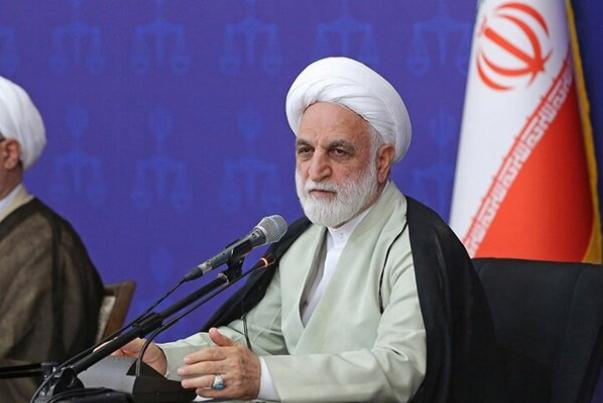
Mohammad-Bagher Ghalibaf Says Iran Won’t Sign US Peace Deal Until Rights Are Secured
Key Takeaways
- Ghalibaf cites national unity as backbone of Iran's negotiating stance.
- Pakistan mediation aims to finalize a US-Iran memorandum of understanding.
- Iran vows decisive retaliation and is ready for all scenarios if attacked.
Ghalibaf rejects US deal
Iran’s parliament speaker and key negotiator Mohammad-Bagher Ghalibaf said Tehran will not sign a peace deal with the United States until its rights are secured, asserting that Tehran “doesn’t trust ‘enemy promises’ and only objective results matter for the Islamic Republic.”
Ghalibaf said Iran is relying on national unity and pushing back the enemy in a “history-making” war, adding that the “most important factor in victory in this war is cohesion and unity,” while also tying the enemy’s retreat to “the unity of the Iranian people along with the country’s military power and defensive readiness.”

The remarks came as the Statesman said the US and Iran were closer to finalising a memorandum of understanding to extend the ceasefire and launch further negotiations on Iran’s nuclear programme, with Axios reporting a 60-day memorandum of understanding that Trump had not yet finally approved.
In parallel, Mehr News Agency quoted Ghalibaf warning that in a new phase of the conflict the enemy is attempting to compensate for military failures by exerting economic pressure and conducting media campaigns aimed at creating divisions and undermining national cohesion.
Mehr also reported that Ghalibaf stressed Iranian diplomats have “no trust in the statements or promises made by adversaries,” and said Tehran would fulfill commitments only in return for concrete gains.
Ceasefire talks and leverage
Radio Free Europe/Radio Liberty reported that CNN said a cease-fire that came into effect in early April allowed Iran to accelerate efforts to excavate underground missile facilities, with CNN citing that 50 of 69 tunnel entrances leading to 18 facilities have been reopened.
RFE/RL also reported that Iranian Foreign Minister Abbas Araqchi confirmed on May 31 that talks were ongoing but warned against “speculation,” saying Tehran couldn’t judge the negotiating process until there was a clear result.

In the same RFE/RL account, Iran’s chief negotiator Mohammad Baqer Qalibaf said there was “no trust” in US promises and that Tehran would only fulfill commitments after achieving “tangible results,” judging any agreement based on concrete outcomes.
The Statesman framed the diplomatic track as a 60-day memorandum of understanding to extend the ceasefire and launch further negotiations, while also noting that Trump had not yet given final approval and the Iranian side had not confirmed acceptance.
DW reported that German Foreign Minister Johann Wadephul called on Israel and Hezbollah to return to the ceasefire, warning that Israel’s “continued advance” into southern Lebanon was “a cause for great concern” and urging Israel to ensure attacks do not harm civilians or civilian infrastructure.
Unity messaging meets domestic friction
As Iran’s leadership emphasized unity in negotiations and conflict, Noor News Agency reported that the Head of the Judiciary, Hojjatoleslam Gholam-Hossein Mohseni-Eje'i, said the liberation of Khorramshahr is a manifestation of “unity,” “self-confidence,” and “resistance” as strategic pillars in modern Iran’s history.
Noor News also quoted Mohseni-Eje'i arguing that the division of society tempts enemies to intensify pressure, while national unity can enable Iran to overcome crises, as happened during the liberation of Khorramshahr when the country’s energies united in defense of sovereignty and national dignity.
In a separate domestic flashpoint after the ceasefire, الجزيرة نت reported that Tehran closed a cafe inside the historic Amari House in Kashan after authorities cited “two cases of 'unveiling'” inside the venue.
The same report said Hojatullah Nasahi Pour, the deputy head of tourism at Kashan's Cultural Heritage, Handicrafts and Tourism Organization, told ISNA that authorities issued the closure after reports of “two cases of 'unveiling'” and that reopening depends on the views of responsible bodies and the completion of legal procedures.
The report also quoted Iranian journalist Yashar Soltani linking the closure to the slogan “the unveiled sister is also our sister,” raising the question of why hijab law is applied selectively after wartime mobilization scenes.
More on Iran
Trump Still Decides on U.S.-Iran Peace Agreement After Edits on Strait of Hormuz
10 sources compared

Iran President Masoud Pezeshkian Submits Resignation Letter Citing IRGC Control, Report
12 sources compared

Trump Demands Tougher Iran Deal Language, Presses Nuclear and Strait of Hormuz Changes
14 sources compared

US Congress Expands US-Israel Military Integration Through Section 224 Defense Bill
21 sources compared