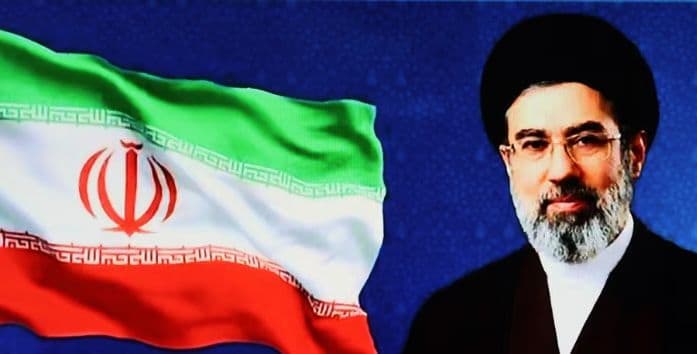
Mojtaba Khamenei Declares Himself Wartime Leader
Key Takeaways
- Mojtaba Khamenei issued his first public message.
- State and semi-independent media broadcast and promoted the message.
- Media cast him as a wartime leader, framing the statement as defiant.
Public wartime statement
Mojtaba Khamenei’s first public statement after days out of view was presented by state media as a wartime proclamation and has been used by Iranian outlets to cast him as a wartime leader.
“As Mojtaba Khamenei’s first public message was delivered Thursday following days of absence, Iranian newspapers and semi-independent websites moved to reinforce his image as a wartime leader”
Iran International reports that “As Mojtaba Khamenei’s first public message was delivered Thursday following days of absence, Iranian newspapers and semi-independent websites moved to reinforce his image as a wartime leader,” and notes the statement was “read aloud by a state television anchor over a still photograph of the new leader.”

Vocal.media similarly frames the first message as consequential, writing that “The first message issued in the name of Mojtaba Khamenei has set the tone for Iran’s leadership during a highly volatile moment in regional politics.”
Calls for resistance
The substance of the message emphasized continued military resistance and specifically positioned the Strait of Hormuz as leverage.
Iran International records that the statement “called for continued military resistance and said the Strait of Hormuz should remain a tool of pressure,” and quoted the message phrase: “The demand of the masses of the people is the continuation of effective and regret-inducing defense.”
Vocal.media also captures the defiant tenor, reporting that by “promising to continue the fight and warning of retaliation against its adversaries, the new leader has signaled that Iran is prepared for a prolonged confrontation.”
Domestic media pivot
Domestic coverage shifted rapidly from portraying Mojtaba through lineage and clerical credentials to foregrounding wartime leadership and ties to the Islamic Revolutionary Guard Corps (IRGC).
“As Mojtaba Khamenei’s first public message was delivered Thursday following days of absence, Iranian newspapers and semi-independent websites moved to reinforce his image as a wartime leader”
Iran International documents that “In the first two days after Ali Khamenei’s death on February 28, coverage largely emphasized Mojtaba’s religious credentials and lineage. By midweek, however, newspapers and websites had turned toward portraying him primarily as a wartime commander.”
It adds that Kayhan “referred to him as ‘the general of the revolution,’ highlighting his long-standing but largely hidden ties to the IRGC,” while some conservative outlets moved from the title ‘Agha’ to “Imam” or “Ayatollah.”
Vocal.media notes the state-driven messaging pivot and the effort to “reinforce his image as a wartime leader.”
Regional risks and impact
Observers and analysts have flagged regional and economic risks tied to the new leader’s defiant messaging, noting potential escalation and impacts on energy markets and diplomacy.
Vocal.media warns that “Even a single miscalculation could trigger further escalation and draw additional countries into the conflict,” and details how “Energy markets have reacted sharply to the tensions surrounding the Strait of Hormuz and the potential disruption of oil shipments from the Persian Gulf,” with “Oil prices [having] risen dramatically.”
Iran International frames the leadership messaging as part of a deliberate projection of authority during active conflict, writing that newspapers “had already begun shifting their focus from the mechanics of succession to projecting authority during an active conflict.”
Together these accounts underline both the domestic political messaging and the broader international stakes.
More on Iran
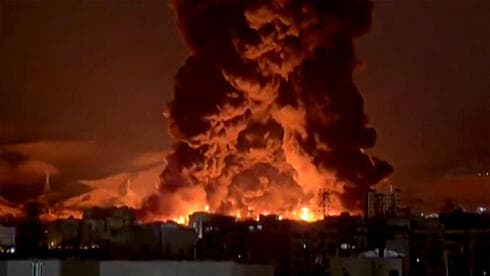
US obliterates military targets on Iran’s Kharg Island, Trump warns
13 sources compared
US Deploys About 2,500 Marines to Middle East After Iran Attacks Gulf Shipping
33 sources compared
FBI Warns of Iranian Drone Plot Based on Unverified Tip; California Says No Credible Threat
10 sources compared

White House Demands ABC Retract Report Claiming Iran Sought To Launch Drone Attacks On California
11 sources compared