
Monday briefing: How are Iranians abroad grappling with loss and uncertainty from afar?
Key Takeaways
- War has broken out in the Middle East.
- Conflict is broadening and spilling into neighbouring countries.
- Iranians abroad are grappling with loss and uncertainty from the war.
Middle East war coverage
The Guardian briefs that war has broken out in the Middle East.
It says that as the Iran war broadens and spills into neighbouring countries, mainstream coverage has focused on how the conflict began, where bombs have fallen and casualty figures, often at the expense of the voices of people directly affected.
The paper notes Iran's population is diverse.
It adds that Iran's diaspora is thought to number between two and four million.
For its newsletter the Guardian interviewed Dr Hosnieh Djafari-Marbini, an NHS consultant anaesthetist and local councillor in Oxford.
She says the days since Donald Trump and Benjamin Netanyahu launched the assault on Iran have felt like "living in a parallel universe."
Reports of bombings in Iran
Djafari-Marbini describes seeing streets she remembers from childhood being bombed as "heartbreaking."
She says her colleagues have been supportive.
Djafari-Marbini reports that "everyone I've spoken to thinks this war is madness."
She tells the Guardian the World Health Organization has confirmed attacks on health infrastructure in Iran and that schools have been hit.
The Guardian recounts the Shajareh Tayyebeh school bombing in Minab, noting the children killed came from very poor backgrounds.
Military investigators now believe it is likely that US forces were responsible for the strike, and the strike killed up to 168 people.
Diaspora reactions and polling
Reactions across the diaspora are far from uniform.
The article highlights that opinions about Ayatollah Ali Khamenei, described as the supreme leader who was killed in the strikes, are polarised.
It says Mojtaba Khamenei, the second son of the late supreme leader, has been chosen as his successor.
The Guardian reports many Iranians abroad reject both the regime and foreign intervention.
The Guardian records protests around the world, including in Indian-administered Kashmir and outside the White House and in New York’s Times Square.
A YouGov survey cited in the briefing found 49% of Britons opposed the attacks, 28% favoured them and 23% were undecided.
The survey noted partisan differences: Reform UK voters (58%) and a plurality of Tories (49%) back the strikes, while Labour (63%), Lib Dem (64%) and Green (70%) voters oppose them.
Iran internet blackout impacts
The briefing emphasises practical and political fears: human rights groups warn Iran's internet blackout could worsen the human toll.
State media have broadcast limited or contradictory information, and orders to flee are invisible to most civilians.
Djafari-Marbini says the greatest worry is what happens if the conflict deepens — millions could be displaced, and she fears the west 'doesn't particularly care about the country's long-term stability.'
The Guardian also flags wider impacts on energy and the economy: Great Britain has only two days of fossil gas stored and global oil prices have surged past the $100 a barrel mark.
More on Iran
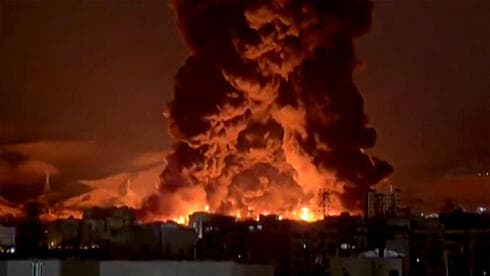
US obliterates military targets on Iran’s Kharg Island, Trump warns
13 sources compared
US Deploys About 2,500 Marines to Middle East After Iran Attacks Gulf Shipping
33 sources compared
FBI Warns of Iranian Drone Plot Based on Unverified Tip; California Says No Credible Threat
10 sources compared

White House Demands ABC Retract Report Claiming Iran Sought To Launch Drone Attacks On California
11 sources compared