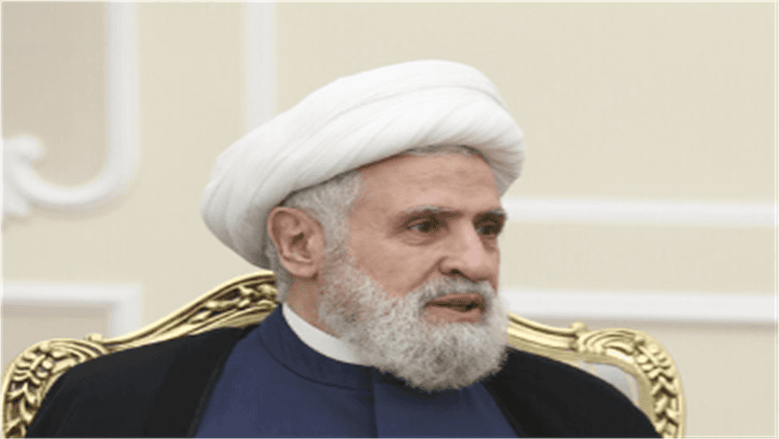
Nabih Berri Says Lebanon Rejects Israeli Lines, Warns Occupation Will Be Met With Resistance
Key Takeaways
- Israeli occupation in southern Lebanon continues; Lebanon vows resistance.
- Unconditional withdrawal demanded from the occupied areas.
- Hezbollah faces disarmament pressure and rejects negotiations with Israel.
Berri Rejects Restrictions
Lebanon’s Speaker of Parliament Nabih Berri said Lebanon rejects “any lines or restrictions imposed upon it in the south,” and he tied that position to what he described as the requirement that Israeli withdrawal be “unconditional.”
“Speaker of Parliament Nabih Berri affirmed Lebanon’s rejection of any lines or restrictions imposed upon it in the south, stressing that the Israeli withdrawal from the areas it has invaded must be unconditional”
Berri warned that continued occupation of areas Israel has invaded means “a permanent confrontation with the resistance,” and he said Lebanon “cannot tolerate losing even a single meter of its territory.”
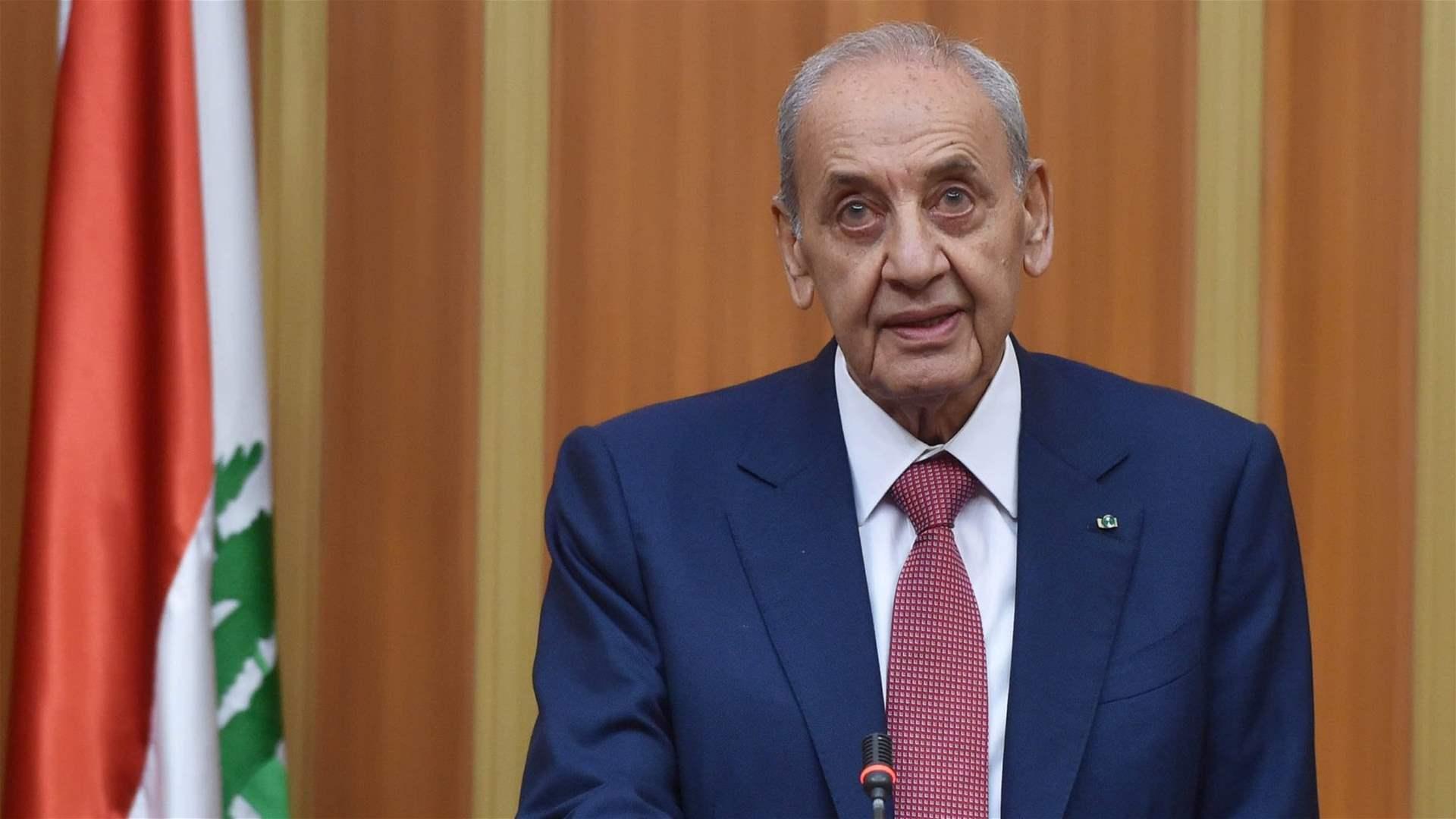
In the same statement, Berri said any insistence on remaining would be met with “a resistance response, as history has shown.”
He also urged displaced persons to “postpone their return to their villages,” citing “a lack of trust in the occupation’s behavior.”
At the same time, Berri emphasized that Lebanon “does not reject negotiations with Israel,” provided they are conducted “indirectly.”
The Al-Manar TV Lebanon account also placed the remarks alongside reporting that “Israeli occupation forces blew up the Imam Sports Complex in Mays Al-Jabal shortly after midnight,” and it referenced “burning ambulances belonging to the Islamic Risala Association.”
The same Al-Manar item added that “Preliminary Iranian delegation arrives in Islamabad as US delegation is already present,” linking Lebanon’s immediate political messaging to broader regional diplomacy.
Escalation and Displacement
The sources describe a rapid sequence of battlefield and political developments leading up to a planned meeting between Lebanese and Israeli ambassadors in the United States.
In the account from الوطَن (Al-Watan), Hezbollah announced “hours before the meeting” that it rejects negotiations with Israel, framing talks as “futile” and requiring “agreement and Lebanese consensus.”

The same source says the meeting was scheduled in Washington and names the Lebanese ambassador as Nadia Hamadeh Muawad and the Israeli ambassador as Yehiel Leiter.
It also reports that Burj Rahal in Tyre was hit by an Israeli airstrike, and it lists air strikes targeting towns including Khirba Salim, Majdal Salm, Barashit, Deir Antar, Ya’tur, and Kafra in the Bint Jbeil District, leaving “three Lebanese dead in the Deir Antar strike.”
The Al-Watan account further says five Israeli airstrikes hit Adshit-Nabatieh, with additional strikes in Qaqqa'iya al-Jisr, Sir al-Gharbiyah, and an Israeli strike hitting al-Tiri in the Bint Jbeil District.
It states that the Disaster Risk Management Unit at the Grand Serail reported “7,158 hostile acts by Israel,” with a daily toll of “34” dead and “174” injured, bringing totals to “2,089 dead and 6,762 wounded.”
The same report adds that “684 shelter centers have been opened,” with “140,914 displaced people in shelters” and “37,136 displaced families in shelters.”
In parallel, the Al-Manar item tied Lebanon’s immediate crisis to a separate incident in Mays Al-Jabal, saying Israeli forces “blew up the Imam Sports Complex” and that ambulances belonging to the Islamic Risala Association were burning.
Hezbollah’s Rejection and Retaliatory Fire
Hezbollah’s leadership framed the rejection of negotiations as a refusal to accept what it described as submission and “gratuitous concessions.”
“Ibrahim Al-Amine, December 15, 2025”
In the Al-Watan account, Naim Qassem said: “We reject negotiations with Israel because they are futile and require agreement and Lebanese consensus,” and he added that “negotiating with Israel is Lebanon's submission.”
Qassem also pointed to what he described as Israel’s failure to implement “any clause of the 15-month ceasefire,” and he said “the Israeli objectives are clear: to eliminate any strength Lebanon possesses.”
The same source says Qassem argued that “the only path to Lebanon's sovereignty is to stop the aggression completely, withdraw immediately, and rebuild,” and it quotes him saying: “We stood firm against the American-Israeli aggression on Lebanon; we will not surrender and we will confront the Israeli aggression to the last breath.”
Before the Washington meeting, the Al-Watan account reports Hezbollah fighters targeted settlements including Kiryat Shmona and Moragliyot and “infrastructure belonging to the Israeli occupation army in the Yesod HaMa’ala settlement with rocket salvos.”
It also says Hezbollah announced targeting “newly established artillery positions of the Israeli army in the town of Al Bayada with a rocket salvo,” and it describes rocket salvos aimed at “gatherings of armored vehicles and soldiers of the occupation army in the Al Aqaba area in Ain Ebel with a rocket salvo.”
The source further states that Hezbollah announced targeting “a gathering of Israeli army soldiers east of Bint Jbeil with a high-precision drone,” and it describes additional rocket salvos around Tal Shamarin and the “Liberation Triangle in Bint Jbeil.”
In the background of these statements, the Al-Manar account’s Berri remarks emphasized that Lebanon would not accept restrictions and that occupation would trigger “a resistance response,” reinforcing the political language used alongside the battlefield claims.
Arms, Politics, and Internal Pressure
Beyond the immediate battlefield, RFI describes an intensifying political push inside Lebanon for Hezbollah to disarm, portraying a shift in the internal balance after major regional events.
RFI says Hezbollah has been isolated on weapons since the creation of its armed branch in 1982 following the Israeli invasion that resulted in “the occupation of Beyrouth and of the quart du territoire libanais.”
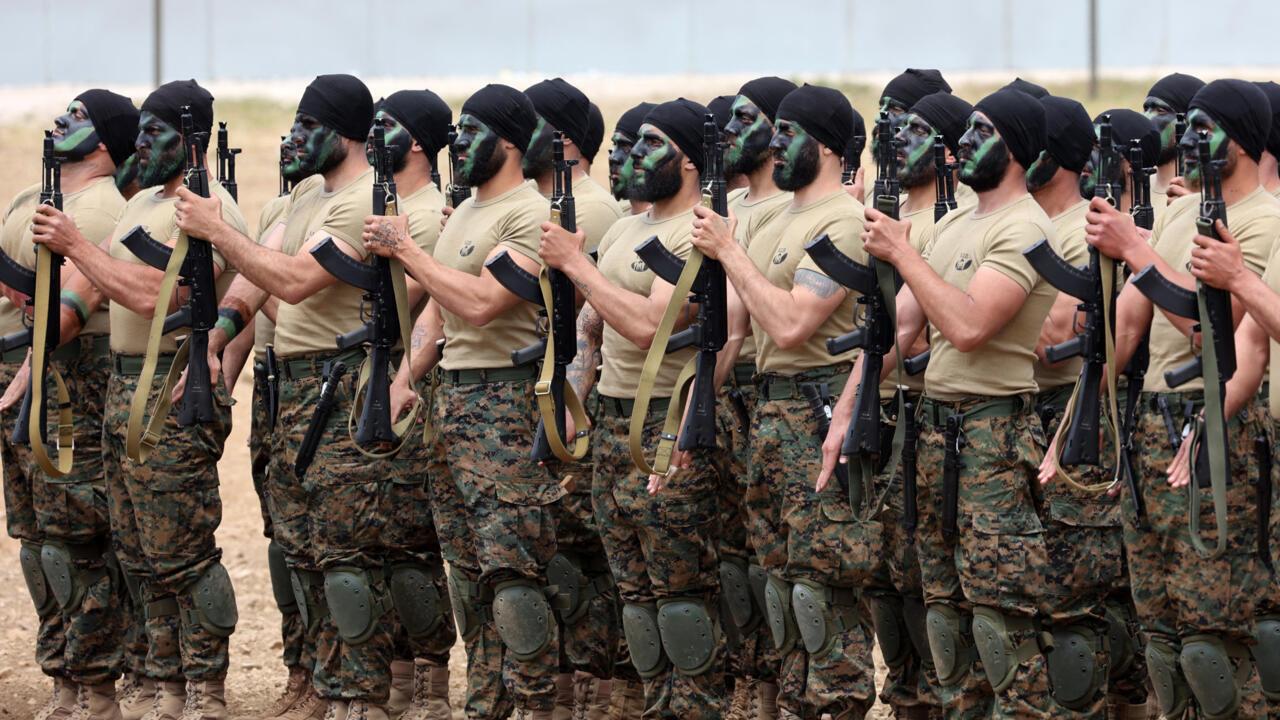
It adds that Hezbollah was the only party excluded from the disarmament process of militias after the civil war ended in 1990, and it says Hezbollah’s action against the Israeli occupation army was covered by the Taëf National Accord and ministerial declarations referencing the right to resist an “occupation étrangère.”
RFI describes how distrust grew after 2005, citing the assassination of ex-Prime Minister Rafic Hariri on “14 février 2005,” and it says some Lebanese opposed the existence of an armed group outside state control.
The article then argues that “Tout a changé en janvier 2025,” linking the change to Hezbollah’s “revers essuyés” in the last war with Israel from “8 octobre 2023-27 novembre 2024” and to the “chute du régime de Bachar el-Assad, en décembre 2024.”
RFI says the new balance produced “l’émergence d’un pouvoir moins enclin à couvrir politiquement le Hezbollah,” and it notes that for the first time since 1990, a presidential inauguration speech did not mention the right to resist militarily.
It quotes Joseph Aoun’s parliamentary speech on “le monopole de l’État sur les armes” and says Prime Minister Nawaf Salam is known for positions hostile to Hezbollah, which he considers an extension of Iranian diplomacy.
RFI also names Walid Joumblatt as an example of figures leaving a “zone grise” to call for disarmament, and it reports that Joumblatt defended “le monopole de l’État sur les armes” and called for Hezbollah to hand over its arsenal to official authorities.
Long War and Future Tests
Contretemps frames the Lebanon conflict as part of a longer colonial struggle, placing the current fighting within a timeline that begins with the creation of Israel in 1948 and extends through later wars and invasions.
“Hours before the meeting, Hezbollah rejects negotiations with Israel: We will not offer free concessions”
In an interview conducted on “28 octobre 2024,” Karim Makdisi says Israeli wars in Palestine and Lebanon are part of what Rashid Khalidi called the “guerre de cent ans,” describing it as “une guerre coloniale menée dans l’ombre de l’empire britannique puis étatsunien, de Balfour à Trump et, maintenant, nous pouvons ajouter Biden.”
Makdisi argues that the “génocide de Gaza” is an extension of what he calls “l’élan et de l’histoire sionistes visant à s’installer en expulsant les Palestiniens de leur terre,” and he links the “invasion du Liban” to historical desires for a “grand Israël.”
He also situates Hezbollah’s emergence by saying the interview traces “la genèse du Hezbollah contre l’occupation israélienne ainsi que sa trajectoire,” and he points to a statement by Bezalel Smotrich, quoting: « Nous voulons annexer le Liban, la Syrie, l’Irak, l’Égypte et l’Arabie saoudite ».
The interview’s historical framing is echoed in ISM-France’s analysis of political pressure and normalization, which says Israel’s allies are lifting hesitations about relations with Tel Aviv and that efforts are underway “to consolidate normalization and revise laws criminalizing any contact with Israel.”
ISM-France says Hezbollah avoids internal confrontation but that “Pressure is growing” as influential forces seek to satisfy “American and Saudi demands,” and it describes a judiciary that is “paralyzed.”
It also warns that Israel remains focused on Hezbollah and that Israeli intelligence services “seek to anticipate its next phase,” while “uncertainty prevails.”
Looking ahead, ISM-France says the “principal” strategic reason Hezbollah does not abandon the current government is the “imminent decision on holding parliamentary elections in May,” describing these elections as “a crucial test.”
In the same piece, it notes that American-Saudi pressure is intensifying to block figures willing to cooperate electorally with Hezbollah, “particularly among Shiite figures close to the Parliament Speaker, Nabih Berri.”
Together, the sources portray a conflict that is both immediate—marked by air strikes, rocket salvos, and displacement—and also contested through long-term political and legal battles over arms, negotiations, and normalization.
More on Lebanon
Emmanuel Macron Reaffirms Lebanon Ceasefire And Sovereignty With Prime Minister Nawaf Salam In Paris
13 sources compared

Israeli Soldiers Damage Jesus Statue in Debel, Lebanon, After Photo Verified
29 sources compared

Israeli Forces Destroy Civilian Infrastructure in Southern Lebanon, Detonate Imam Moussa Al-Sadr Sports Complex
17 sources compared

Israeli Soldier Vandalizes Jesus Statue in Debel, Lebanon, Netanyahu Orders Criminal Probe
12 sources compared