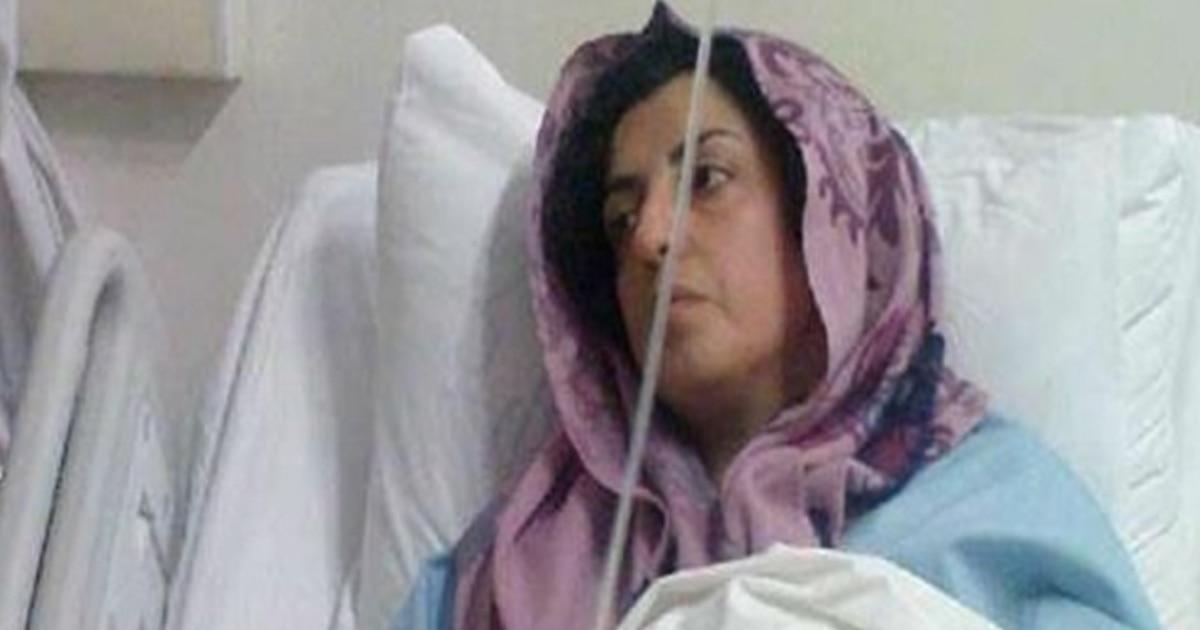
Narges Mohammadi Rushed To Hospital In Zanjan After Losing Consciousness Twice In Custody
Key Takeaways
- Transferred from Zanjan Prison to hospital after health deteriorated.
- Lost consciousness twice in custody before medical transfer.
- Hospitalisation occurred in early May 2026.
Fainting in custody
Imprisoned Nobel Peace Prize laureate Narges Mohammadi was rushed to hospital in Zanjan after losing consciousness twice in custody, according to multiple reports describing her transfer from prison medical care to a hospital setting.
“Iranian human rights activist and 2023 Nobel Peace Prize laureate Narges Mohammadi has been transferred from prison to a hospital due to a sharp decline in her health”
The Eastleigh Voice said Mohammadi was taken to a local hospital in Zanjan after reportedly losing consciousness twice in a day in custody, with her foundation citing “dangerous blood pressure, nausea, and worsening heart-related conditions.”

It reported that she was first moved to the Zanjan Central Prison medical unit for emergency intravenous treatment, after her family said she had days of dangerously high blood pressure and severe nausea, and that she initially refused transfer to local medical facilities because she believed Zanjan lacked specialised equipment and that treatment should be carried out in Tehran under her own medical team.
The Eastleigh Voice added that after a second episode of fainting later in the day, prison doctors determined her condition could not be managed within the facility’s clinic and ordered her emergency transfer to hospital, describing the timing as “approximately 5:00 PM local time.”
Al Jazeera similarly said Mohammadi had two episodes of complete loss of consciousness and a severe cardiac crisis, and that “This transfer was done as an unavoidable necessity after prison doctors determined her condition could not be managed on-site.”
Al Jazeera also stated that earlier on Friday she had fainted twice in prison in Zanjan in northwestern Iran, and that she was believed to have suffered a heart attack in late March, according to her lawyers.
In the same account, Al Jazeera described Mohammadi as 53 and said she had been imprisoned since December 12 after she was arrested during a visit to the eastern Iranian city of Mashhad.
Medical details and history
The reports tie Mohammadi’s hospital transfer to a longer deterioration described in medical terms, including fluctuating blood pressure, acute chest pain, and weight loss, alongside a history of heart procedures.
The Eastleigh Voice said her condition had deteriorated over months in detention, describing “persistent denial of specialised medical care,” and it specified that her blood pressure had been fluctuating dangerously in recent weeks between 150/100 and 170/110 with little response to medication.

It also said she had significant weight loss of around 20 kilograms and recurring acute chest pain, and that she was believed to have suffered a heart attack in March, with repeated vomiting before fainting.
The Eastleigh Voice further stated that two independent heart specialists in Zanjan, also cited by the foundation, said her treatment was not possible in any hospital in the city given the complexity of her condition and the need for advanced facilities available in Tehran.
Al Jazeera echoed the heart-focused framing, saying she was believed to have suffered a heart attack in late March and that her foundation said the transfer followed prison doctors’ determination that her condition could not be managed on-site.
In a separate account, Iran International said Mohammadi was moved by ambulance to a local hospital in Zanjan after prison doctors concluded her condition could no longer be managed inside the prison, and it said she was admitted to the coronary care unit, according to her lawyer Mostafa Nili.
The same report added that a neurologist ordered urgent hospitalization, saying her neurological condition had become the immediate clinical priority despite her serious cardiac issues, and it said specialists had recommended transfer to Pars Hospital in Tehran where her own medical team could treat her.
Family, foundation, and lawyer
Across the accounts, Mohammadi’s family, her foundation, and her legal representatives describe the transfer as the result of worsening health and medical constraints in custody, while also emphasizing that she had sought care in Tehran.
“Narges Mohammadi, Vice President of the Center for the Defense of Human Rights, who is now serving her sentence in prison, was transferred to a hospital and admitted on Monday following a convulsion”
The Eastleigh Voice quoted the foundation’s statement about the sequence of events, including that “For hours, authorities kept her in the unstable environment of the prison clinic while refusing the transfer to Tehran,” before prison doctors ordered emergency evacuation after she fainted a second time.
It also included the foundation’s call for release, saying, “We call for her immediate and unconditional release and transfer to the care of her specialised medical team in Tehran and the release of all political prisoners currently held in Iranian custody.”
Iran International described lawyer Mostafa Nili’s account of Mohammadi’s refusal to be transferred initially to a Zanjan hospital, citing warnings from two cardiologists that her history of “three angiographies and stent placement” made treatment in Zanjan dangerous and required care by her own medical team.
It also said Nili described her first fainting after a sudden drop in blood pressure and that she was given IV fluids and anti-nausea medication in the prison clinic.
The same report said a neurologist then ordered urgent hospitalization, and it described the foundation’s view that the transfer was a “last-minute” step that may have come too late.
Mezha.net, meanwhile, framed the move as a response to “catastrophic deterioration of health,” attributing the phrase to the Narges Foundation and saying Mohammadi was transferred from prison in Zanjan to a local hospital in the Iranian province.
Sentencing and arrest timeline
The hospital transfer is reported against a backdrop of Mohammadi’s detention timeline, including her arrest in December and subsequent sentencing, with multiple outlets describing how her imprisonment has continued despite health concerns.
Al Jazeera said Mohammadi has been imprisoned since December 12 after she was arrested during a visit to Mashhad, and it described her as 53, with her imprisonment linked to the period after her arrest.

It also said that in February she was sentenced to more than seven years in prison, and that her lawyer said six years of that sentence was for the accusation of “gathering and collusion to commit crimes.”
The Eastleigh Voice provided additional sentencing detail, saying that before her arrest on December 12, Mohammadi was serving a prison sentence of 13 years and nine months on convictions related to alleged collusion against state security and propaganda against the Iranian government, and that she had been temporarily released from prison in late 2024 on health grounds before being re-arrested last year.
The Eastleigh Voice added that Mohammadi was later sentenced to an additional seven years in prison in February 2026.
Iran International similarly said Mohammadi was re-arrested on December 12, 2025 and sentenced on February 8, 2026 to an additional seven and a half years in prison, bringing her cumulative sentence to more than 18 years.
In the same report, Iran International said Zanjan’s forensic medical commission had recommended a one-month suspension of her sentence for medical treatment, but prosecutors made it contingent on approval from Tehran.
Competing narratives and stakes
The accounts also diverge in emphasis, with some focusing on medical necessity and others on alleged mistreatment and the broader implications for Mohammadi’s life and rights.
“✕ Home News Analysis Agro-Forestry Art & Culture Technology Economy & Business Education Energy & Extractives Politics Law & Governance Health Science & Environment Social & Gender Sports Transport Urban Development WASH Research LogIn/SignUp Close the sidebar Urgent Hospitalization for Iran's Imprisoned Nobel Laureate Narges Mohammadi Narges Mohammadi, Iran's Nobel Peace Prize laureate, was urgently transferred to a hospital following a severe health deterioration after medical neglect in prison”
Al Jazeera described “life-threatening mistreatment,” saying the Nobel committee condemned the “ongoing life-threatening mistreatment” of Mohammadi in a statement in February and noting that the Iranian government had not commented on the alleged attack described by her family.

It also reported that her family said her health was worsening in prison, “in part because of an alleged beating she had endured during her arrest in December,” and it quoted that multiple men hit and kicked her in her side, head and neck.
The Eastleigh Voice, in contrast, emphasized the medical denial narrative, stating the foundation described “persistent denial of specialised medical care,” and it framed the transfer as a response to a condition that could not be managed on-site.
It also said the foundation described her continued imprisonment under her current medical condition as posing a direct threat to her life, and it repeated its demand for “immediate and unconditional release.”
Iran International added a procedural detail about sentence suspension, saying prosecutors made the recommended one-month suspension contingent on approval from Tehran, and it described the transfer as a “last-minute” step that may have come too late.
Mezha.net said international advocates were preparing urgent appeals as her condition worsens, while Devdiscourse framed the transfer as coming after “140 days of systemic medical neglect since her arrest last December.”
More on Iran
May Day Protests Worldwide Demand Peace, Higher Wages Amid Iran War Energy Costs
16 sources compared

Israel Air Force Commander Tomer Bar Warns No Iran Nuclear Deal Would Be Major Failure
12 sources compared

U.S. Navy Awards Domino Data Lab Nearly $100 Million to Detect Iranian Mines in Strait of Hormuz
10 sources compared

Trump Tells Congress Iran Hostilities Have Terminated Ahead of May 1 War Powers Deadline
20 sources compared