Entertainment15 January, 20262 min read
NASA Flies Four Astronauts Home in First ISS Medical Evacuation, Leaves Three Crew Members Aboard
This article is an automated aggregation of coverage from news outlets. Our editorials offer in-depth analysis curated by the NewsCord team.
NASA evacuated four Crew-11 astronauts from the ISS due to a crew medical issue. An unnamed crew member required medical care; NASA called the condition non-emergency and stable.

9 outlets told this the same way.
Outlets did split on RJ Mitte Dies At 34 In Brownsville, Texas, Representatives Say Suicide →
Crew-11 medical evacuation
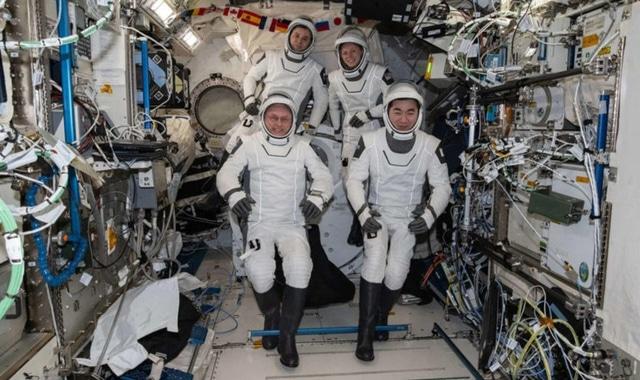
NASA and SpaceX returned four Crew-11 astronauts to Earth early this week after an out-of-schedule undocking and Pacific splashdown. The four — Zena Cardman, outgoing commander Mike Fincke, Japan's Kimiya Yui and Russia's Oleg Platonov — left the International Space Station and splashed down off California after their planned mission was cut short by more than a month.
“NASA carried out its first-ever medical evacuation from the International Space Station, returning four crew members — Zena Cardman, outgoing commander Mike Fincke (U.S.), Kimiya Yui (Japan) and Oleg Platonov (Russia) — who undocked Wednesday and splashed down Thursday in the Pacific near San Diego.”
Recovery teams and medical personnel were aboard the recovery ship. Officials described the move as the agency's first-ever medical evacuation connected to the ISS crew rotation, and the spacecraft was scheduled to splash down near San Diego at about 08:40 UTC on Thursday following a nighttime undocking.

Crew medical return
NASA and mission partners said the early return followed an illness affecting an unnamed crew member. Officials have not publicly identified the person or given medical details, saying only that the astronaut is "stable, safe and well cared for" and will undergo full diagnostics on the ground.
Flight operations had already canceled a planned spacewalk after the health concern emerged, and medical staff were standing by on the recovery vessel when the Dragon splashed down. Agencies stressed patient privacy and that the return was deliberate so the crew member could receive full on-ground medical assessment.

Station crew and operations
The early return has immediate operational consequences aboard the station: it reduced the on-orbit crew complement to one U.S. and two Russian astronauts and led NASA to suspend spacewalks that require two-person internal backup. NASA and SpaceX are accelerating a replacement four-person launch from Florida, with agencies targeting mid-February for the next Crew-11 relief flight. Until that launch arrives, the station will operate with a smaller team, and some activities, particularly external or multi-person EVAs, will remain on hold for safety.
“The move leaves one U.S. and two Russian crew members on the station roughly 1½ months into an eight‑month Soyuz‑launched mission.”
Reporting on ISS medical evacuation
Reporting differs on how historically significant the event is and on the timeframe used to describe that significance. Several outlets call this the first medical evacuation associated with the ISS or with NASA human spaceflight: ScienceAlert and Pragativadi call it NASA’s "first medical evacuation," South China Morning Post frames it as "the first medical evacuation in the ISS’s history," and Mid-day uses the phrase "first medical evacuation in human spaceflight history." By contrast, Bhaskar English highlights a different numerical frame—"in 25 years of continuous ISS operations, the station has never before sent someone home early for medical reasons"—which focuses on ISS operational history rather than the broader span of human spaceflight.
Media framing of NASA recovery
Outlets vary in the context they add beyond immediate facts: Bhaskar English emphasizes the science mission background—studies of bones, muscles, heart health, sleep, and eyesight relevant to deep-space travel. Mid-day frames the operation as controlled, routine, and focused on safety, while South China Morning Post and ScienceAlert highlight NASA's wording about stability and a non-emergency status.
“NASA called the decision — its first medical evacuation in human spaceflight history — safer than keeping the sick crewmember in orbit.”
Pragativadi highlights operational steps such as medical teams on the recovery ship and the planned accelerated launch. This variety reflects editorial choices: some outlets provide operational detail and programmatic context, while others center official statements and timing.