
NASA's Artemis II Astronauts Splash Down Safely After Historic Lunar Orbit
Key Takeaways
- 10-day mission around the Moon achieved historic farthest distance from Earth.
- Splashdown occurred in the Pacific Ocean off California's coast.
- First crewed lunar flyby since the Apollo era.
Historic Splashdown
NASA's Artemis II mission successfully returned to Earth on April 10, 2026, with the Orion spacecraft splashing down in the Pacific Ocean off the coast of California.
The four astronauts aboard were NASA's Reid Wiseman, Victor Glover, Christina Koch, and Canadian astronaut Jeremy Hansen.

The splashdown occurred at 5:07pm local time after a high-speed re-entry through Earth's atmosphere.
The capsule endured a 13-minute descent with exterior temperatures climbing to about 2,760 degrees Celsius.
Communication was briefly cut off due to plasma interference but was restored as parachutes deployed.
Recovery teams quickly secured the capsule and extracted the crew, who reported minor communication issues but were otherwise in good condition.
Record-Breaking Journey
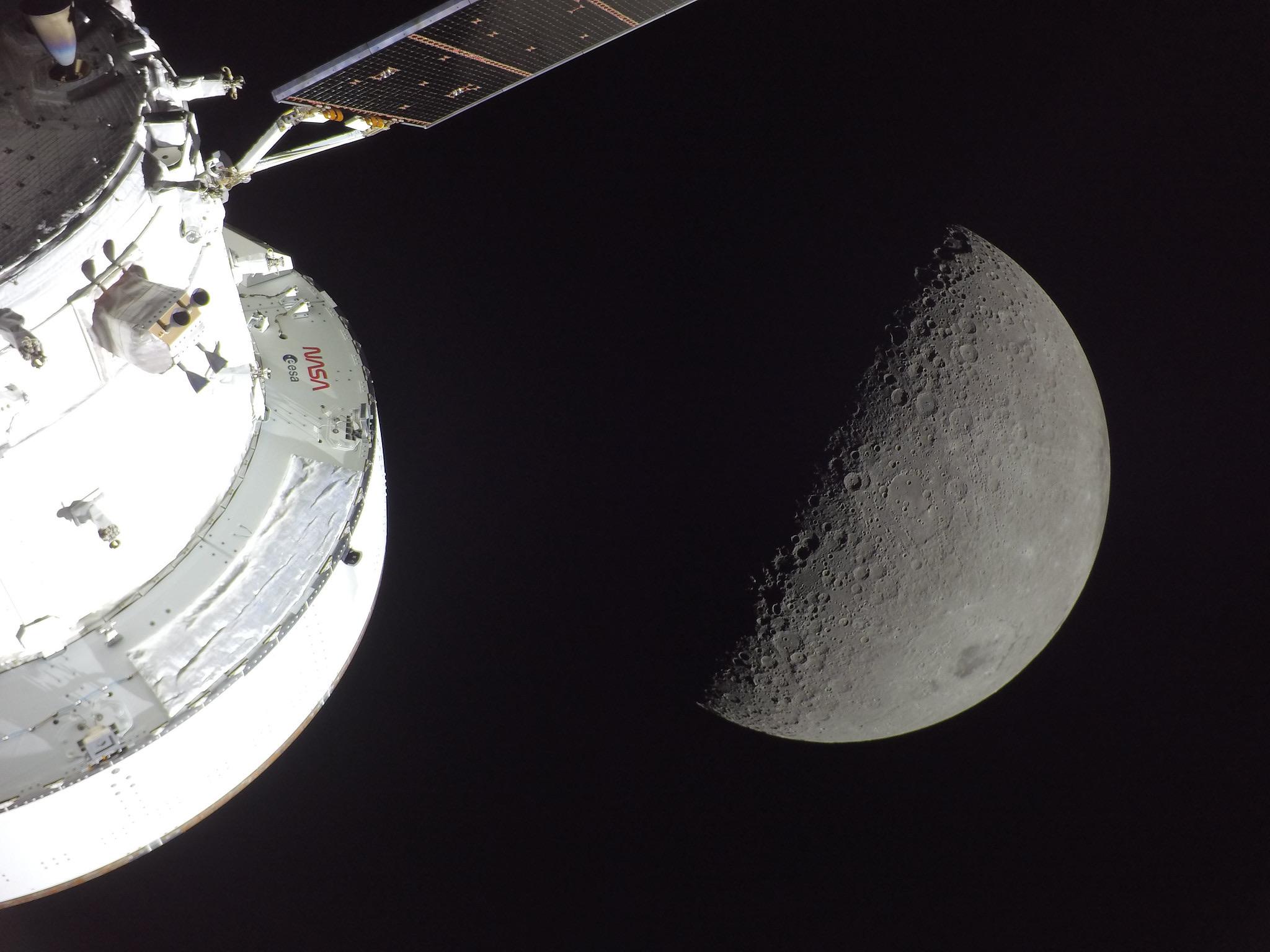
The Artemis II crew embarked on a 10-day journey that took them farther from Earth than any humans since the Apollo era.
They surpassed the distance record set by Apollo 13 by 6,606 kilometers.

Glover became the first person of color to travel around the moon, Koch the first woman, and Hansen the first non-American.
The crew witnessed a solar eclipse and meteorite impacts.
They named a lunar feature Carroll Crater in honor of Wiseman's late wife.
The mission was widely seen as a critical test flight for future Moon missions.
Human Moments and Challenges
The mission offered an unprecedented level of intimacy with the astronauts.
They shared experiences including toilet troubles that required Koch to act as the space plumber.
The crew worked in a small cabin where they bumped into each other 100% of the time.
The mission tested Orion's capabilities in real space conditions.
The return included a brief communication blackout during re-entry.
NASA's success was hailed as a triumph of engineering and human exploration.
Global Collaboration and Industry
The Artemis II mission was a product of extensive collaboration across NASA, international partners, and private industry.
Canadian astronaut Jeremy Hansen marked the first non-American to travel around the moon.
Syensqo manufactured the specialized ablative materials used for the solid rocket boosters.
The success of Artemis II sets the stage for a sustained human presence on the moon.
NASA is planning to announce the crew for Artemis III and aiming for a landing in 2028.
More on Technology and Science

France Ditches Microsoft Windows for Linux to Regain Digital Sovereignty
14 sources compared

NASA's Artemis II Faces High-Risk Reentry With Flawed Heat Shield Design
19 sources compared

RSPB Urges Gardeners to Stop Feeding Birds May to October to Prevent Disease
14 sources compared

Iran-Linked Hackers Leak 19,000 Files From Ex-IDF Chief Herzi Halevi's Phone
12 sources compared