Full story
Artemis II Success
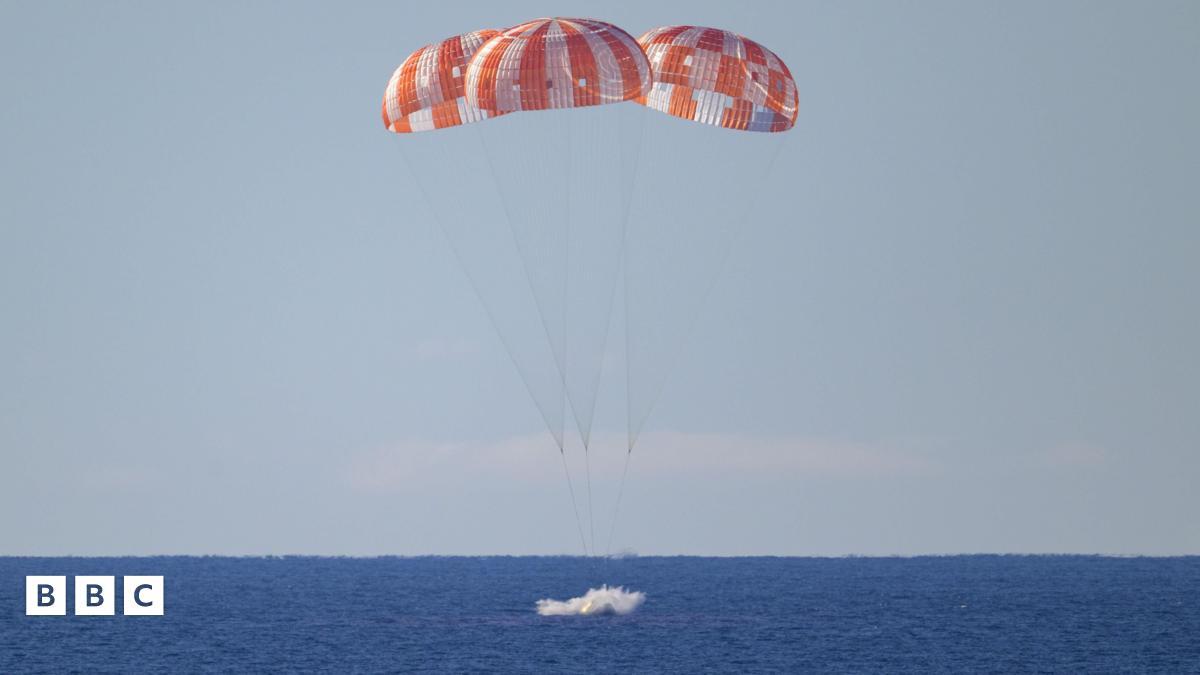
NASA's Artemis II mission marked a historic milestone as the Orion capsule carried four astronauts farther from Earth than any humans in history.
The mission was watched live by 18 million Americans.

Artemis II embodied a technological leap with the Space Launch System, Orion capsule, and future lunar landing systems designed for long-term presence.
The Moon is no longer just a destination but a testing ground for future Mars missions.
The mission carried a political message of more inclusive exploration, planning to send the first woman and the first person of color to the Moon.
NASA aims to have one crewed lunar landing per year beginning in 2028.
Lander Delays
NASA needs a lunar lander to get boots on the surface.
SpaceX and Blue Origin are both well behind schedule.

SpaceX's lunar Starship is at least two years behind its original delivery date.
Blue Origin's Blue Moon is at least eight months late.
The new landers must carry significant infrastructure, requiring enormous amounts of propellant.
The next Artemis mission is scheduled for mid-2027, a target many analysts consider a very steep ask.
Cost and Criticism
Artemis II's onboard toilet malfunctioned and cost a reported $23 million.
Building and launching a single Orion crew capsule costs around $1 billion.
Each flight of Artemis I through IV costs around $4.1 billion.
The projected estimate for Artemis up to 2025 is $93 billion.
NASA has received more than $1.9 trillion in cumulative funding since 1958.
Congress allocated $24.4 billion for 2026, but the budget request for 2027 is a much reduced $18.8 billion.
China's Lunar Ambitions
China has quietly been making large strides toward putting its astronauts on the moon.
On February 11, a single-stage version of China's Long March 10 rocket topped with a Mengzhou spacecraft lifted off.
China is progressing on all necessary hardware to reach the moon, with a stated goal of a crewed landing before 2030.
China has already tested landing hardware, performing propulsive lunar landing and launch tests in simulated moon gravity.
China plans to use two Long March 10 rockets for a lunar mission.
Experts note China's more centralized approach may give it an advantage over the U.S.