NASA Artemis II Astronauts Splash Down Safely After Historic Moon Orbit
Key Takeaways
- Orion splashed down in the Pacific off San Diego at 8:07 p.m. ET.
- Ten-day Artemis II mission circled the Moon, achieving the farthest distance from Earth.
- Crew consisted of Reid Wiseman, Victor Glover, Christina Koch, and Canadian Jeremy Hansen.
Historic Return
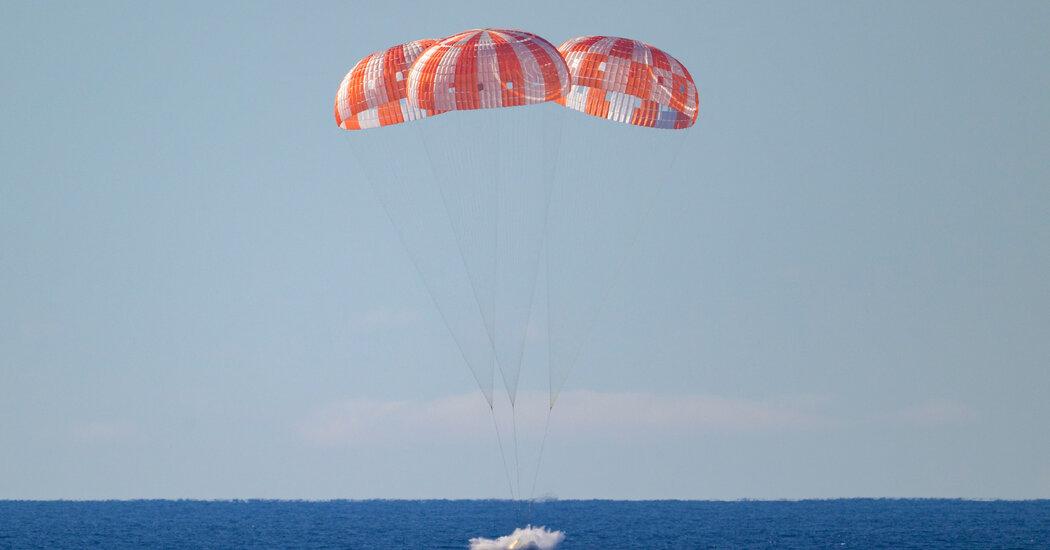
NASA's Artemis II mission concluded with a successful splashdown in the Pacific Ocean off the coast of San Diego.
The Orion spacecraft endured a dramatic 13-minute re-entry, with exterior temperatures climbing to about 2,760 degrees Celsius.

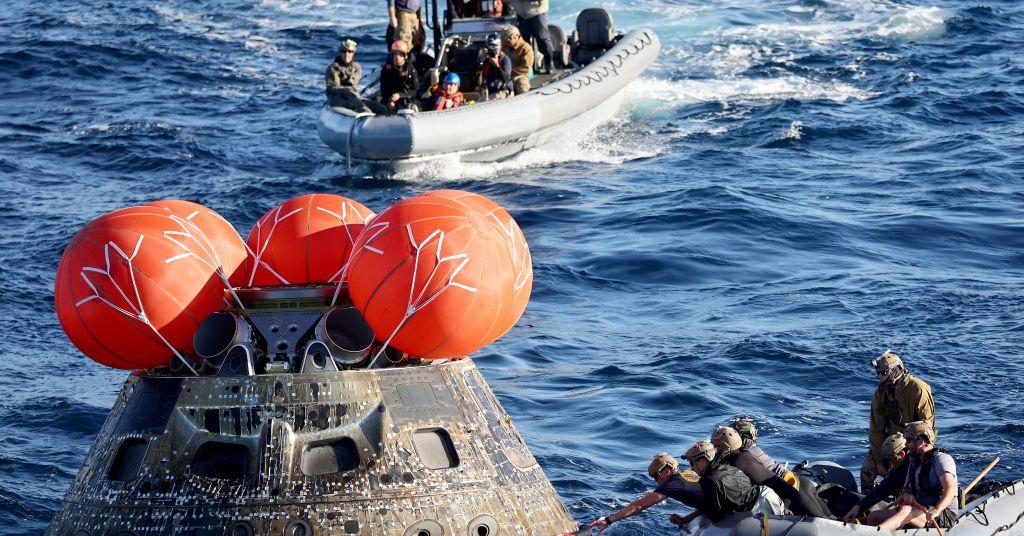
The four astronauts onboard were extracted and reported in good condition.
The mission set a new record for the farthest distance humans have traveled from Earth, reaching 252,756 miles.
NASA Administrator Jared Isaacman called the crew ambassadors for humanity.
Re-entry Challenges
The re-entry was the riskiest part of the mission, with the Orion capsule entering Earth's atmosphere at over 40,000 kilometers per hour.
The heat shield was a focus of concern after being severely damaged during the first unmanned Artemis mission.

Communications were lost for six minutes due to a plasma layer formed by ionized air.
Recovery teams used a sequence of parachutes and airbags to slow and stabilize the capsule before splashdown.
The capsule hit its flight path angle target within 0.4% and splashed down less than a mile from its target.
Historic Firsts and Future Plans
Victor Glover became the first person of color to travel around the moon.
“NASA’s Artemis II astronauts have returned safely to Earth, completing the first crewed mission to travel around the Moon in more than 50 years”
Christina Koch was the first woman to travel around the moon.
Jeremy Hansen was the first non-American to travel around the moon.
The crew documented lunar surface features never seen by human eyes.
Artemis II is widely seen as a critical test flight for future Moon missions.
Public and Political Reaction
More than 20 million people worldwide watched NASA's livestream of the return.
President Donald Trump congratulated the crew.

The crew made their first public appearance at the Johnson Space Center in Houston.
Despite technical issues, the crew shrugged them off as necessary sacrifices.
NASA officials emphasized that the path to the lunar surface is open.
More on Technology and Science

NASA Completes Artemis II Crewed Lunar Flyby, Prepares for Artemis III Crew Announcement
11 sources compared

NASA's Artemis II Crew Returns Safely After Record-Breaking 10-Day Moon Mission
25 sources compared

Eamonn Holmes Recovering in Hospital After Suffering Stroke
11 sources compared
Artemis II Crew Completes Historic Lunar Orbit, Canadian Astronaut Makes Space History
25 sources compared