Protests12 January, 20262 min read
Nearly 15,000 New York City Nurses Stage Largest Strike in City History Against Mount Sinai, Montefiore and NewYork-Presbyterian Over Unsafe Staffing and Benefit Rollbacks
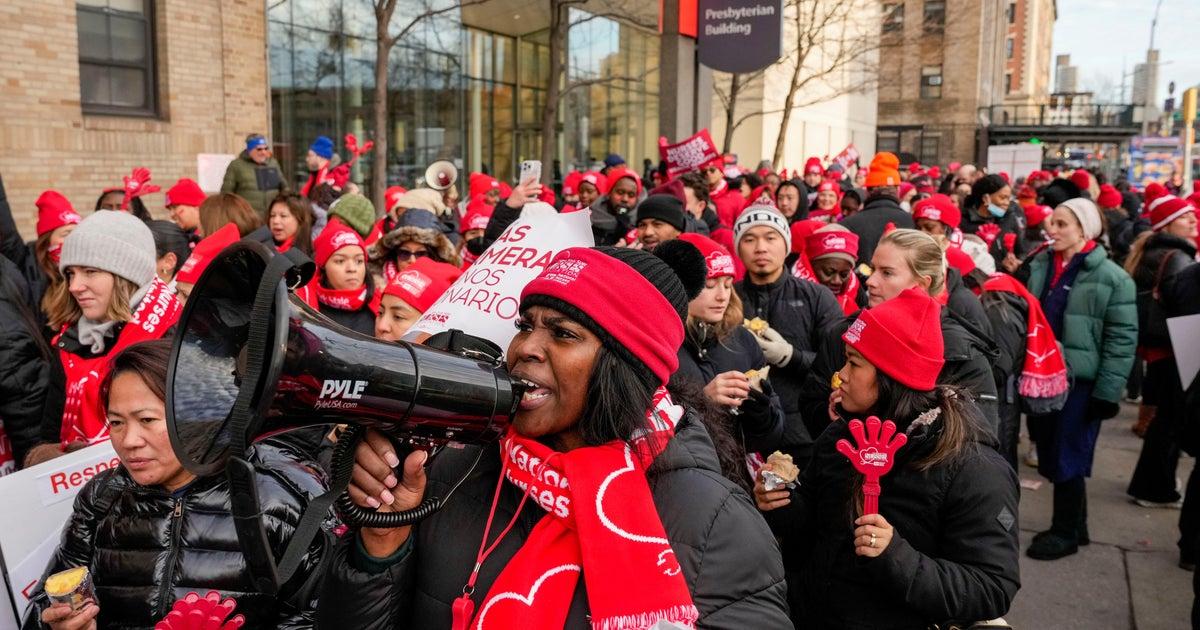
Nearly 15,000 nurses at Mount Sinai, Montefiore, and NewYork-Presbyterian walked off Monday. Nurses demanded safer staffing levels and opposed benefit rollbacks and pay cuts.

23 outlets told this the same way.
Outlets did split on France Suspends Police Stun Grenades at High School Protests After 15-Year-Old Loses Hand →
New York Nurses Strike
Nearly 15,000 nurses walked off the job Monday in what union leaders called the largest nurses' strike in New York City history. They staged coordinated walkouts at Mount Sinai (including Morningside and West), Montefiore, and NewYork-Presbyterian after months of stalled contract talks.
“About 15,000 nurses — the largest nurses' strike in New York City history — walked off the job Monday after union and hospital negotiators failed to reach a tentative agreement.”
The New York State Nurses Association (NYSNA) said the strike followed failed negotiations and framed the action as necessary to press core demands. Reporting described the scale as about 15,000 nurses, noted pickets began early Monday at different campuses, and said hospitals and the union remain sharply at odds as public officials reacted to the walkout.

Nurses' safety and staffing
The union framed its demands around three core issues: safe staffing ratios, protections from workplace violence, and preserving nurses’ health-care benefits. NYSNA leaders said hospitals refused to make meaningful progress on those items and warned of rollbacks to staffing standards won after previous negotiations.
Reporting linked the strike to heavy workloads and ongoing safety concerns inside hospitals. Some nurses described 'moral injury' from understaffed units and overwhelmed NICUs.

Hospital pushback on union demands
Hospital systems pushed back sharply, calling many union proposals unaffordable and saying they had contingency plans to maintain patient care. They characterized some demands as 'extreme' or 'reckless' and cited multi-billion-dollar cost estimates provided by management. Hospitals also reported hiring large numbers of temporary or 'travel' nurses to cover shifts, with some systems saying they had over a thousand qualified replacements ready to keep services open.
“Hospitals pushed back, with Mount Sinai saying the union refused to budge on 'extreme economic demands' and that it has about 1,400 qualified nurses to maintain patient care.”
Responses to nurse walkout
The walkout prompted swift political and operational responses. Mayor Zohran Mamdani and other elected officials publicly supported nurses on picket lines. Governor Kathy Hochul declared a state or 'disaster' emergency to allow outside clinicians and other measures to preserve care.
Officials warned the strike, coming amid a severe flu season, could force patient transfers, cancelled procedures or ambulance diversions. Hospitals said they had hired travel nurses and prepared contingency staffing plans.
Media coverage differences
Coverage differed in tone and emphasis across source types. Alternative and some local outlets highlighted nurses' grievances and criticized hospital management and executive pay. Investigative and West Asian outlets emphasized financial context and profit figures.
“ProPublica data shows the three hospitals reported substantial 2024 net incomes (NewYork-Presbyterian $547M, Montefiore $288.62M, Mount Sinai $114M).”
Mainstream outlets and wires stressed operational impacts, contingency staffing numbers, and the state's emergency measures. These divergences shaped how readers might view whether the dispute is primarily about patient safety and labor rights or about affordability and hospital operations.