Business17 December, 20253 min read
Netanyahu Approves $35 Billion Israel-to-Egypt Gas Export Deal
This article is an automated aggregation of coverage from news outlets. Our editorials offer in-depth analysis curated by the NewsCord team.
Benjamin Netanyahu approved a $35 billion, 15-year natural gas export agreement with Egypt U.S. energy giant Chevron and Israeli partners will supply the gas under the agreement

8 outlets told this the same way.
Israel–Egypt gas deal
Israeli Prime Minister Benjamin Netanyahu approved a major natural gas export agreement with Egypt described by several outlets as the largest in Israel’s history. Reports value the deal at roughly $35 billion, which is about 112 billion shekels. Some coverage describes it as a 15‑year export arrangement supplied by Chevron from an offshore Mediterranean field.
“Israel’s government, led by Prime Minister Benjamin Netanyahu, approved a $35 billion deal to export natural gas to Egypt — the largest such agreement in Israel’s history.”
Tovima reports that Israel will supply Egypt with 130 billion cubic meters of gas through 2040 and that the pact will generate about 58 billion shekels for Israel’s treasury. Overall coverage establishes the core facts: Netanyahu’s approval, the multi‑year duration, the large financial scale, and the involvement of Chevron and Leviathan‑area stakeholders.

Gas supply and infrastructure
Reporting also highlights who will supply and benefit from the gas and the planned infrastructure investments. Hürriyet Daily News states the gas will be supplied by Chevron from an offshore Mediterranean field, with about half the proceeds expected to go to Israel's coffers. Tovima says Chevron and partners will invest in expanding Israeli gas infrastructure, including a third pipeline from the Leviathan field and increased Israel–Egypt transmission capacity.
Tovima adds that Egypt, with liquefaction facilities, can buy pipeline gas and sell it abroad as LNG, underlining commercial motives. Legalinsurrection and The Arab Weekly emphasize the deal's scale and U.S. involvement. They provide fewer operational details, so West Asian outlets supply more on-the-ground infrastructure specifics.

Media coverage of energy pact
The political context and timeline are emphasized differently across outlets. Tovima reports the deal was approved by Egypt in August and that Israel's energy minister had resisted U.S. pressure in October to ratify the pact, seeking better domestic pricing and resolution of political issues. Hürriyet notes a delay that prompted the U.S. energy secretary to cancel a planned visit but says the energy minister publicly backed the final agreement.
“The deal was approved by Egypt in August. Israel’s energy minister reportedly resisted U.S. pressure in October to ratify the deal as-is, seeking better domestic pricing and resolution of political issues; Netanyahu also said unspecified security concerns are part of the agreement.”
The Arab Weekly explicitly reports the pact was advanced in part due to U.S. pressure to improve Egypt–Israel ties, linking the deal to regional diplomacy. Legalinsurrection frames the development succinctly and notes a related U.S. agreement, without detailing the ministerial resistance or earlier Egyptian approval.
Deal coverage and context
Some coverage pairs the deal with wider Israeli export and security news and broader regional concerns. Hürriyet flags that Germany expanded a purchase of Israel's Arrow 3 missile-defense system to $6.5 billion, calling it 'the largest Israeli defense export to date'. Hürriyet separately reports U.N. and aid groups warning that humanitarian operations in the Palestinian territories face collapse unless Israel reverses restrictive measures.
The Arab Weekly and tovima note the agreement comes amid strained Israel-Egypt ties over the Gaza war even as security coordination continues, framing the pact as commercially beneficial but politically sensitive. Meanwhile, two outlets provided only fragments or asked for full text, which limits how they contribute to the narrative: WION said it saw only '...Read More', and CTV News said it had only the header pasted.
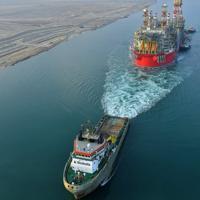
Coverage of gas export deal
Across the provided sources the core facts are consistent: Netanyahu approved a long‑term, high‑value gas export deal to Egypt involving Leviathan‑area supplies and Chevron participation. Differences are mainly in emphasis: Western Alternative sources highlight headline value and U.S. ties (legalinsurrection), West Asian and local outlets provide operational detail, revenue breakdowns and timeline (Hürriyet Daily News, tovima), and regional outlets frame diplomatic motives and stability implications (The Arab Weekly).
“Israel’s government, led by Prime Minister Benjamin Netanyahu, approved a $35 billion deal to export natural gas to Egypt — the largest such agreement in Israel’s history. Israel signed a related agreement with the United States on Wednesday.”
Some provided snippets (WION, CTV) lacked full text, limiting their contribution and creating uneven source coverage. Where timelines or figures differ in emphasis, the sources quote different metrics—total contract value, shekel equivalents, projected domestic revenue, and gas volume—which are not mutually exclusive facts.
