Full Analysis Summary
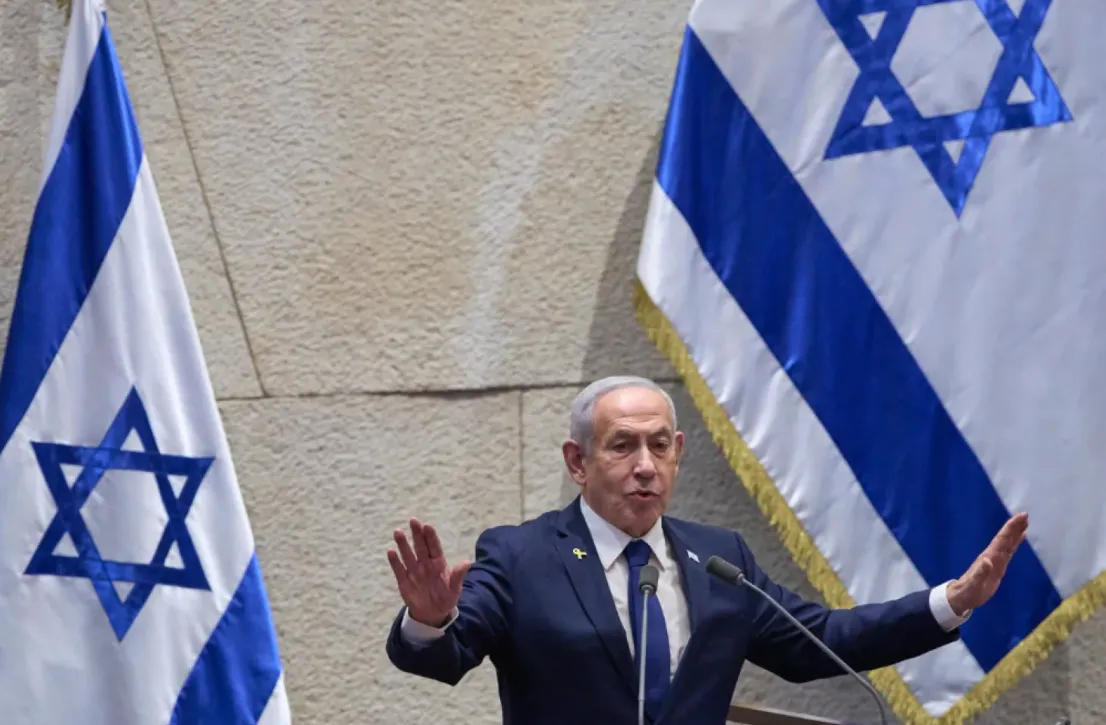
Netanyahu demands buffer zone
Israeli Prime Minister Benjamin Netanyahu demanded that Syria establish a demilitarized buffer zone stretching from Damascus to the existing buffer area, including the approaches and peak of occupied Jabal al-Sheikh (Mount Hermon).
He framed the demand as necessary for Israeli security and said an agreement might be possible 'through understanding and good will'.
Al Jazeera reported the demand amid long-standing disputes over the Golan Heights.
The outlet noted that Israel's control of the area stems from the 1967 war and a later annexation, a move recognized by the United States but rejected by most of the international community.
Al-Jazeera Net quoted Netanyahu saying an agreement may be possible 'through understanding and good will,' and Asharq Al-awsat also recorded him insisting Syrian authorities must create the buffer to protect Israeli citizens.
Coverage Differences
Tone and framing
Al Jazeera (West Asian) frames Netanyahu’s demand in the context of historical territorial disputes and international law relating to the 1967 seizure and annexation of the Golan Heights, while Al‑Jazeera Net (West Asian) foregrounds Netanyahu’s own conciliatory phrasing — a possible deal “through understanding and good will” — and Asharq Al‑awsat (West Asian) emphasizes the security rationale (protecting Israeli citizens) behind insisting on a buffer zone. The sources thus differ mainly in whether they foreground legal-historical context (Al Jazeera), Israeli leader’s wording (Al‑Jazeera Net), or security justification (Asharq Al‑awsat).
Israeli buffer demand framing
Israeli officials and spokespeople, as reported, frame the buffer demand as a practical security measure.
Al Jazeera Net quotes Israeli statements that Israel will stop terrorists or hostile activity near the border, defend towns along the northern frontier, and protect its Druze allies.
Those statements also say Israel expects Syria to create a weapons-free zone from Damascus to the buffer area, including Mount Hermon.
Israel pledged to keep southwestern Syria free of weapons and to retain control of currently held areas.
Al Jazeera records Netanyahu’s framing that control of those approaches is necessary for Israeli security.
Asharq Al‑awsat reproduces similar security-centered language describing the insistence that Syrian authorities create the demilitarized zone to protect Israeli citizens.
Coverage Differences
Narrative emphasis
Al‑Jazeera Net (West Asian) relays detailed Israeli operational and political pledges (protect towns, Druze allies, expect weapons‑free zone), presenting these as official commitments, while Al Jazeera (West Asian) pairs the security claim with broader historical context and domestic criticism (quoting Haaretz). Asharq Al‑awsat (West Asian) gives prominence to the security justification in the immediate regional reporting. The difference reflects that Al‑Jazeera Net focuses on Israeli official lines, Al Jazeera situates those lines historically and politically, and Asharq headlines the security rationale.
Israeli operations in Syria
Reporting links Netanyahu’s demands to more assertive Israeli operations on Syrian soil.
Al Jazeera reports that after the fall of Bashar al‑Assad in December 2024, Israel reportedly withdrew from a 1974 agreement and expanded control into more Syrian territory, including Jabal al‑Sheikh/Mount Hermon.
It also notes recent Israeli strikes such as a raid on Beit Jinn that it says killed 13 people.
Asharq Al‑awsat similarly recounts that Syrian state media said an Israeli strike in southern Syria killed 13 people while Israel said it had targeted a Lebanese militant group.
Al‑Jazeera Net’s account stresses Israel’s security rationale and pledges to retain control of areas it now holds, implicitly linking rhetoric to on‑the‑ground control.
Coverage Differences
Reported facts vs. official claims
Al Jazeera (West Asian) reports the claim that Israel "reportedly withdrew from a 1974 agreement and expanded its control" after Assad’s fall, presenting this as a reported development; Asharq Al‑awsat (West Asian) relays Syrian state media’s attribution of 13 deaths to an Israeli strike and Israel’s counterclaim that it targeted a Lebanese militant group; Al‑Jazeera Net (West Asian) emphasizes Israel’s stated intentions to retain control. The difference is between reporting alleged Israeli policy moves (Al Jazeera), reporting conflicting casualty attributions (Asharq), and relaying Israeli official posture (Al‑Jazeera Net).
Media coverage of buffer demand
Sources differ over emphasis and the inclusion of criticism or a wider regional context.
Al Jazeera includes domestic Israeli criticism, citing Haaretz columnist Gideon Levy who called Netanyahu's demands "outrageous" and argued any security zone should be on Israeli territory.
Al-Jazeera Net foregrounds official Israeli assurances to allies and defensive pledges.
Asharq Al-awsat situates the buffer demand within immediate regional events — the strike in southern Syria, the transfer of remains from Gaza coordinated via the Red Cross, and other developments — which can make the demilitarized zone demand appear part of broader operational and diplomatic moves.
Coverage Differences
Inclusion of criticism and broader context
Al Jazeera (West Asian) uniquely reports Haaretz criticism of Netanyahu’s demands and highlights legal-historical context; Al‑Jazeera Net (West Asian) focuses on official Israeli statements and practical pledges (Druze protection, weapons‑free zone); Asharq Al‑awsat (West Asian) ties the demand into concurrent regional incidents (strike casualties, remains transfer, Pope’s Lebanon visit). This creates differences in perceived intent — from political/military maneuvering to security necessity — depending on which source is read.
Media framing of buffer-zone demand
The three sources together portray Netanyahu’s buffer-zone demand as a mix of security policy, territorial consolidation, and diplomatic posturing.
However, important facts remain reported rather than independently verified, and the sources differ on emphasis.
Al Jazeera reports Israel’s withdrawal from the 1974 agreement and expanded control after Assad’s fall, framing this as reported information rather than an uncontested fact.
Asharq highlights conflicting casualty claims over strikes.
Al-Jazeera Net focuses on Israeli official positions and pledges.
Readers should note these differences in framing: historical-legal context and criticism from Al Jazeera, official Israeli rhetoric and pledges from Al-Jazeera Net, and immediate regional incident linkage from Asharq Al-awsat.
Coverage Differences
Verification and reporting style
Al Jazeera (West Asian) uses reported language for major claims (e.g., 'reportedly withdrew from a 1974 agreement'), indicating uncertainty; Asharq Al‑awsat (West Asian) reports competing casualty attributions between Syrian state media and Israeli statements; Al‑Jazeera Net (West Asian) largely relays Israeli official assertions and intentions. The effect is that Al Jazeera flags contested claims, Asharq presents contemporaneous incident reporting with competing versions, and Al‑Jazeera Net presents the official line — together showing where information is certain versus contested.