Gaza Genocide19 April, 20266 min read
Netanyahu Orders Forceful IDF Strikes in Lebanon After Hezbollah Rockets and Drones
Netanyahu ordered forceful Israeli strikes in Lebanon targeting Hezbollah. Strikes followed Hezbollah rocket attacks and drones after the ceasefire extension.
The Jerusalem Post was read line by line by the Watchdog: 5.3. See the score →
Netanyahu Orders Force
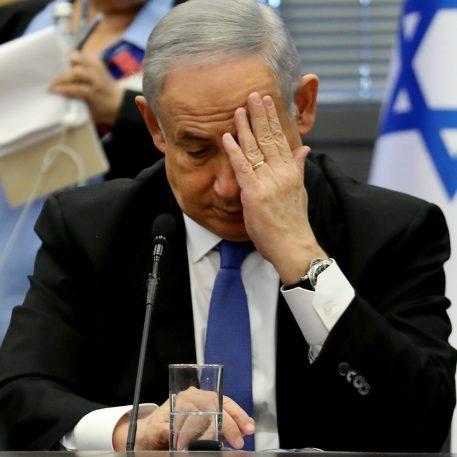
Israeli Prime Minister Benjamin Netanyahu ordered the IDF to attack Hezbollah targets in Lebanon “with force,” after the Israeli military said Hezbollah launched rockets and drones toward northern Israeli communities and after sirens sounded in parts of the Galilee Panhandle. Israeli National News described the order as Netanyahu ordering the IDF to “vigorously attack Hezbollah targets in Lebanon,” with the Prime Minister's Office announcing it Saturday night. Netanyahu’s directive followed an earlier sequence in which the IDF said “Following the sirens that were sounded in several areas in northern Israel, the Israeli Air Force successfully intercepted a suspicious aerial target that was launched from Lebanon toward Israeli territory,” and that “Contact with an additional suspicious aerial target was lost.”
In the same reporting, Israel National News said “two rockets were launched from Lebanon towards the Galilee Panhandle,” with one intercepted and the other falling “in an open area.” ynetnews similarly tied the order to sirens in Manara, Margaliot and Misgav Am after “the launch of two rockets from Lebanon,” and it quoted the IDF calling the launches a “blatant violation” of the ceasefire by Hezbollah. The South China Morning Post and Middle East Eye both described additional Israeli strikes in Lebanon’s south after Netanyahu’s orders, with Lebanon’s state media reporting casualties in towns including Yohmor al-Shaqeef and Safad al-Battikh, and with Israel saying it “eliminated” Hezbollah operatives driving a vehicle loaded with weapons and another riding a motorcycle.

Ceasefire Extended, Attacks Continue
The new strikes and rocket-and-drone alerts unfolded against a backdrop of a ceasefire extension between Israel and Hezbollah that multiple outlets described as having been extended for three weeks. Al Jazeera said Israel continued its attacks on southern Lebanon “hours after ceasefire between the two countries was extended for a further three weeks,” and it described the attacks as “the latest violations of a ceasefire that began on April 16 after weeks of fighting between Israel and Hezbollah.” In that same account, Al Jazeera said Israeli forces remained stationed in southern Lebanon after establishing a “yellow line,” and it reported that the casualty toll since the current round of fighting broke out on March 2 had risen to “2,491 people killed and 7,719 wounded,” according to Lebanon’s Health Ministry.
Al Jazeera also reported that Hezbollah dismissed the extension as “meaningless,” quoting Hezbollah lawmaker Ali Fayyad saying, “It is essential to point out that the ceasefire is meaningless in light of Israel’s insistence on hostile acts, including assassinations, shelling, and gunfire,” and adding that “every Israeli attack gave Hezbollah the “right to retaliate.” The Haaretz report placed the escalation alongside other regional diplomatic moves, including Iranian President Masoud Pezeshkian’s comments to Pakistani Prime Minister Shehbaz Sharif about “forced negotiations” and the need for America to cease “hostile actions and operational pressures.” Haaretz also said the Israeli military struck “several buildings linked to Hezbollah in southern Lebanon,” carried out by the Israeli air force under orders from the political echelon.

Casualties and Strike Claims
Lebanese state media and Israeli military statements described casualties and targets across multiple towns in southern Lebanon as Netanyahu’s order translated into air and artillery activity. South China Morning Post reported that Lebanese state media said earlier attacks killed six people despite the extended ceasefire, and it cited the Lebanese health ministry saying “Israeli enemy strikes on a truck and a motorbike in the town of Yohmor al-Shaqeef in the Nabatieh district killed four people.” It further said another attack “on the town of Safad al-Battikh, in the Bint Jbeil district, resulted in two fatalities and 17 injuries,” and it described Israel’s military saying it “eliminated” three Hezbollah operatives driving “a vehicle loaded with weapons,” as well as another one riding a motorcycle, and “two more armed members of the group elsewhere.”
Al Jazeera reported that the Lebanese Health Ministry said “two people were killed in an Israeli air strike in the southern area of Touline,” and it also said earlier on Friday “several people were wounded” in an Israeli artillery attack on Yater. Al Arabiya.net, citing the Lebanese National News Agency and Reuters, said the Lebanese Health Ministry reported “6 people were killed in Israeli airstrikes on south Lebanon, Saturday,” including four killed in Yahmor al-Shqif and one killed with 17 wounded in Safd al-Batinakh, bringing to 12 the number killed since Friday. Haaretz described an Israeli soldier filmed smashing a statue of Jesus in the village, and it said the Israeli military said it was investigating an incident in Debel after footage showed an IDF excavator damaging solar panels, with the IDF saying “the actions seen in the video do not align with the values of the IDF and the conduct expected of its soldiers.”
Diplomacy and Mediation Efforts
While strikes continued in Lebanon, Haaretz described parallel diplomacy involving Iran, Pakistan, and the United States, alongside negotiations tied to Gaza.
Haaretz said Iranian President Masoud Pezeshkian told Pakistani Prime Minister Shehbaz Sharif during a phone call that Tehran would not conduct “forced negotiations” under pressure and threats from the United States, adding that a breakthrough in negotiations would be difficult unless America ceased its “hostile actions and operational pressures.”

In the same report, Haaretz said Sharif told reporters the call was “warm and constructive,” and reiterated his commitment “to serve as an honest and sincere facilitator.”
Haaretz also said the Israeli military said it was investigating incidents in Debel and that Lebanese reports described damage to homes and infrastructure, while it simultaneously tracked U.S.-Iran cease-fire mediation.
It reported that U.S. President Donald Trump cancelled a U.S. envoys’ Jared Kushner and Steve Witkoff's trip to Pakistan for Iran negotiations, and Trump said the U.S. received a “much better” cease-fire proposal from the Iranian delegation after cancelling the trip.
The Haaretz update also said “Negotiations between the Hamas delegation and the Board of Peace high representative, Nickolay Mladenov, will resume on Monday in Cairo.”
Reactions and International Response
Reactions to the continued fighting and ceasefire disputes came from Hezbollah, Israeli leadership, and international figures, with each side using sharply different language about the meaning of the truce. Al Jazeera quoted Hezbollah lawmaker Ali Fayyad saying the ceasefire was “meaningless,” and it included his argument that “Israel’s insistence on hostile acts, including assassinations, shelling, and gunfire” made the agreement hollow, while also stating that “every Israeli attack gave Hezbollah the “right to retaliate.” In the same Al Jazeera report, Israel’s Prime Minister Benjamin Netanyahu said Israel was “maintaining full freedom of action against any threat” and accused Hezbollah of “trying to sabotage” the ceasefire deal.
Al Jazeera also reported that United Nations Secretary-General Antonio Guterres welcomed the extension of the ceasefire and praised the US for its role in mediating the truce, quoting Guterres saying, “Everyone must fully respect the cessation of hostilities, cease any further attacks & comply with their obligations under international law,” and it framed that as a call for compliance. In parallel, ynetnews described local criticism in northern Israel, with Asaf Langlaban, head of the Upper Galilee Regional Council, saying residents deserved a safe return to routine life and that the government was responsible for removing the missile threat. Haaretz added another layer of reaction by reporting that Iranian Foreign Minister Abbas Araghchi was expected to return to Pakistan on Sunday after completing a previously scheduled visit to Oman, and it said Mehr reported that some members of his delegation returned to Tehran to receive “necessary instructions regarding issues related to ending the war.”