Netanyahu Orders IDF To Forcefully Attack Hezbollah Targets After Rockets Hit Northern Israel
Key Takeaways
- Rocket activity from Lebanon indicates escalating cross-border hostilities.
- Israeli leadership plans stronger action against Hezbollah amid ongoing escalation.
- Northern border security guidelines tightened as Hezbollah tensions increase.
Ceasefire Breach, Strikes
On Sunday, April 26, 2026, Israeli Prime Minister Benjamin Netanyahu ordered the military to “forcefully suppress Hezbollah activity in Lebanon” after a breach of the fragile regional truce, Reuters reported, as cited by the Kyiv Post.
“Subscribe to our newsletter to receive the most important and top news of the day”
The directive from the Prime Minister’s Office instructed the Israel Defense Forces (IDF) to “forcefully attack Hezbollah targets” after militants launched two rockets at northern Israel.

The Kyiv Post says that while one missile was successfully intercepted and no casualties were reported, the IDF responded with nighttime airstrikes on rocket launchers in three locations across southern Lebanon.
The report also says Israeli forces targeted groups of militants and facilities belonging to the Radwan unit, Hezbollah’s elite special forces.
The escalation is described as occurring just days after US President Donald Trump announced a three-week extension of the ceasefire between Israel and Lebanon, with the Kyiv Post adding that the agreement includes Israel’s right to take “all necessary measures in self-defense.”
Hezbollah, the Kyiv Post reports, dismissed the truce as “meaningless,” pointing to persistent Israeli operations on Lebanese soil as justification for its own retaliation.
The same Kyiv Post account says the military has reissued a warning to Lebanese civilians, prohibiting them from approaching the Litani River area, where active combat operations are ongoing.
Security Rules and Alerts
As tensions between Hezbollah and Israel increased, Israel’s Home Front Command updated security guidelines for northern communities on Sunday, according to the Jerusalem Post.
The Jerusalem Post reports that the new guidelines limit gatherings in communities along the Lebanese border to no more than 1,500 people.
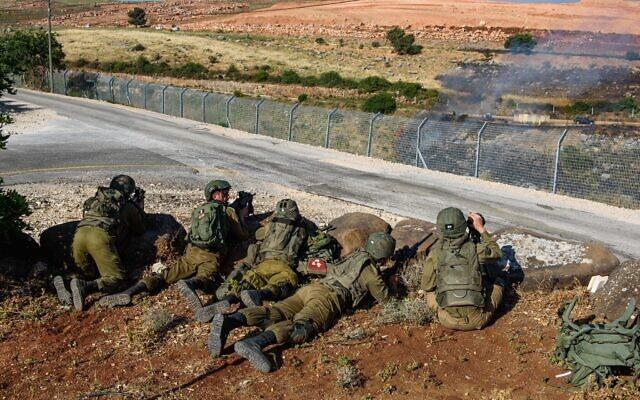
It says the guidelines come into effect at 22:30 on Sunday and end at 20:00 on Monday, while all other Home Front Command guidelines remain unchanged.
The Jerusalem Post adds that Ynet reported on Sunday that the Conflict Line Forum decided that, independently of the Home Front Command guidelines, they would declare their communities to be at “orange” alert and shut down schools and education centers beginning on Tuesday.
In response to the situation, Moshe Davidovitz, head of the Mateh Asher Regional Council and chairman of the Confrontation Line Forum, said, “I am furious at the disconnect of those sitting in the ivory tower from the reality of the parents, students, and residents here.”
He added, “Not only is this not a green policy, but it is a spit in the face of the children of the conflict line.”
The Jerusalem Post also frames the growing concern as stemming from intensifying exchanges between Hezbollah and the IDF in southern Lebanon in recent days, including a dispute after the April 17 ceasefire about whether the ceasefire applied only north of the Litani River.
Israeli Assessments of Escalation
Israeli media assessments described by the “https | West Asian” outlet portray the northern front with Lebanon as moving toward a more complex phase, with Israeli security establishment assessments that the confrontation has not yet peaked.
“Israeli Prime Minister Benjamin Netanyahu ordered the military to forcefully suppress Hezbollah activity in Lebanon on Sunday, April 26, following a breach of the fragile regional truce, Reuters reported”
The outlet says military assessments point to a likely rise and expansion in the pace of rocket and drone launches from Lebanon in the coming period.
It also reports “growing concern inside Israel” about Hezbollah’s ability to reorganize and recover battlefield capabilities, specifically highlighting specialized units responsible for operating drones.
The same account says Hezbollah’s drone unit may have adapted to wartime conditions by hiding in civilians’ homes or orchards, assembling drones and operating them while Israeli forces struggle to deal with the threat.
It quotes a reserve officer telling Walla, “It is very complex. We have results, but they are not sufficient at the moment.”
The outlet further says Channel 12 reported that the security establishment told Netanyahu to expect an increase in fire from Lebanon in the coming days, and it adds that the security establishment presented this assessment during a meeting with Prime Minister Benjamin Netanyahu and Defense Minister Yisrael Katz.
Finally, it says the Israeli army continues to monitor fire data on Israel and that this will not translate into fatigue on the home front in the coming days, according to the outlet’s description of military sources.
Political Costs and No Solution
The Middle East Monitor frames the war in Lebanon as carrying “huge political cost” for Israel while asserting there is “no military solution to Hezbollah’s missiles in the north,” citing Israel Hayom and a senior official.
It says the Israeli official argued that despite criticism about the ceasefire with Hezbollah announced Saturday, halting the fighting remains the only way to stop rocket and missile fire on northern Israeli towns.

The report says the Israeli Cabinet had never instructed the army to eliminate Hezbollah’s military power, and it describes dismantling Hezbollah as a broader objective that was not defined as something to be achieved solely through military means.
The Middle East Monitor account adds that the official acknowledged targeted assassinations and other military operations may weaken Hezbollah but “cannot completely stop the group’s missile and rocket launches.”
It also says achieving a complete military stop would require “a far more drastic offensive and a massive increase in manpower that is currently unrealistic,” especially as the Israeli army is described as overstretched across multiple fronts and repeatedly calling up reservists.
The report states that the threat of a ground incursion into northern Israeli towns had been removed, raising doubts about whether resuming the offensive would bring significant military benefit.
The Middle East Monitor also reports that attempts within the European Union to suspend mutual agreements with Israel had resumed, and it says “80% of Democratic senators last week voted in favor of halting weapons sales to Israel,” according to the report.
Future Security Zones
As the fighting continues, Israeli discussions described by “https | West Asian” include proposals for a buffer zone or demilitarized zone inside southern Lebanon to keep threats away from northern settlements.
“Home Front Command updated its security guidelines for Israel's northern communities on Sunday, in light of the increasing tensions between Hezbollah and Israel”
The outlet says the proposed solution lies in broad deployment across the area so that Hezbollah cannot control key points, and it adds that in recent days IDF forces urged residents of villages in southern Lebanon to evacuate north of the Litani River.
It reports that this step is part of efforts to create a new security reality along the border, a region where the direct threat to Israeli cities is removed.
The account also says many officials avoid using the familiar term security zone due to its heavy historical baggage, and instead refer to a demilitarized zone or a temporary buffer zone.
In parallel, the Jerusalem Post’s reporting on Home Front Command guidelines and the Conflict Line Forum’s “orange” alert shows how Israeli authorities are tightening civilian measures in communities along the Lebanese border.
The Kyiv Post similarly describes a warning to Lebanese civilians prohibiting them from approaching the Litani River area, where active combat operations are ongoing.
The “https | West Asian” outlet also says Hezbollah is sending its elements back to southern Lebanon, aiming, according to Israeli estimates, at shifting Israel’s attention away from Iran, while Israel continues monitoring fire data.
More on Lebanon

Israel Strikes Hezbollah Positions in Lebanon’s Bekaa and Southern Lebanon During Ceasefire
10 sources compared
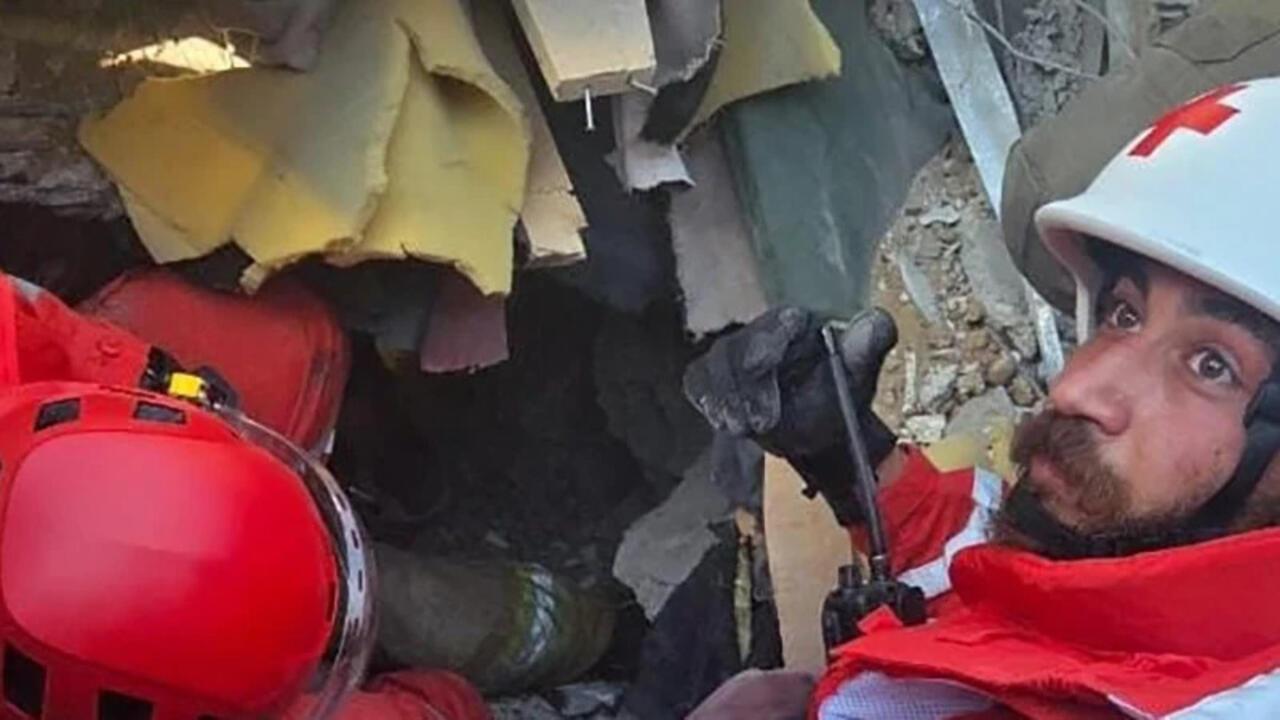
Israeli Strikes Kill Lebanese Red Cross Medic Hasan Badawi in Southern Lebanon
26 sources compared

Eastern Chad Fighting Kills 42 After Water Well Dispute Between Rival Families
10 sources compared

Israel Orders Evacuation of Seven South Lebanon Towns North of Litani River
44 sources compared