Netanyahu Races to Washington to Pressure Trump to Sabotage Iran Nuclear Deal

Netanyahu Races to Washington to Pressure Trump to Sabotage Iran Nuclear Deal

11 February, 202621 sources compared
Iran

Key Points from 21 News Sources

  1. 1

    Netanyahu met Trump in Washington to press US on Iran nuclear negotiations

  2. 2

    Netanyahu lobbied Trump to oppose a limited nuclear deal and demand stricter terms

  3. 3

    Iran accused Israel of trying to sabotage nuclear talks and urged the US to resist

Full Analysis Summary

Netanyahu's Iran push

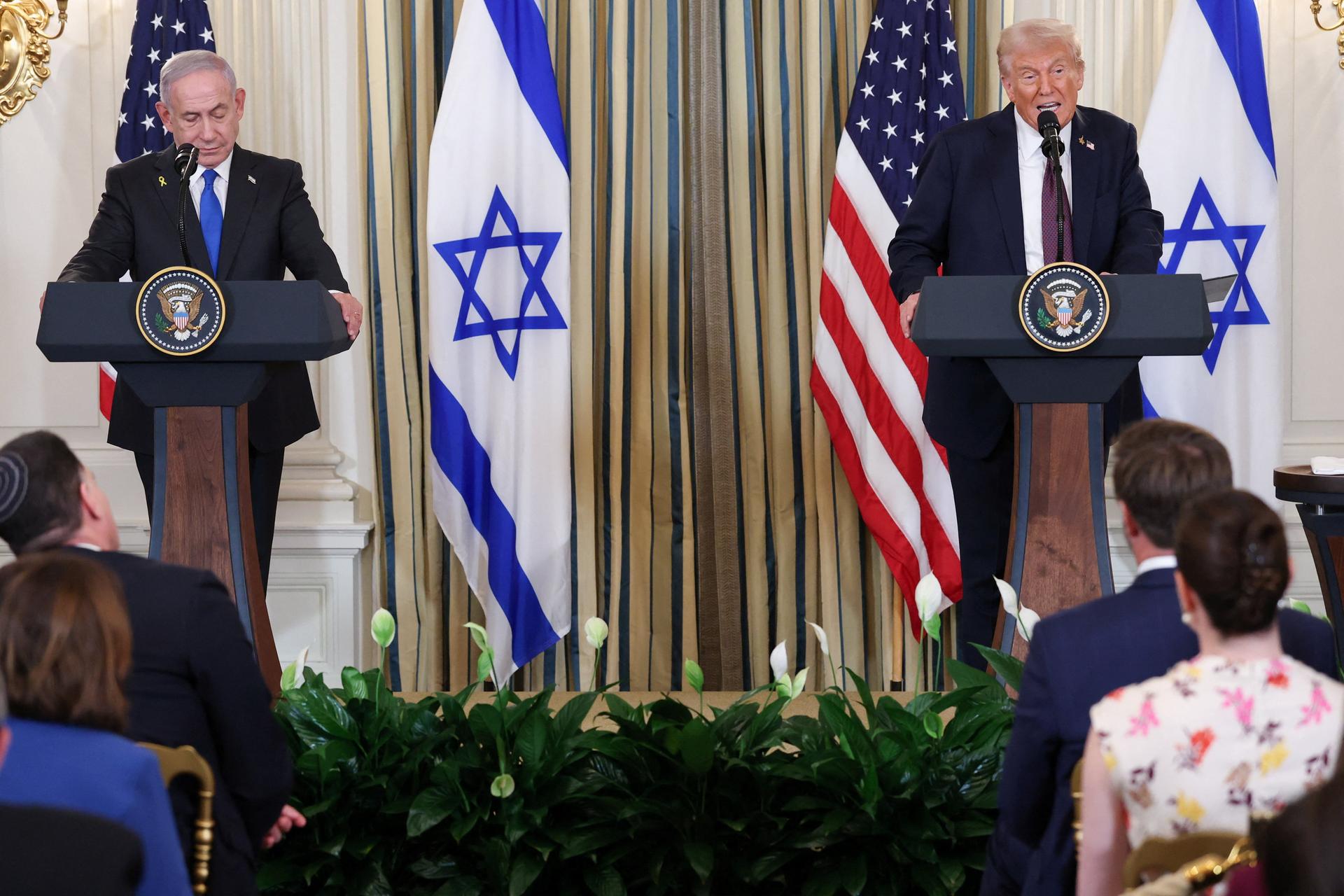
Israeli Prime Minister Benjamin Netanyahu unexpectedly rushed to Washington to press President Donald Trump to block or broaden any potential Iran nuclear deal.

He framed the trip as urgent pressure to prevent a narrow agreement that would leave Iran's missile and proxy capabilities intact.

Multiple outlets reported Netanyahu's hastened White House visit.

Haaretz described an 'understated arrival' and noted Netanyahu signing onto Trump's 'Board of Peace'.

Il Sole 24 ORE said he arrived to discuss Gaza, regional issues and principles for negotiating with Iran.

Newsweek said Netanyahu appeared more ready to carry out or back military action, underscoring the urgency Israel attaches to tougher limits on Tehran.

The visit follows coordinated U.S.-Israel engagement on the file and comes amid broader regional security concerns.

Israel demands that any deal address missiles, proxy forces, human-rights issues and Iran's nuclear program.

Coverage Differences

Narrative Framing

Sources vary in how they portray Netanyahu’s visit: Haaretz (Israeli) emphasizes a subdued, procedural arrival and ritual (signing the “Board of Peace”), while Newsweek (Western Mainstream) frames Netanyahu as ready to back or carry out military action, suggesting a more confrontational posture. Il Sole 24 ORE (Other) frames it as a policy trip to discuss Gaza and negotiating principles, highlighting diplomatic aims rather than spectacle or imminent force.

Tone

Western mainstream outlets (Newsweek) emphasize urgency and possible military options, while Israeli outlets (Haaretz) present the visit in procedural, domestic-political terms; European outlets (Il Sole 24 ORE) stress diplomatic agenda items. These tonal differences reflect source perspectives and likely audiences.

U.S. policy response

Washington's response is portrayed variously as alignment with Israel and as a cautious, broader U.S. strategy that keeps military options on the table while pursuing diplomacy.

Newsweek notes U.S. and Israeli officials publicly stress alignment, citing U.S. Ambassador Mike Huckabee and analyst Gregg Roman who argue that objectives mirror each other.

Newsweek also reports Washington has signaled the possibility of intervention even as talks reopened.

The Council on Foreign Relations summary records that President Trump hosted Prime Minister Netanyahu to coordinate on Iran and Gaza and that indirect U.S.-Iran talks in Oman were described as positive but inconclusive.

The summary says the U.S. warned commercial ships and kept contingency military options under consideration.

Al-Jazeera records President Trump saying any deal must address Iran's nuclear program 'in all its aspects' and that ballistic missiles could also be part of negotiations, reflecting U.S. insistence on a comprehensive outcome beyond just uranium limits.

Coverage Differences

Tone

Newsweek and CFR (Western Mainstream/Other) emphasize public U.S.–Israel alignment and the retention of military contingency options, while Al‑Jazeera (West Asian) highlights Trump’s expansive wording that any deal must address the nuclear program "in all its aspects," including missiles; the sources report similar facts but differ in emphasis—alignment vs. breadth of negotiated issues.

Narrative Framing

Some outlets present U.S. posture as chiefly diplomatic with a backstop of force (CFR, Newsweek), while others note rhetorical firmness on missiles (Al‑Jazeera) or stress U.S. steps to bolster regional defenses (The Guardian), revealing different narrative priorities about how likely the U.S. is to accept a narrowly focused deal.

Iran protests and diplomacy

Tehran's domestic politics and public reaction complicate the diplomatic picture, with outlets reporting both large-scale unrest and sharply divergent casualty counts that underline uncertainty.

Iran International reports that authorities violently suppressed nationwide protests and says its editorial board concluded the crackdown killed more than 36,500 people.

The Guardian reports Iranian authorities confronting protests and arresting reformist figures.

The Guardian also quotes Tehran officials warning that a narrowly focused second round of talks could fail because Iran insists on retaining the right to enrich uranium for reactors, and Iran's atomic energy chief warned the country might increase enrichment toward 60%.

Newsweek records disputed death tolls, noting Tehran claims about 3,117 dead while some watchdogs estimate up to ten times that, highlighting major discrepancies in available figures.

Coverage Differences

Contradiction

Casualty figures vary widely across sources: Iran International’s editorial board asserts more than 36,500 killed, while Newsweek reports Tehran’s official figure of about 3,117 and watchdog estimates up to ten times higher; the gap reflects both reporting difficulties and political contestation over numbers.

Narrative Framing

Western outlets emphasize the diplomatic impasse over enrichment levels (The Guardian reports Tehran insists on retaining reactor enrichment rights and may push to 60%), while Iran‑focused outlets foreground internal repression and allegations of state misconduct (Iran International), showing different coverage priorities.

Scope of Iran Deal

Sources disagree fundamentally on what a successful Iran deal must cover.

Israel is pushing for a package that goes beyond limiting uranium enrichment to also curb ballistic missiles, dismantle proxy networks and address human-rights concerns.

Some U.S. officials and mediators have prioritized narrowly bounded nuclear limits that might be easier to revive.

Haaretz reports Netanyahu will urge Trump to accept a narrowly focused deal that would block only a nuclear weapons program.

By contrast, Haaretz and The Guardian note Netanyahu demands the deal also curb missiles, proxies and abuses.

Newsweek and The Guardian summarize Israeli calls, via analysts and Netanyahu’s lobbying, for measures to eliminate nuclear capability, limit missiles and end proxy support.

Al-Jazeera records Trump saying missiles could be part of negotiations.

This divergence - whether the U.S. will back Israel's wider "threat-ecosystem" agenda or accept a narrower nuclear-only framework - is a core bargaining fault line.

Coverage Differences

Missed Information

Some coverage (e.g., Haaretz’s note that Netanyahu will press for a deal blocking only a nuclear weapons program) could be read as accepting a narrower approach as the immediate aim, while other sources (Newsweek, The Guardian, Al‑Jazeera) highlight persistent Israeli demands for missiles, proxies and rights; the discrepancy shows different emphases on negotiating strategy versus long‑term Israeli objectives.

Tone

Israeli and pro‑Israeli outlets emphasize broader security threats (proxies, missiles), while some international outlets foreground diplomatic mechanics and whether Tehran will accept terms; that difference colors expectations about whether diplomacy or pressure will prevail.

Prospects for Iran agreement

Reporting converges on uncertainty: analysts and multiple outlets say the decisive question is not only whether Washington and Jerusalem can agree but whether Tehran will accept any package.

Newsweek frames the issue as whether Tehran will accept terms rather than whether Washington and Jerusalem can reach agreement.

The Guardian and the Council on Foreign Relations warn that narrowly focused follow-up talks could fail if Tehran insists on enrichment rights and if U.S. and Israeli demands diverge.

Iran-facing outlets such as Iran International and regional reporting from Middle East Monitor add that broader regional dynamics — including alleged cash transfers to Hezbollah and debates about Gaza and disarmament — complicate the prospect of a clean diplomatic resolution.
Coverage Differences

Narrative Framing

Most Western mainstream outlets (Newsweek, The Guardian, CFR) frame the impasse as centered on Tehran’s willingness to accept limits, while regionally focused outlets (Iran International, Middle East Monitor) bring in domestic repression, Hezbollah finances and Gaza‑related negotiations as complicating factors — different scopes shaping assessments of likely outcomes.

Unique Coverage

Regional and alternative outlets add reporting not present in some mainstream coverage — e.g., Iran International’s allegations about diplomats transferring cash to Hezbollah and Middle East Monitor’s reporting on U.S. delegations and Gaza disarmament proposals — which broaden the stakes beyond purely nuclear negotiations.

All 21 Sources Compared

ABC7 San Francisco

House GOP pushes strict proof-of-citizenship requirement for voters ahead of midterm elections

Read Original

Al-Jazeera Net

Larijani to Al Jazeera: Negotiations are limited to the nuclear issue, and bringing enrichment to zero is rejected.

Read Original

Beritaja

House Passes Save America Act, Sending Trump-backed Election Bill To The Senate

Read Original

CNBC

SAVE Act: House to vote on Trump-backed voter ID bill

Read Original

Council on Foreign Relations

Netanyahu to Discuss Gaza and Iran During Washington Visit

Read Original

DIE WELT

Vice President Vance: "If the Iranian people want to overthrow the regime, that is the Iranian people's business."

Read Original

FOX40

House GOP pushes strict proof-of-citizenship requirement for voters ahead of midterm elections

Read Original

Haaretz

Netanyahu Arrives at White House for Talks With Trump on Iran and Gaza

Read Original

Il Sole 24 ORE

Gaza, US yes to small arms for Hamas. West Bank, IDF prevents Palestinians from ploughing

Read Original

Middle East Monitor

Netanyahu may seek Trump’s backing for Gaza relocation plan: Hebrew newspaper

Read Original

NBC News

Trump administration live updates: Pam Bondi clashes with lawmakers; House passes SAVE America Act

Read Original

Newsmax

Sen. Thune Rules Out Filibuster Change for SAVE Act

Read Original

Newsweek

Why Netanyahu Wants His Say in Shaping a Trump Deal for Iran

Read Original

NTD News

House Passes Elections Bill Requiring Proof of Citizenship, Voter ID

Read Original

PBS News

What to know about how the SAVE America Act could change voting

Read Original

The Guardian

Iran tells US not to let Netanyahu thwart nuclear talks before Trump meeting

Read Original

The Jerusalem Post

Report: Hamas disarmament plan drafted by US

Read Original

theweek.in

Netanyahu’s Washington visit injects fresh tension into already fragile US–Iran nuclear negotiations

Read Original

World Israel News

Report: US to allow Hamas to keep some of its arsenal

Read Original

www.israelhayom

Report: Trump to allow Hamas to retain some weapons

Read Original

ایران اینترنشنال

Why Netanyahu raced to Washington over Iran

Read Original