Full Analysis Summary
Netanyahu-Trump meeting on Iran
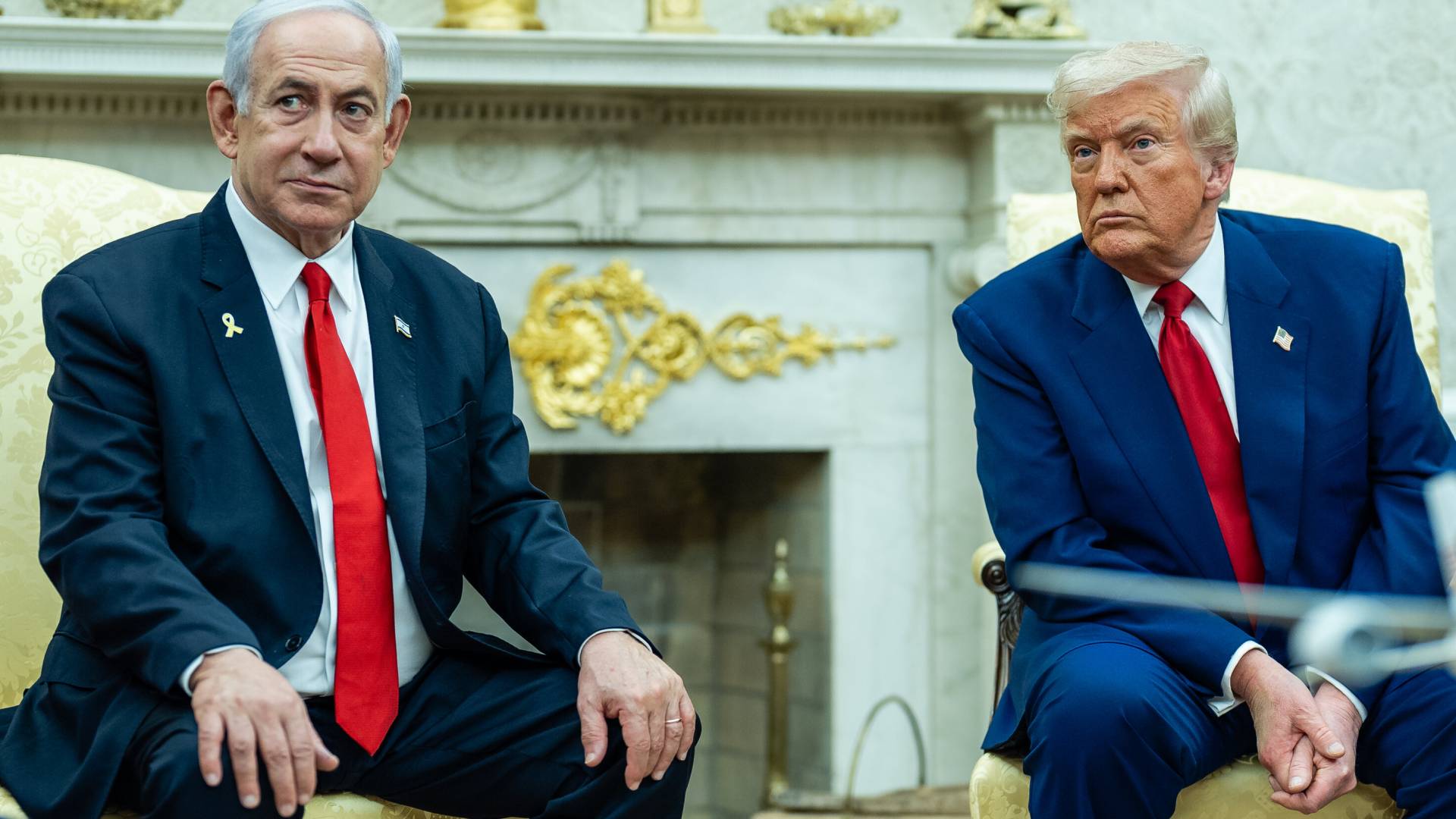
Israeli Prime Minister Benjamin Netanyahu is reportedly planning to meet former U.S. President Donald Trump at Mar-a-Lago later this month, with December 29 under discussion, to press for approval of strikes on Iran’s ballistic-missile sites.
Netanyahu is framing missiles and air defenses as Israel’s most immediate danger.
Haaretz reports Netanyahu will seek renewed strikes amid concerns about Tehran’s expanding ballistic-missile program and notes that Israel sees Iran’s rebuilding of nuclear-enrichment sites as worrying but regards missiles and air defenses as the more immediate threat.
Roya News says a prepared briefing for Trump outlines four strategic options for confronting Iran: independent Israeli strikes, limited U.S. assistance, joint operations, or deferring to a U.S.-led campaign.
ABP Live does not have an article to summarize and provides no additional reporting on the meeting.
Coverage Differences
Narrative emphasis
Haaretz (Israeli) emphasizes missiles and air defenses as the immediate threat and reports Netanyahu will press for renewed strikes at Mar-a-Lago, while Roya News (West Asian) presents a structured briefing with four strategic options and more explicit enumeration of operational paths, and ABP Live (Asian) contains no article content to contribute reporting.
Iran missile production warnings
Israeli officials and former U.S. personnel cited in reporting warn of explosive Iranian missile production.
Haaretz and Roya News cite a figure saying Iran could produce as many as 3,000 ballistic missiles per month if production is unchecked, a claim offered as a strategic rationale for preemptive action.
Haaretz relays the warning via NBC News and former U.S. officials and frames missiles as the immediate threat.
Roya News records Netanyahu’s team warning that missile output might reach 3,000 units per month and links that risk to hardening and overwhelming defenses around nuclear sites.
An ABP Live snippet contains no substantive reporting to corroborate or dispute those claims.
Coverage Differences
Source attribution and framing
Haaretz (Israeli) reports the 3,000-per-month figure while attributing it to "a cited Israeli source and former U.S. officials" and NBC News; Roya News (West Asian) repeats the 3,000 figure as part of Netanyahu’s team warnings and ties it to operational consequences for defenses — the two sources thus align on the figure but differ slightly in attribution and emphasis. ABP Live (Asian) provides no reporting to compare.
Context for strike push
Reporting places the push for strikes in the context of recent exchanges of long-range fire and prior operations.
Haaretz reports Iran launched roughly 530 ballistic missiles in about 42 barrages during a recent 12-day conflict.
Israeli reports note that 36 missiles struck built environments and that air defenses achieved an 86% interception rate.
Israel and the U.S. used about 200 interceptors at an estimated cost of 5 billion shekels (nearly $1.5 billion).
Roya News adds background on military actions, citing Israeli strikes in 2024 that damaged Iran’s S-300 air defenses.
Roya News also cites the U.S.-led Operation Midnight Hammer in June 2025, which the White House says "totally obliterated" Iran’s nuclear capabilities.
This material underscores why Prime Minister Netanyahu’s team is pushing options that range up to joint operations.
ABP Live does not add reporting on these operations.
Coverage Differences
Operational detail vs. historical context
Haaretz (Israeli) focuses on operational figures from the recent campaign (missile counts, interception rate, interceptor costs), while Roya News (West Asian) provides broader historical context including Israeli strikes in 2024 and the US Operation Midnight Hammer in 2025 and quotes White House claims about obliterating nuclear capabilities; ABP Live (Asian) has no reporting to compare.
Trump, Gaza ceasefire, Iran
Political dynamics and divisions shape how receptive Trump might be.
Haaretz reports that two former Israeli officials told NBC that Trump may be less receptive if the sides remain divided over Netanyahu’s cease‑fire approach, linking Gaza ceasefire disagreements to willingness to commit against Iran.
Roya News similarly notes that the briefing agenda may also cover a fragile ceasefire between Israel and Hamas and warns those disagreements could affect Trump’s willingness to make new commitments against Iran.
Roya News also records Trump's assertions that he destroyed the Iran nuclear threat and that the US could quickly strike again, framing his public posture as assertive but potentially conditional.
ABP Live offers no content on these political contours.
Coverage Differences
Political conditionality and leader quotes
Haaretz (Israeli) foregrounds reporting that former Israeli officials told NBC Trump may be less receptive amid internal Israeli divisions over the ceasefire, while Roya News (West Asian) both notes the ceasefire as a potential agenda item and quotes Trump’s public claims that he 'destroyed the Iran nuclear threat' and could act again; ABP Live (Asian) contains no article text to compare.
News sources' differing emphases
Two substantive sources present complementary but distinct emphases.
Haaretz (Israeli) stresses immediate operational threats—missile barrages, interception rates, and the cost of defenses—and reports Netanyahu's planned outreach to Trump to press for strikes.
Roya News (West Asian) situates the briefing within a menu of strategic options, prior US operations (Operation Midnight Hammer), and Trump's public claims about eliminating the nuclear threat.
ABP Live (Asian) supplies no reporting to enrich or contest those narratives.
Together, the sources justify Netanyahu's outreach as motivated by missile threats and previous operations, but they differ on attribution, framing, and the broader diplomatic context.
Coverage Differences
Tone and omission
Haaretz (Israeli) uses operational statistics and urgency in tone, Roya News (West Asian) adds diplomatic framing and quotes from US claims to present both options and political context, and ABP Live (Asian) omits coverage; these differences affect how forceful the case for strikes appears and what is attributed to which actors.