Netanyahu Visits Israeli Forces in Illegally Occupied Southern Syria, Angering Damascus

Netanyahu Visits Israeli Forces in Illegally Occupied Southern Syria, Angering Damascus

20 November, 202527 sources compared
Syria

Key Points from 27 News Sources

  1. 1

    Benjamin Netanyahu publicly visited Israeli troops in the UN‑supervised buffer zone in southern Syria.

  2. 2

    Damascus and multiple regional states condemned the visit as an illegal violation of Syrian sovereignty.

  3. 3

    The trip heightened tensions and jeopardized a prospective Israel‑Syria security pact under U.S. facilitation.

Full Analysis Summary

Netanyahu visit to Syria

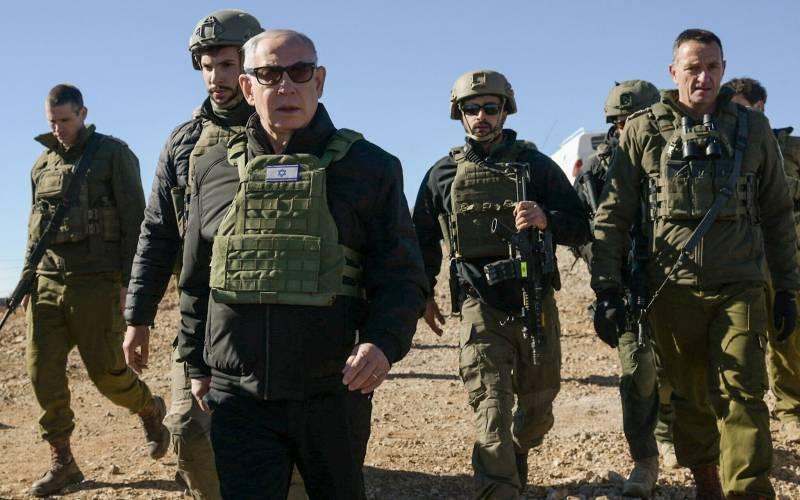
Israeli Prime Minister Benjamin Netanyahu made a high-profile visit on 19 November 2025 to Israeli forces stationed in a buffer zone inside southern Syria.

Damascus, regional capitals and UN officials condemned the action as an illegal breach of Syrian sovereignty and the 1974 disengagement agreement.

Syrian and regional statements described the visit as a "blatant provocation" and "a new attempt to impose a fait accompli."

The UN called the public trip "worrying."

Israeli government releases and local reporting say Netanyahu inspected an outpost, received an operational briefing and told troops the positions have "immense importance" defensively and offensively.

The visit was publicised with footage and posts on social media and X, but also prompted concern about legal and media constraints after images of soldiers were blurred in some coverage.
Coverage Differences

Tone / framing

Some sources foreground Damascus’s legal and sovereignty claims, using charged language like 'blatant provocation' and 'fait accompli' (National Herald — Western Asian/Asian; chinadailyasia — Asian; Enab Baladi — Other), while other outlets emphasise Israel’s security framing — operational briefings, defensive importance and protection of border communities (news.antiwar — Other; 24 News HD — Asian; chinadailyasia — Asian). The UN voice is reported as a third, more procedural actor calling the visit 'worrying' (Arab News PK).

Reporting detail / imagery

Some outlets reported Israeli-released footage and social posts celebrating the visit (24 News HD; Al-Jazeera Net), while others noted that images of soldiers were blurred amid media restrictions and legal worries (Middle East Eye), a detail that shifts coverage from triumphalism to concern about accountability.

Northern border security rationale

Israel's stated rationale across several outlets centred on security imperatives.

Officials framed the occupation of positions east of the UN buffer zone and the inspection of outposts as necessary to defend Israel's northern border, protect Druze communities and prevent armed groups from exploiting a power vacuum after the collapse of Bashar al-Assad's rule in December 2024.

Reports list senior officials who accompanied Netanyahu, including Defence Minister Israel Katz, Foreign Minister Gideon Sa'ar and military chief Eyal Zamir, and quote Israeli officials stressing the defensive and offensive value of the positions and the vital nature of the deployment.

Coverage Differences

Narrative emphasis

West Asian and some Asian reports (chinadailyasia; 24 News HD; kurdistan24.net) emphasise Israel’s security claims and naming of senior officials, while Syrian and Western‑alternative outlets (Middle East Eye; Middle East Monitor) highlight occupation and local damage. The Israeli narrative is framed as protective; Syrian/alternative sources present it as consolidation of occupation.

Attribution / legal framing

Some sources explicitly quote Israeli claims that the 1974 disengagement arrangement is invalid after Assad’s collapse (National Herald), while Syrian sources and many regional outlets insist the measures are illegal and must be reversed under international law (chinadailyasia; Enab Baladi).

Israeli strikes in southern Syria

Syrian and several regional sources report a sharp rise in Israeli air and ground operations in southern Syria since December 2024.

Figures cited include more than 1,000 airstrikes and over 400 cross-border raids, and accounts describe farmland damage, new checkpoints and arrests.

Damascus says this pattern demonstrates an expanding occupation rather than purely defensive action.

International and regional reports repeat Syrian government figures and local testimony about destruction and arrests, while some outlets note that Israel characterises many strikes as preemptive against hostile infrastructure.

Coverage Differences

Claims vs. counterclaims (numbers and characterization)

Several West Asian and other outlets (TRT World; Middle East Monitor; kurdistan24.net) report Syrian government figures of 'more than 1,000 airstrikes and over 400 cross‑border raids,' while Israeli sources quoted in some pieces frame strikes as 'preemptive actions' (kurdistan24.net). This is a difference between reported Syrian tallies and Israeli characterisations of the strikes’ intent.

Detail / local impact

Western‑alternative outlets (Middle East Monitor; Middle East Eye) emphasise local damage — farmland, forests, arrests and checkpoints — while some mainstream regional outlets summarise the toll numerically without as much on‑the‑ground detail (TRT World).

Israel–Syria talks update

Diplomatic reporting is divided: several outlets say US-brokered talks on a new Israel–Syria security arrangement were under way but have stalled because Israel refuses to withdraw from positions taken after December 2024.

Israel has pressed demands Syria rejects, including control of certain high ground and corridors, while other reports note negotiations continue, albeit fraught.

Some pieces describe Israeli requests—a humanitarian corridor to Suwayda, demilitarised zones, and control over Mount Hermon—as non-starters for Damascus.

Syrian officials publicly called on the UN Security Council to enforce the 1974 disengagement terms.

Coverage Differences

Status of talks

news.antiwar, kathmandupost and Evrim Ağacı report talks have stalled or collapsed because of Israeli demands and refusals to withdraw, while National Herald reported both sides are reportedly negotiating a possible security arrangement that analysts said could be finalised by year‑end — a contrast between 'stalled/collapsed' and 'possible finalisation' narratives.

Demand specifics and source framing

Evrim Ağacı and chinadailyasia detail Israeli demand lists — demilitarised zones, control of Mount Hermon and humanitarian corridors — while Syrian and regional outlets present those demands as unacceptable and grounds to insist on full withdrawal to pre‑December 8 borders (news.antiwar; 24 News HD).

International and media reactions

International reaction has been broad and mixed in tone.

Regional states, including Qatar, Jordan and Iran, and several UN officials demanded action or condemned the visit and called for restoration of the 1974 Disengagement Agreement.

Iran's foreign ministry called the trip "illegal" and urged the UN Security Council to force Israel's withdrawal.

Some Western and mainstream outlets simply reported the diplomatic condemnations and UN concern, while Western-alternative and regional outlets emphasized accusations of occupation, published photographs of damage and warned the visit risks escalation and further fragmentation in Syria.

Coverage Differences

Severity and recommended response

West Asian and regional sources (Mehr News Agency; Enab Baladi; Arab News PK) issue strident calls for UN action and withdrawal, whereas some mainstream outlets focus on diplomatic concern and calls for restraint without prescribing concrete enforcement steps (Arab News PK; Haaretz summarised reaction).

Focus on legal/forensic concerns

Western‑alternative outlets (Middle East Eye) highlight legal anxieties — blurred faces, media restrictions and references to alleged war crimes — that mainstream regional pieces often omit, shifting the conversation from diplomacy to accountability.

Potential escalation and interpretations

Commentators and analysts warn the visit could further inflame an already volatile front.

Some urge diplomacy and enforcement of existing UN resolutions to avoid a wider conflagration.

Others view Netanyahu’s public inspection as an attempt to consolidate facts on the ground and to pressure Damascus during fraught talks.

Coverage differs on whether the visit marks a decisive shift toward permanent Israeli control or a temporary tactical posture pending negotiations.

Several sources explicitly note the situation remains disputed and unresolved.

Coverage Differences

Implication / prognostication

Al-Jazeera Net and Middle East Eye stress risks of escalation and consolidation of facts on the ground (Al-Jazeera Net; Middle East Eye), whereas National Herald and 24 News HD convey a more tactical/defensive rationale from Israel and point to possible negotiations continuing (National Herald; 24 News HD).

Clarity / unresolved claims

Several sources caution claims and figures remain contested — for example, Syria’s tallies of strikes and incursions are widely reported but not independently verified in these pieces, and outlets vary in whether they present negotiations as alive, stalled, or collapsing — so the overall picture remains ambiguous and disputed.

All 27 Sources Compared

24 News HD

Netanyahu visits Israeli troops beyond Syria ceasefire line

Read Original

Al Jazeera

Syria condemns Netanyahu’s visit to occupied territory

Read Original

Al Jazeera

Syria condemns Israeli PM Netanyahu’s ‘illegal visit’ to seized territory

Read Original

Al Jazeera

After Israel PM’s trip to occupied Syria, is a deal off the table?

Read Original

Al-Jazeera Net

Controversy on platforms after Netanyahu's visit to the buffer zone in southern Syria

Read Original

Al-Jazeera Net

Syria condemns Netanyahu's visit to the buffer zone on its territory.

Read Original

Anadolu Ajansı

Saudi Arabia, Qatar, Kuwait condemn Israeli prime minister’s tour in occupied Syrian territory

Read Original

Anadolu Ajansı

Syria, Jordan condemn Israeli premier’s visit to south as violation of UN resolutions

Read Original

Arab News PK

Syria condemns Israeli PM’s visit to country’s south

Read Original

chinadailyasia

Syria condemns Israeli officials' ‘illegal’ visit to southern region

Read Original

Democracy Now!

Syria Condemns Netanyahu Visit to Israeli-Occupied Southern Region

Read Original

Enab Baladi

International condemnations of Netanyahu’s entry into southern Syria - Enab Baladi

Read Original

Evrim Ağacı

Netanyahu’s Syria Visit Sparks Global Outcry And Stalemate

Read Original

Haaretz

Damascus Condemns Netanyahu's Visit to 'Syria Buffer Zone' in Golan Heights

Read Original

İlke Haber Ajansı

UN and Syrian officials condemn Netanyahu’s provocative visit to southern Syria

Read Original

İlke Haber Ajansı

Syria condemns Netanyahu's 'blatant violation' of sovereignty in occupied buffer zone

Read Original

kathmandupost

Syria condemns Netanyahu’s visit to its Israeli-occupied south

Read Original

kurdistan24.net

UN Voices Concern Over Netanyahu’s Visit to Syria Buffer Zone as Regional Dynamics Shift

Read Original

Mehr News Agency

Iran condemns Israeli officials' illegal visit to Syria: spox

Read Original

Middle East Eye

Netanyahu visits Israeli soldiers in occupied Syria with faces of troops blurred

Read Original

Middle East Monitor

Netanyahu tours Israeli-seized buffer zone in Syria with senior army officials

Read Original

Middle East Monitor

Syria condemns Netanyahu’s tour of southern Syria as “dangerous escalation”

Read Original

National Herald

Syria condemns Netanyahu’s visit to occupied southern territory as ‘provocative’

Read Original

news.antiwar

Netanyahu Visits IDF Troops in Israeli-Occupied Syria

Read Original

The Syrian Observer

A Grave Violation: Syrian Foreign Ministry Condemns Netanyahu’s Visit to Southern Syrian Territories

Read Original

TRT World

Damascus condemns Israel's Netanyahu visit to southern Syria

Read Original

WION

Netanyahu’s Visit to Syrian Buffer Zone Sparks Global Condemnation

Read Original