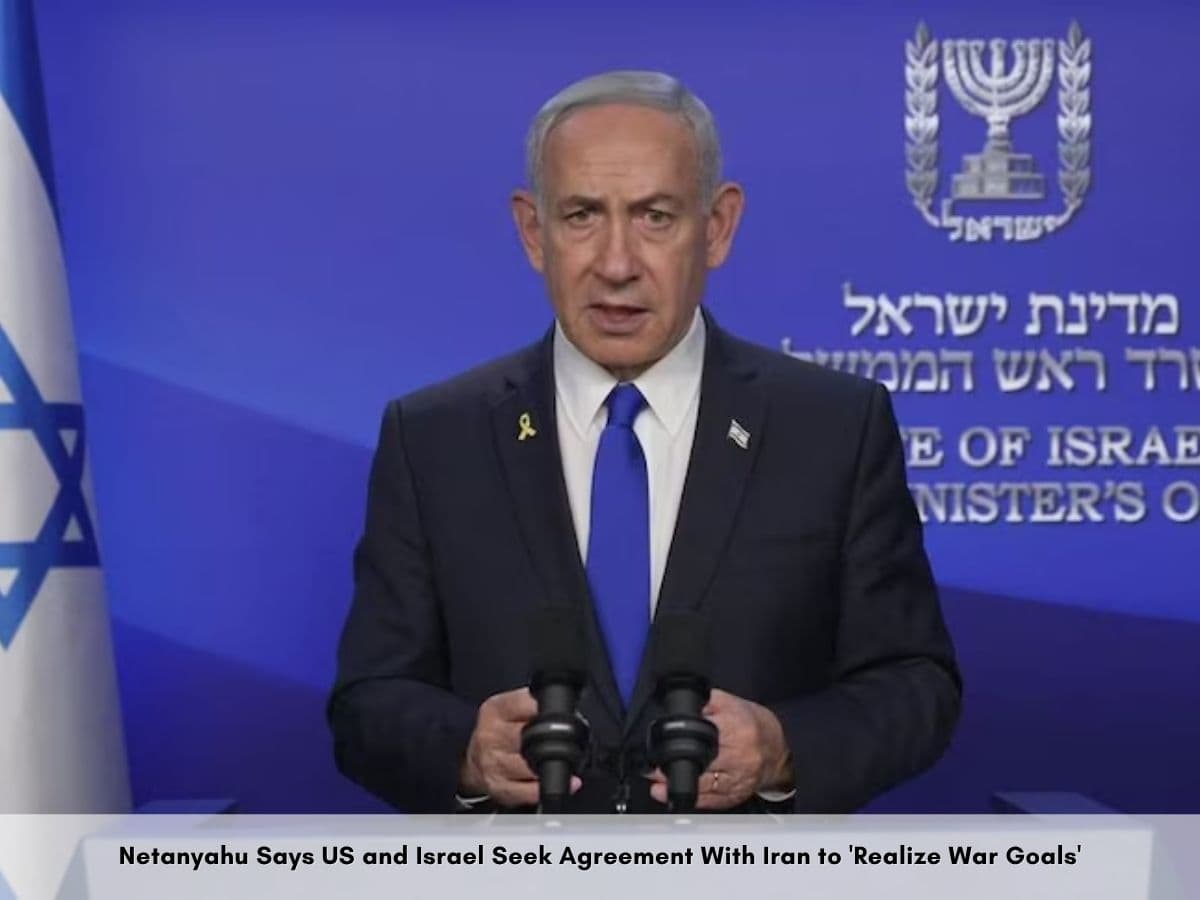
Netanyahu Vows Continued Strikes Against Iran
Key Takeaways
- Netanyahu discussed Iran talks with Trump.
- Trump says gains in Iran can be leveraged into a negotiated deal protecting Israel's interests.
- Netanyahu vowed continued strikes against Tehran and Hezbollah.
Netanyahu-Talks Strategy
Israeli Prime Minister Benjamin Netanyahu has vowed continued military strikes against Iran and Hezbollah despite ongoing diplomatic discussions with the United States.
“Netanyahu discusses Iran talks with Trump, vows continued strikes against Tehran, Hezbollah Israeli Prime Minister Benjamin Netanyahu said Monday that he spoke with Donald Trump, saying that the U”
In a video statement, Netanyahu announced that he had spoken with US President Donald Trump, with Trump believing that 'there is a chance to leverage the tremendous achievements of the IDF (Israeli army) and the U.S. military in order to realize the war's objectives in an agreement.'

However, Netanyahu made clear that military operations would continue regardless, stating 'We will protect our vital interests under any circumstances,' while simultaneously declaring 'At the same time, we continue to strike both in Iran and in Lebanon.'
This dual approach reflects Israel's strategy of maintaining military pressure while pursuing diplomatic outcomes that protect Israeli security interests.
Military Operations Scope
Netanyahu has claimed significant military achievements from the ongoing strikes against Iranian infrastructure, specifically targeting what he describes as Iran's 'missile program and the nuclear program.'
The Israeli Prime Minister has boasted about the elimination of Iranian nuclear personnel, stating 'Just a few days ago we eliminated two more (Iranian) nuclear scientists, and this is not the end.'
Concurrently, Israel has intensified air operations against Hezbollah targets in Lebanon, with the Israel Defense Forces reporting 'a wave of air strikes against terrorist Hezbollah infrastructure in Beirut.'
Lebanese state media confirmed three Israeli air raids over Beirut's southern suburbs, visible through rising smoke columns.
These coordinated military efforts aim to degrade both Iran's nuclear capabilities and Hezbollah's operational capacity while maintaining regional pressure.
Regional Involvement
The expanding conflict has drawn in other regional actors, with Ukrainian President Volodymyr Zelenskyy alleging that Russia is providing intelligence support to Iran that is extending the war.
“Zelenskyy Says 'Growing Evidence' Of Russian Intelligence Support For Iran Ukrainian President Volodymyr Zelenskyy says there is "growing evidence" that Russia is continuing to "provide the Iranian regime with intelligence support”
Zelenskyy stated there is 'growing evidence' that Russia is 'providing the Iranian regime with intelligence support' and helping Iran 'strike more accurately.'
This claim appears to be supported by US officials who confirmed to RFE/RL that Russia is providing Iran with targeting information to attack US troops and military assets in the Middle East.
The Wall Street Journal subsequently reported that Russia was sharing satellite imagery and improved drone technology with Iran.
Meanwhile, Bahrain, home to the US Fifth Fleet naval headquarters, has experienced several loud explosions, with the Bahraini Interior Ministry calling on citizens to evacuate to shelters or safe places, indicating the conflict's regional spillover effects.
Iran's Position
Iran has consistently denied engaging in any dialogue with the United States despite President Trump's claims of 'very good and productive' talks.
Iran's parliament speaker dismissed reports of negotiations as 'fake news' being used to 'manipulate' oil markets, while the Iranian Foreign Ministry issued a statement asserting that 'The US President's statements are within the framework of efforts to reduce energy prices and gain time to implement his military plans.'
The ministry emphasized that 'We are not the party that started this war, and all these requests should be referred to Washington.'
These denials create a stark contrast with Trump's public statements, where he claimed Iran 'wants to make a deal badly' and that an agreement could come 'within five days or less.'
The conflicting narratives highlight the deep mistrust between the two nations despite apparent communication channels.
Economic Impact
The conflict has had significant economic and strategic consequences, with the Strait of Hormuz remaining effectively blocked to most shipping and causing volatile oil prices globally.
“Netanyahu discusses Iran talks with Trump, vows continued strikes against Tehran, Hezbollah Israeli Prime Minister Benjamin Netanyahu said Monday that he spoke with Donald Trump, saying that the U”
Trump had issued a 48-hour ultimatum demanding Iran fully reopen the strategic waterway, warning of strikes on Iranian power plants if the deadline passed.
When the ultimatum expired on Monday without military action, Trump announced a five-day postponement, citing the 'productive' talks with Iran that Tehran has since denied.
The ongoing hostilities have 'significantly complicating the fuel situation in many countries,' according to Zelenskyy, who noted the US-Israeli war with Iran was affecting global markets.
Energy Minister Engineer Dean Sharafi told Radio Farda that Iranian energy facilities remain vulnerable with 'virtually no protection,' suggesting the potential for further disruption to global energy supplies as the conflict continues to evolve.
More on Iran

President Trump Says Iran Deal Within Reach Amid Talks With Senior Iranian Official
10 sources compared

Trump Approves Iran Operation After Netanyahu Presses for Joint Strike on Khamenei
12 sources compared

President Donald Trump orders ICE officers deployed to airports amid DHS shutdown.
227 sources compared
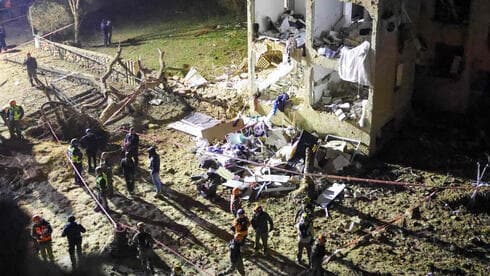
Iranian Missiles Strike Israel; Officials Report 180 Injured Amid Conflicting Casualty Figures.
12 sources compared