Full Analysis Summary
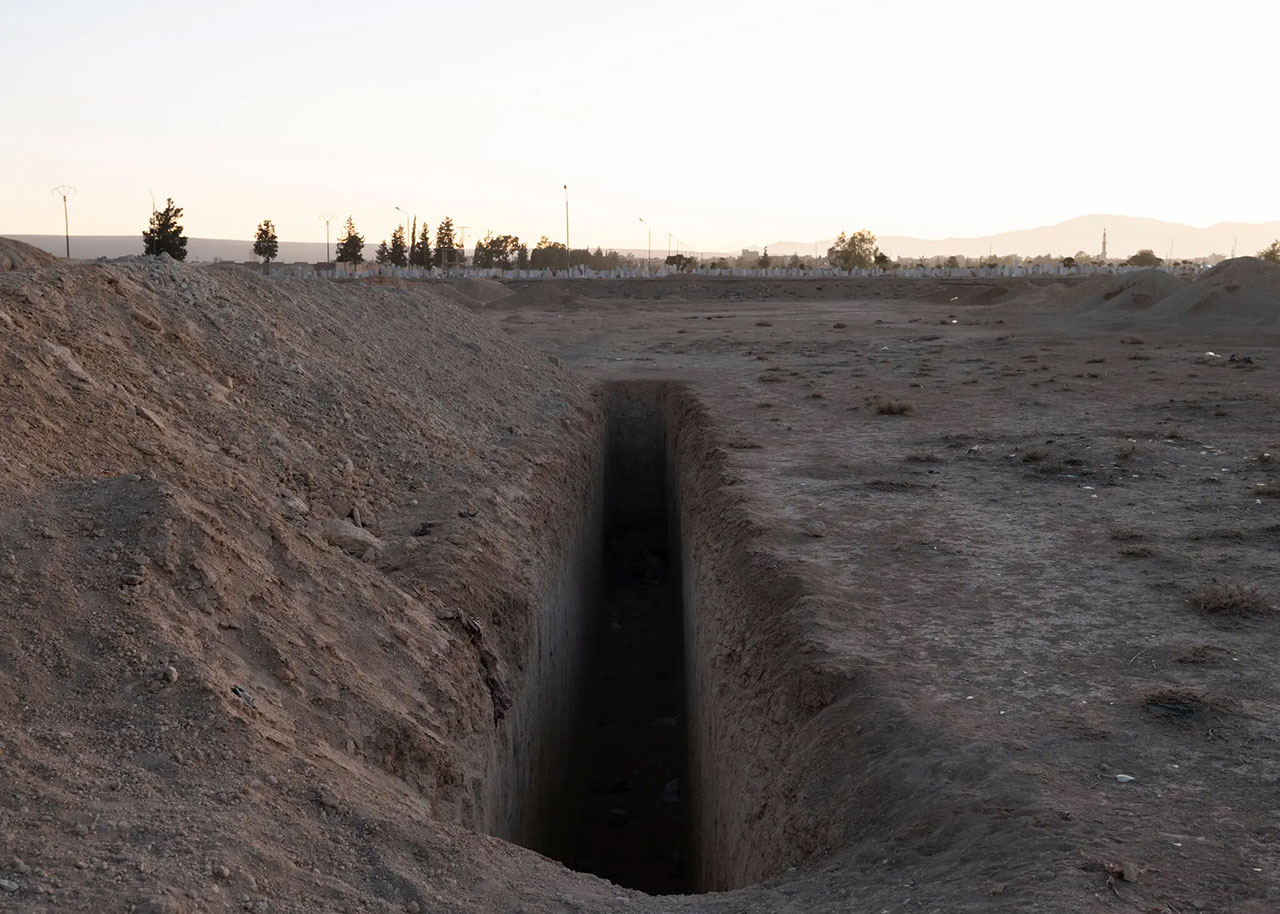
Disappearances and Mass Graves
Families of Syrians who vanished during the war now believe many of the missing are in mass graves, and relatives say disappearances began in some areas as early as 2013.
Al-Mishtawli says family members were often taken while going to work or running errands in Sayyida Zainab, a Damascus suburb, and by 2018 nine relatives, including his father, had disappeared.
Those relatives and others are appealing to international organizations and the U.N. to exhume and identify the victims.
Coverage Differences
Source availability / inability to compare perspectives
Only one source (SFG Media) was provided for this assignment, so cross-source comparisons (e.g., Western vs. West Asian vs. alternative outlets) are not possible. The paragraph therefore reflects only SFG Media's reporting and quotes rather than multiple independent narratives. The article itself quotes relatives such as Al‑Mishtawli reporting disappearances beginning in 2013 and appeals to international bodies.
Missing persons commission update
A new Syrian commission on missing persons, described in the article as formed by the government, says locating and identifying remains will take years.
The commission is seeking international assistance to build technical and forensic capacity, including establishing DNA laboratories to support identification efforts.
Coverage Differences
Tone / framing (limited to single source)
Because only SFG Media's account is available, there is no contrasting coverage from opposition, international, or alternative outlets. SFG Media reports the commission as government-formed and emphasizes the commission’s own projection that the process will take years and that international technical help is needed.
Forensic training for Syrian teams
Guatemalan forensic instructors are training Syrian teams in grave detection and recovery, bringing decades of experience from Guatemala's civil war.
The training includes practical exercises: trainees from Damascus and Aleppo practiced locating buried skeletons in a field and learned excavation and forensic techniques, according to the report.
Coverage Differences
Unique/off-topic detail (single-source)
SFG Media provides a specific international partner — the Forensic Anthropology Foundation of Guatemala — and highlights hands-on training. Without other sources, we cannot verify alternative accounts or additional partners; the article itself credits Guatemala’s experience as a model transferred to Syrian teams.
Exhumation and identification delays
The slow, technical nature of exhumation and identification, combined with the commission’s admission that the effort will take years, leaves relatives in prolonged uncertainty and dependent on outside forensic capacity.
SFG Media reports relatives appealing to the U.N. and international organizations to help exhume and identify victims, underscoring both the human cost and the institutional limits inside Syria.
Coverage Differences
Narrative emphasis / missing comparative voices
SFG Media emphasizes relatives' appeals and the technical hurdles the government-formed commission describes; because no other sources were supplied, we cannot show whether other outlets stress accountability, political impediments, or alternate forensic partnerships. The narrative therefore centers on appeals for technical help and the long timeline reported by the commission.
Efforts to identify remains
SFG Media reports that government-created institutions and foreign trainers have begun work to locate and identify remains.
However, the scale, technical requirements, and time needed mean families will likely continue searching for years.
Because only SFG Media's reporting was supplied for this task, it is not possible to compare tone, emphasis, or alternative explanations across different source types from the provided materials.
Coverage Differences
Overall limitation / missing multiple-source perspective
The central limitation is source availability: only SFG Media was provided, so the article synthesizes that single perspective. That prevents the identification of contradictions or tonal differences across West Asian, Western mainstream, or alternative outlets that the user requested.