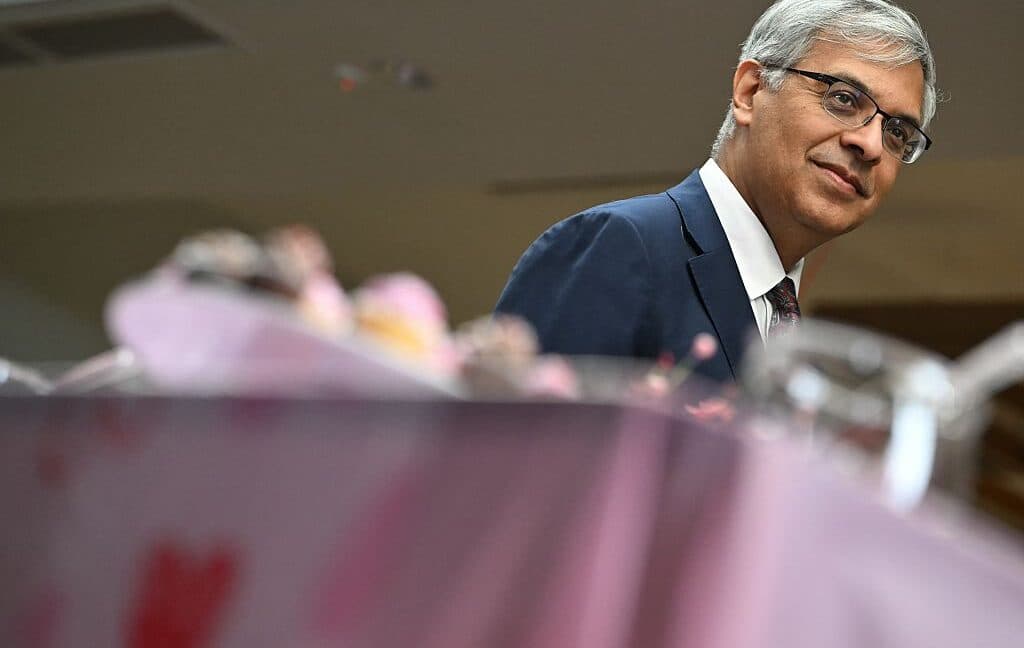
NIH director launches “Scientific Freedom” lectures with non-scientist
Key Takeaways
- NIH launches a new lecture series with first event scheduled March 20.
- First lecture features a non-scientist as the scheduled speaker.
- NIH director Jay Bhattacharya cites perceived pandemic censorship as motivation for the series.
NIH lecture launch
On Tuesday, word spread that the National Institutes of Health was launching a series of what it’s calling “Scientific Freedom Lectures,” with the first scheduled for March 20.
“On Tuesday, word spread that the National Institutes of Health was launching a series of what it’s calling “Scientific Freedom Lectures,” with the first scheduled for March 20”
The “freedom” theme echoes one of the major concerns of the director of the NIH, Jay Bhattacharya, who feels he suffered outrageous censorship of his ideas during the pandemic and is using his anger about it to fuel his efforts to bring change to the NIH.
Given that scientific freedom is a major interest of the director, you might think that the first lecture would be delivered by a distinguished scientist.
Guess again.
First speaker and topic
The speaker at the first lecture will be a former journalist best known for his fringe ideas on COVID and the climate.
The topic will be the possibility that SARS-CoV-2 was accidentally released from a lab, an idea for which there is no scientific evidence.
Bhattacharya's background
Bhattacharya was one of the signatories of the Great Barrington Declaration, which argued that we should try to protect the elderly and vulnerable but otherwise enable COVID to spread through the rest of the population.
“On Tuesday, word spread that the National Institutes of Health was launching a series of what it’s calling “Scientific Freedom Lectures,” with the first scheduled for March 20”
By and large, public health officials were aghast at the likely consequences—overwhelmed hospital systems, a still-substantial rate of mortality among healthy adults, the consequences of more cases of long COVID, etc.—and argued strongly against it.
Bhattacharya suffered no professional consequences but felt his ideas were being suppressed.
He took part in a lawsuit that accused the government of censoring him, but the Supreme Court rejected it on the grounds that he was unable to tie any alleged incident of censorship to the government agencies he sued.
Since then, he’s been animated by the idea that the scientific community needs major reform, going so far as to call for a second scientific revolution.
Ridley's views and record
Instead, he’s chosen Matthew Ridley, a British hereditary peer and science journalist.
While some of his early books on biology were highly praised, Ridley has mostly been known for his fringe ideas about climate change.
While Ridley accepts that the greenhouse effect is real and we are warming the planet, he appears to be convinced that warming will be at the low extreme of the range expected by mainstream science (if he has detailed his reasons for believing this, we have been unable to find it).
Instead, he argues that a boost in plant growth and lower cold-related deaths will make climate change a net win for humanity.
More on Technology and Science

Chemical odor forces FAA to halt flights across DC-area airports
27 sources compared

Apple Cuts China App Store Commissions to 25% After Regulator Pressure
25 sources compared

FBI Investigates Hacker Who Uploaded Malware-Laced Games to Steam
12 sources compared

University of Cambridge Researchers Urge Tighter Regulation Of AI Talking Toys For Under-Fives
10 sources compared