South America10 December, 20253 min read
Nobel Peace Prize Winner María Corina Machado Defies Maduro Government's Travel Ban, Appears in Oslo After 11 Months
Machado had been in hiding for 11 months amid arrest warrants and a travel ban Her daughter Ana Corina Sosa Machado accepted the Nobel Peace Prize on her behalf

49 outlets told this the same way.
Outlets did split on Alexandre de Moraes Orders Eduardo Bolsonaro Arrest, Cancels Passport, Enforces Four-Year Sentence →
Machado's Oslo Appearance
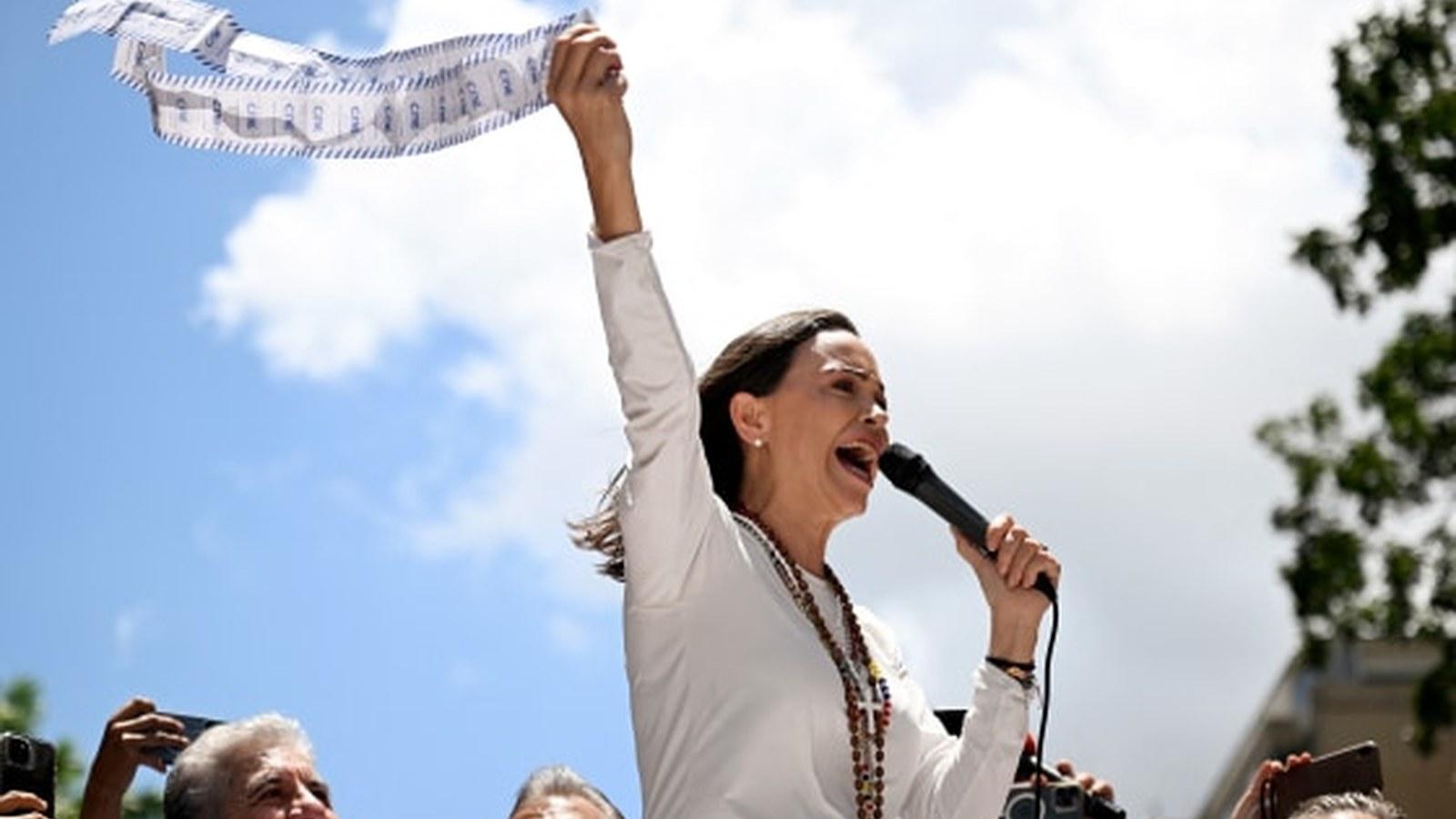
María Corina Machado made a dramatic public appearance in Oslo after roughly 11 months in hiding, re-emerging to greet supporters following her daughter's acceptance of the 2025 Nobel Peace Prize on her behalf. Uzalendo News reported she made a covert arrival early Thursday and emerged onto the balcony of the Grand Hotel to wave and blow kisses to hundreds of supporters. CBC said she appeared publicly for the first time in 11 months early Thursday, waving to supporters at a hotel in Oslo.
“María Corina Machado made a dramatic, covert arrival in Oslo early Thursday, emerging onto the balcony of the Grand Hotel to wave and blow kisses to hundreds of supporters before climbing over security barricades to greet them amid chants and raised phones.”
The Norwegian Nobel Institute and committee released an audio in which Machado said people had risked their lives to bring her to Oslo. Planned press conferences and news events around her arrival were disrupted or canceled, and the Associated Press reported a planned news conference would not take place that day.

Machado's Oslo journey
Machado’s journey to Oslo followed more than a year of hiding and legal and political barriers at home. She was barred from Venezuela’s 2024 presidential race, faced criminal charges and a long-standing travel ban, and supporters said getting her out was fraught with danger. News Arena India reported she secretly left Venezuela by boat, traveling via the Caribbean island of Curaçao before flying to Oslo.
Blue News and other outlets said she had been hiding at a secret location in Venezuela and faced charges including terrorism. Outlets also noted the Nobel award intensified scrutiny of her ties to hawkish U.S.-aligned figures, and Free Press Journal said she partly dedicated the prize to US President Donald Trump, a point critics seized on when assessing the prize’s political implications.

Machado Oslo ceremony updates
The Oslo ceremony proceeded with Machado's daughter, Ana Corina Sosa Machado, accepting the prize and delivering a lecture written by her mother, while the Nobel Institute and committee provided intermittent updates about Machado's status. CBC reported that her daughter said Machado remains committed to a free Venezuela and will return soon.
“Her daughter, Ana Corina Sosa, accepted the prize and said Machado remains committed to a free Venezuela and will return soon.”
ITVX reported that Nobel Committee chair Jørgen Watne Frydnes called Machado one of the most extraordinary examples of civilian courage. El Mundo and AP highlighted that an audio released by the Nobel committee had Machado saying she was traveling to Oslo but would not arrive in time, and that organizers described the trip as involving a situation of extreme danger.
Reactions to Machado Prize
The award and Machado’s transit to Oslo deepened existing controversy, with critics and Venezuelan authorities denouncing the prize while international supporters framed it as a validation of the opposition’s fight. The Guardian and Azat TV noted critics pointed to Machado’s support for U.S. military measures and her dedication of the prize to former U.S. president Donald Trump.
The Grand Junction Daily Sentinel and CNN highlighted reports that U.S. strikes on suspected drug‑smuggling boats have reportedly killed dozens, an element that further complicated reactions. Venezuelan officials were blunt: PhotoNews Pakistan quoted the attorney general warning Machado would be treated as a fugitive from justice if she left, Caracas denounced the Nobel as an auction, and Interior Minister Diosdado Cabello organized a rival rally.
Venezuelan opposition trade-offs
Observers warned the episode could reshape the opposition's trajectory, noting that the risks and the choice between remaining inside Venezuela or going into exile carry strategic trade-offs. Free Malaysia Today quoted Benedicte Bull of the University of Oslo saying an arrest upon return "would have strong symbolic impact," but that prolonged exile "would likely erode her leadership."
“One laureate now lives in exile and was in Oslo on Wednesday. Venezuelan opposition figure Machado has refused to leave the country, a stance that has increased her domestic political standing but which experts say puts her at risk of arrest if she returns — an arrest would have strong symbolic impact, said Benedicte Bull of the University of Oslo. Bull added that prolonged exile would likely erode her leadership.”
bgnes and NPR reported broad international calls for accountability and for Maduro to step down. The Nobel committee and many foreign leaders used the Oslo events to press for democratic change, but coverage varied on whether the prize strengthens Machado's position at home or underscores the limits of international recognition to alter on-the-ground repression.