Full Analysis Summary
North Korea succession update
South Korea’s National Intelligence Service (NIS) told lawmakers it now assesses that North Korean leader Kim Jong Un has moved his daughter from 'successor training' into a 'successor-designate' stage.
The daughter is widely identified in outside reports as Kim Ju Ae and is thought to be about 13.
The assessment signals the prospect of a fourth dynastic generation.
The assessment was described in closed briefings and reported across international outlets, with sources noting an upgrade in language from earlier descriptions of grooming to a near-designation.
Several outlets emphasised the NIS wording and timing ahead of North Korea’s once-every-five-years Workers’ Party congress.
Coverage Differences
Tone/Formality
Some sources present the change as a clear NIS assessment of designation, while others couch it as an upgrade in language from "successor training" to a "successor‑designate" stage — reflecting variation in how definitively outlets report the intelligence briefing. For example, HUM News (Other) reports the NIS "assesses... has already designated his daughter, Kim Ju Ae, as his successor," while the Associated Press (Western Mainstream) quotes the NIS as saying she is "close to being designated" and the Mint (Asian) frames it as entering a "successor‑designate stage." These differences reflect editorial choices about certainty and how the agencies’ phrasing is relayed to readers.
Certainty
Some outlets emphasise the closed‑briefing nature and the intelligence framing (e.g., The Guardian and NPR refer to the NIS briefing to lawmakers), while others use more declarative headlines that state Kim has "designated" or "selected" his daughter — a difference between reporting the agency’s assessment versus asserting a formal action by Pyongyang. This distinction appears across Western Mainstream (The Guardian, NPR) and Other/Tabloid sources (Daily Trust, LADbible).
Naming/Source
Several pieces note that North Korean state media do not publish her name and that the commonly used name "Kim Ju Ae" comes from outside accounts; outlets differ in how prominently they repeat that caveat. Associated Press and The Guardian explicitly note the name’s outside origin, while other sources (GB News, Moneycontrol) use the name as standard identification.
Public appearances as evidence
Analysts and the NIS point to a steady stream of carefully staged public appearances as the primary evidence.
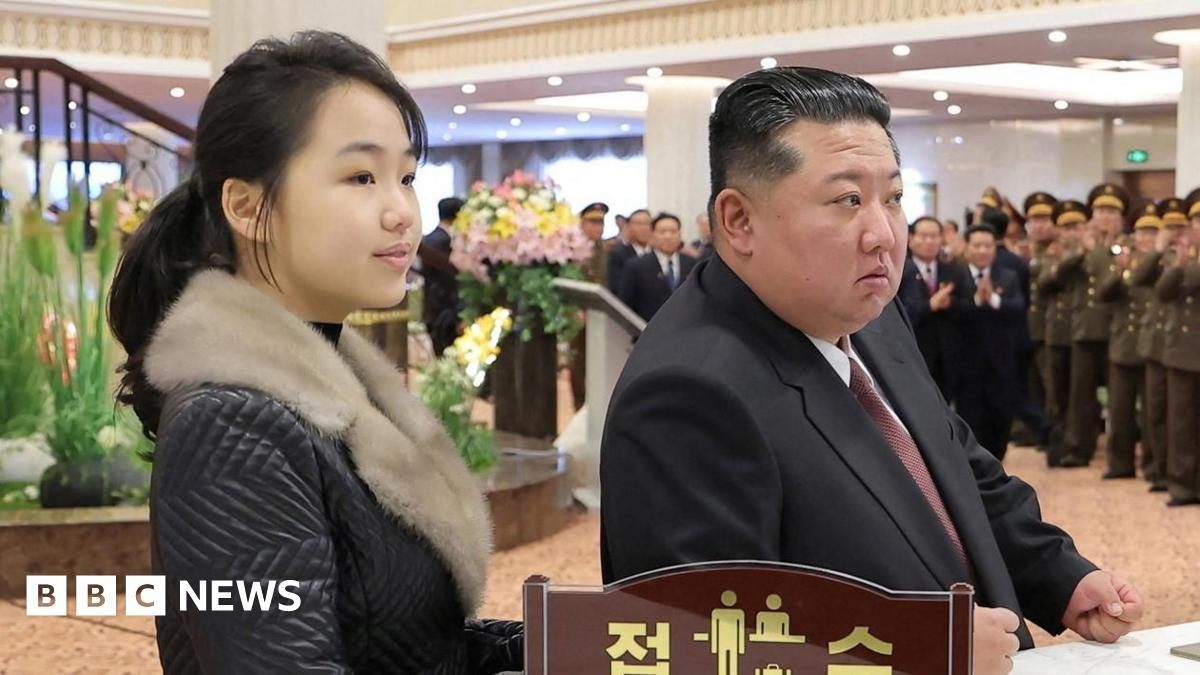
They cite state media photos and footage of Kim with a young girl at long‑range missile tests (first shown in 2022), military parades, factory visits, a New Year’s Day visit to the Kumsusan Palace of the Sun, a reported trip to Beijing, and scenes of her near or slightly ahead of Kim in official coverage.
Outlets list similar examples but vary in emphasis, with some highlighting symbolic imagery such as designer clothes and postage stamps, while others stress the pattern of being positioned as second‑in‑command or offering policy input.
Coverage Differences
Evidence emphasis
Sources agree on the roster of public events cited as evidence, but differ on what those signs signify: Mint (Asian) and Dimsum Daily (Asian) emphasise the shift in internal terminology and staging; LADbible (Western Tabloid) and GB News (Western Mainstream) underline visual signals such as designer clothing and proximity to Kim; while the Associated Press (Western Mainstream) and i24NEWS (Israeli) note alleged policy input and elevation to a de facto second‑ranking role. These differences reflect editorial focus on symbolism versus institutional function.
Policy input claim
Some outlets report or cite NIS claims that Ju Ae has begun to give input on state matters, while others either omit that detail or treat it more cautiously. HUM News (Other) says she "may have a role in policy," Daily Trust (Other) and i24NEWS (Israeli) repeat that the NIS mentioned "reported input on some policies," and AP frames it as observers’ interpretation rather than direct Pyongyang confirmation.
Visual details
Tabloid and lifestyle‑oriented outlets foreground visual and human interest details (designer clothing, long hair, stamps) that emphasise an engineered image, while mainstream outlets tend to treat such details as supporting evidence rather than the main claim. Examples include LADbible and Moneycontrol’s note of polished appearance versus AP and The Guardian’s focus on state messaging and political signalling.
North Korea succession debate
Observers note that naming a child heir, and a girl in particular, departs from North Korea’s recent male-line pattern.
Analysts point to female precedents inside the regime.
Multiple sources highlight Kim Yo Jong as an existing example of female influence.
They also stress the unusual nature of selecting a roughly 13-year-old.
Commentators and intelligence analysts asked why an apparently young and healthy Kim Jong Un would move now to a child successor.
They emphasise uncertainty over what policy direction, if any, Ju Ae would take.
Coverage Differences
Historical context
Mainstream outlets (The Guardian, Associated Press, NPR) emphasise the contrast with North Korea’s male‑line succession history and frame the move as an extension of the dynasty, whereas tabloids and regional outlets (Daily Express US, LADbible) highlight the novelty and human‑interest angle of a female heir. The Guardian and AP underline institutional significance; LADbible foregrounds public spectacle and the idea of a first female leader.
Precedent vs novelty
Some pieces stress that Kim Yo Jong’s prominence already provides a female precedent (GB News, i24NEWS), while others stress how unusual a child successor remains and point to possible unacknowledged male siblings (news24online, yourcentralvalley). This illustrates variance in weighing precedent against novelty.
Uncertainty/Questioning
Several outlets explicitly flag unanswered questions: why a young heir now, whether other children exist, and what formal steps would follow. NPR and AP note practical constraints such as party rules and general opacity; tabloids less often stress these institutional limits.
Succession at Party Congress
Attention now centres on the upcoming Ninth Workers’ Party Congress.
Seoul’s intelligence said it will watch whether Ju Ae appears with Kim or receives internal party recognition, steps that would further institutionalise any succession plan.
Analysts warn public moves may be limited by party age rules and political choreography.
Some outlets mention specific possible titles or symbolic language, with Mathrubhumi citing the potential of an internal title such as "First Secretary".
Others caution that any formal role could be subtle, internal or rhetorical rather than immediate.
Coverage Differences
Possible formalization
Mathrubhumi (Asian) explicitly mentions the possibility of a party title such as "First Secretary" at the congress as a route to institutionalise her role, while Associated Press and NPR emphasise that any appointment may be subtle or internal given party age thresholds.
Congress role
Most outlets treat the congress as an important signalling moment; Newsweek and the Guardian stress it as the event where Kim sets five‑year policy goals and could consolidate power, while others focus strictly on whether Ju Ae appears publicly as the key indicator.
Caution/constraints
Outlet coverage varies in how strongly it highlights legal and practical constraints (age rules, media control). Some Asian and mainstream sources foreground these limits (Moneycontrol, AP), while tabloids and some others give more space to the spectacle of a young heir.
Leadership signalling and uncertainty
Major uncertainties remain: North Korean state media do not name the child.
The name "Kim Ju Ae" traces to outside accounts.
Intelligence and analysts disagree on the reasons and timing of any move.
Some reports link the development to broader military and diplomatic strategy.
Several sources note other intelligence reporting on North Korea’s military projects, including submarine development.
Sources also note a stated restraint on ICBM tests.
These points underline that leadership signalling is happening alongside ongoing weapons development.
Overall coverage spans sober intelligence summaries in mainstream outlets.
It includes human-interest visuals in tabloids.
Regional analysis emphasises the dynastic implications and strategic context.
Coverage Differences
Naming origin
Multiple mainstream sources note the name is not public and that the common identification "Kim Ju Ae" comes from Dennis Rodman’s account; other outlets adopt the name without repeating that caveat. Associated Press and The Guardian state the origin explicitly, while outlets such as GB News and Dimsum Daily use the name broadly.
Military context
Some regional outlets (Mathrubhumi, Sri Lanka Guardian) include concurrent reporting about North Korea’s military programs — for instance, an 8,700‑ton submarine reportedly carrying up to 10 missiles — suggesting the leadership news is part of a broader strategic picture; many Western outlets focus more narrowly on succession signalling and party mechanics.
Speculation vs confirmation
Across the sample, mainstream outlets consistently flag the NIS assessment and stress uncertainty (AP, NPR, The Guardian), while tabloids and some other sites present the story with more declarative language and vivid visuals, illustrating a split between cautious intelligence reporting and more assertive public presentations.
