
NTSB Says Distracted Drivers Caused Two Fatal Crashes While Using Ford BlueCruise
Key Takeaways
- Two fatal 2024 crashes occurred while Ford's BlueCruise hands-free system was active
- NTSB concluded driver distraction likely played a central role in both crashes
- NTSB released documents and will hold a March 31 public hearing in Washington, D.C.
Crash overviews and braking
The NTSB’s reviews of two early-2024 fatal crashes involving Ford’s BlueCruise show distracted drivers were implicated in both collisions and that no vehicle subsystem applied braking in either case.
“Ford faces federal hearing over 2 fatal crashes involving BlueCruise Washington — The National Transportation Safety Board will hold a March 31 hearing to determine the probable cause of two fatal crashes involving Ford Motor Co”
In February 2024 in San Antonio, a 2022 Ford Mustang Mach‑E using BlueCruise struck a stationary 1999 Honda CR‑V at about 74 mph; the Mustang driver sustained minor injuries while the Honda driver died.

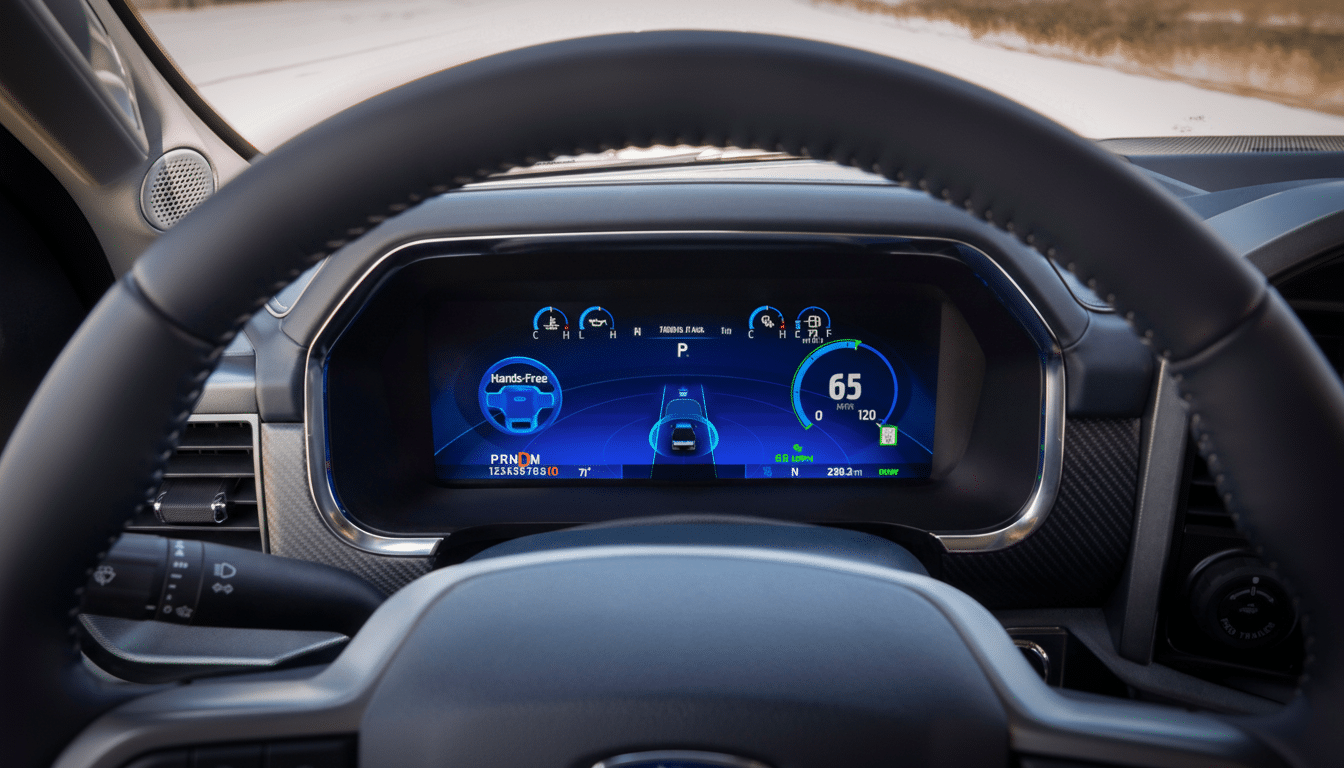
The NTSB’s report says Ford’s camera-based driver-monitoring system registered the driver as looking at the main infotainment screen in the five seconds before the crash and that the driver received two visual and auditory alerts in the 30 seconds before impact but did not brake.
Investigators noted that “no vehicle subsystem applied any braking in either of the fatal crashes.”
Philadelphia crash details
The Philadelphia March 2024 crash highlights a distinct driver-monitoring mismatch: the Mach‑E driver was later charged with DUI homicide, and while the monitoring system logged the driver’s eyes as “on-road” for the full five seconds before impact, a photograph taken two seconds before the crash appears to show a phone held above the steering wheel, potentially outside the monitoring camera’s field of view.
That crash involved a Mach‑E striking a stopped 2012 Hyundai Elantra that then hit a 2006 Toyota Prius; both the Elantra and Prius drivers died while the Mach‑E driver had minor injuries.
Local police reported the Mach‑E driver was intoxicated at the time and was later charged; court proceedings were still pending at the time of reporting.
System limits and admissions
Both articles emphasize limitations in driver-monitoring and active-safety sensor stacks and note Ford’s own warnings that BlueCruise is a convenience feature, not a crash-avoidance system, and that forward-collision warning (FCW) and automatic emergency braking (AEB) are “supplemental.”
“Two drivers involved in fatal crashes in 2024 while using Ford’s BlueCruise hands-free driving system were likely distracted in the moments before impact, according to new information released Wednesday by the National Transportation Safety Board (NTSB)”
Ford engineers told the NTSB they would not expect the current generation of radar‑camera fusion AEB systems to reliably detect and classify some stationary targets in highway-speed scenarios, and industry testing suggests many AEB systems perform inconsistently against stopped vehicles—factors that help explain why AEB did not engage in these crashes.
Recommended fixes and safeguards
Investigators and safety researchers flagged specific vulnerabilities in camera-based gaze tracking, including blind spots when a phone is held in front of the driver, lighting or occlusion issues, and the potential for complacency when hands-free lane-keeping feels automated.
The NTSB and safety groups have urged tougher safeguards—expanding driver-camera fields of view, detecting handheld phone posture, faster and stronger alert escalation, limiting distracting screen interactions at speed, and, in some scenarios, restricting hands-free engagement—many of which could be implemented via over-the-air updates if Ford chooses to pursue them.
Regulatory response and messaging
Regulatory scrutiny and legal follow-ups are ongoing: the NTSB’s reports and meetings with Ford feed into a broader National Highway Traffic Safety Administration (NHTSA) probe and could lead to recommendations or rule changes on how partial‑automation systems are described and constrained.
“Federal investigators say driver distraction likely played a central role in two fatal crashes that occurred while Ford’s BlueCruise hands-free system was active, sharpening questions about how well current driver-monitoring and automatic braking technologies prevent real-world tragedies”
The cases also underline messaging gaps—owners’ manuals and marketing call BlueCruise a convenience feature and caution drivers to remain attentive, but real-world misuse, intoxication, and edge-case sensor limits have prompted investigators to press for clearer communications and system changes.
More on Technology and Science
Chemical odor forces FAA to halt flights across DC-area airports
27 sources compared

Apple Cuts China App Store Commissions to 25% After Regulator Pressure
25 sources compared

FBI Investigates Hacker Who Uploaded Malware-Laced Games to Steam
12 sources compared

University of Cambridge Researchers Urge Tighter Regulation Of AI Talking Toys For Under-Fives
10 sources compared