Oil Prices Climb as Iran Proposes Reopening Strait of Hormuz With U.S. Nuclear Talks Deferred
Key Takeaways
- Oil prices rose as markets priced in a longer U.S. blockade of Iran.
- Brent crude jumped to about $117–$119 per barrel.
- Trump signaled extension of the naval blockade against Iran.
Proposal vs. Blockade
Oil prices climbed as Iran proposed to end its blockade of the Strait of Hormuz in exchange for deferring nuclear negotiations with the United States, but the offer failed to calm traders’ concerns, according to Al Jazeera.
“Global crude oil prices are rising due to concerns over supply disruptions in West Asia and uncertainty surrounding US policy towards Iran”
Brent crude rose 3 percent on Tuesday, and Al Jazeera reported Brent stood at $111.49 per barrel as of 07:30 GMT, up 13 percent from Tuesday last week, when the benchmark settled below $100.

Al Jazeera said Iranian Foreign Minister Abbas Araghchi shared proposals to reopen the strait with interlocutor Pakistan amid stalled peace negotiations between Washington and Tehran.
Al Jazeera added that the US has not commented publicly on the Iranian proposal, which would set aside the thorny issue of Iran’s nuclear programme to a later date.
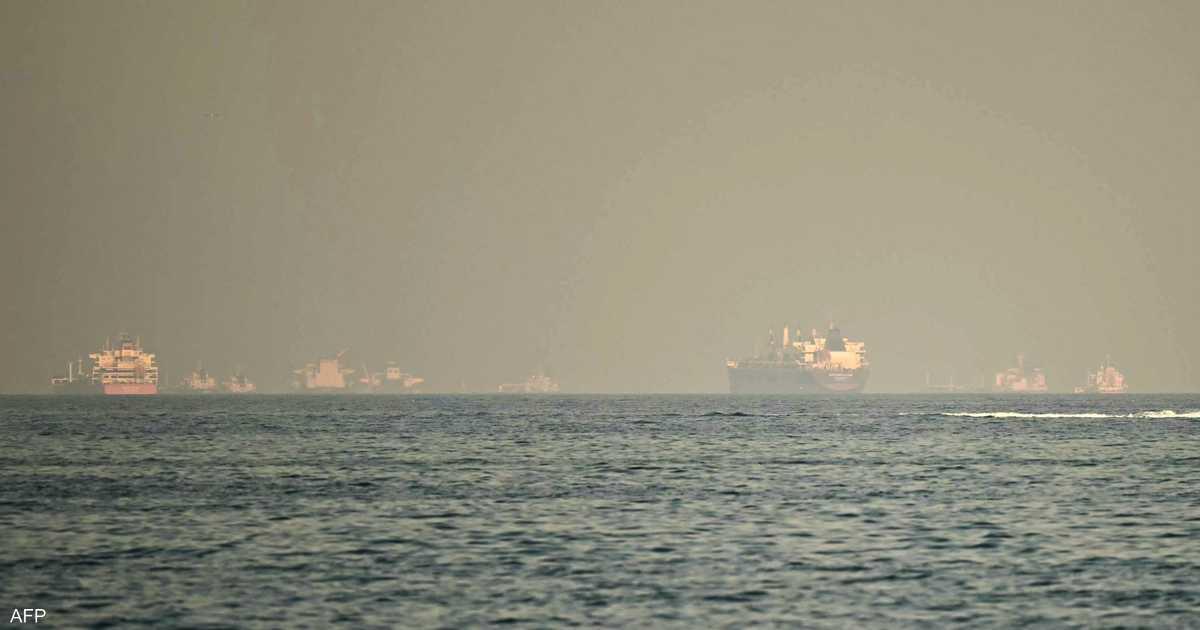
The same report said Iran’s threats against commercial shipping have reduced maritime traffic in the strait to a trickle over the past two months, with only eight vessels crossing on Sunday compared with 19 transits the previous day, according to ship tracking data monitored by Windward.
Al Jazeera also cited UNCTAD data that before the US and Israel launched their war on Iran on February 28, an average of 129 vessels passed the strait each day.
Al Jazeera further reported that the blockade and attacks on regional energy infrastructure have reduced global oil production by 14.5 million barrels per day, citing a Goldman Sachs estimate.
Trump’s Blockade Plan
While Iran floated a proposal to reopen the Strait of Hormuz, multiple reports said the United States moved in the opposite direction by preparing to extend its blockade of Iranian ports.
CNBC reported that oil prices jumped more than 6% Wednesday after President Donald Trump said he will maintain the U.S. naval blockade against Iran until they agreed to a nuclear deal.

CNBC said international benchmark Brent crude futures rose more than 6% to $118.33 per barrel by 12:10 p.m. ET, and U.S. West Texas Intermediate futures also advanced more than 6% to $106.37 per barrel.
CNBC quoted Trump telling Axios on Wednesday, "The blockade is somewhat more effective than the bombing," and added, "They are choking like a stuffed pig, and it is going to be worse for them. They can't have a nuclear weapon."
The BBC said oil prices soared after reports the US was preparing for an 'extended' blockade of Iran, with Brent crude rising to $119 (£88) a barrel on Wednesday afternoon, described as the highest price so far this month and a rise of nearly 7% in one day.
The BBC reported that it understood energy executives including Chevron chief executive Mike Wirth met President Donald Trump at the White House on Tuesday to discuss how to limit the fallout from the conflict on American consumers.
The BBC also said the meeting followed separate reports from the Wall Street Journal that Trump instructed aides to prepare to extend the ongoing blockade of Iran's ports, and that Iran said it will continue to disrupt traffic travelling through the Strait of Hormuz in response to the US blockade.
In parallel, Anadolu Ajansı reported that Trump instructed his advisers to prepare for a longer-term naval blockade targeting Iranian ports, and said the United Nations reported ship transits through the Strait of Hormuz have fallen by 95.3% since the start of the conflict due to restrictions in the waterway.
Ships, Interceptions, and Staging
Beyond price moves, reporting described how enforcement pressure is shaping tanker behavior near the blockade line and around the Strait of Hormuz.
“Oil prices continued to increase Wednesday on reports that US President Donald Trump has instructed his advisers to prepare for a longer-term naval blockade targeting Iranian ports”
Crude Oil Prices Today said at least six Iranian tankers laden with oil were loitering in a cluster near the port of Chabahar in Iran, outside the Strait of Hormuz but just inside the U.S. naval blockade line, based on satellite images and maritime intelligence analyses.
The same report said the cluster of about half a dozen Iranian vessels signals that Iran continues to load oil on Iranian tankers that are trying to leave the Middle East region, while the piling up of ships outside the Strait of Hormuz but inside the U.S. blockade line suggests American interception is working to delay Iranian oil exports.
Crude Oil Prices Today cited U.S. Central Command (CENTCOM) saying on Friday, “the blockade against ships entering or exiting Iranian ports continues. To date, U.S. forces have redirected 34 vessels.”
It also quoted Windward saying, “The tanker cluster east of Hormuz near Chabahar remains stable, reinforcing the persistence of eastern positioning under enforcement pressure.”
Windward’s proprietary imaging and analysis, as described by Crude Oil Prices Today, confirmed the continued presence of seven tankers in the anchorage area, consisting of six very large crude carriers (VLCCs) and one Suezmax, operating without AIS transmission.
The report added that Windward said the vessels remain in fixed positions, with “no indication of loading or ship-to-ship transfer activity,” supporting loitering rather than active operations.
Crude Oil Prices Today further reported that Windward said the dark mode of tanker positioning and a tanker likely acting as a bunkering unit suggest “deliberate staging behavior, rather than incidental congestion or short-term delay,” and that in one week to April 21 since the U.S. blockade was enforced, 34 energy tankers with Iranian links transited the area, according to Claire Jungman, Director of Maritime Risk & Intelligence at Vortexa.
The report also said Vortexa data put 160 million barrels of Iranian crude on water as of April 21, including 130 million barrels already outside the U.S. blockade area, and quoted Jungman saying, “This is sufficient to supply about 2.5 months of typical Chinese import needs, and more vessels are likely to trickle through the US net.”
Market Forecasts and Scenarios
Financial and market analysis in the sources framed the blockade as a prolonged disruption that would keep oil flows below pre-war levels and lift price forecasts.
ING’s analysis said it had “revised higher our oil price forecasts as peace talks between the US and Iran stall, and with no immediate signs of a resumption in flows through the Strait of Hormuz,” and described “Eight weeks” passing since US and Israeli strikes on Iran that led to “the ongoing blockade of the Strait of Hormuz.”
ING said the strait is a key chokepoint with “roughly 20m b/d of oil moving through the strait prior to the war,” and that after considering diversion and “the trickle of tankers still making it through the Strait of Hormuz,” “around 14m b/d of oil supply is currently disrupted.”
ING reported that in its base case it assumed flows would resume in April but “this has clearly not materialised,” so it updated assumptions and revised higher ICE Brent forecasts, now assuming oil flows would “slowly start resuming in May and June, and remain below pre-war levels for most of the year.”
ING said its new base case sees “ICE Brent averaging $104/bbl ($96 previously) over 2Q26,” while “Brent averaging $92/bbl ($88/bbl previously) over 4Q26,” and it described low inventories and the need to restock as suggesting oil prices will remain “relatively well supported for the foreseeable future.”
The analysis also laid out an upside risk scenario where “a near full closure of the Strait of Hormuz persisting through May” would likely see Brent “finding a floor above $100/bbl for the remainder of the year,” aligned with “scenario 2.”
ING warned of a more significant risk of “a renewed escalation that could nearly halt oil supply through the end of the second quarter,” and said under that scenario “Saudi crude shipments via the Red Sea and UAE exports from Fujairah would also be disrupted,” potentially driving oil prices to “new record highs,” aligned with “scenario 3.”
In parallel, the BBC reported that “Financial markets will now need to price in the prospect of a prolonged blockade,” quoting Kathleen Brooks, research director at XTB, and it linked the blockade to risks of “physical shortages and steeper price rises on a range of goods.”
Divergent Frames, Shared Pressure
Across outlets, the same core pressure—blockade fears and Strait of Hormuz disruption—was framed through different lenses: enforcement mechanics, political bargaining, and domestic economic strain in Iran.
“Oil price soars to $119 after reports of 'extended' Iran blockade Oil prices have soared following reports that the US is preparing for an 'extended' blockade of Iran”
The BBC emphasized the market and consumer impact, saying oil price soars followed reports of an 'extended' blockade and that energy executives including Chevron chief executive Mike Wirth met President Donald Trump at the White House on Tuesday, while it quoted Lindsay James, investment strategist at Quilter, saying, "every day that passes without a resumption of supply sees the risk of physical shortages and steeper price rises on a range of goods increasing".
The BBC also described Iran’s internal economic stress, citing the Statistical Center of Iran that “the annual inflation rate has risen to 53.7%,” and said “the rial, has fallen to a record low,” while reporting that “Around two million Iranians have lost their jobs, directly or indirectly, as a result of the war, the Iranian government had said last week.”
By contrast, Al Jazeera foregrounded maritime traffic and negotiation mechanics, reporting that only eight vessels crossed the strait on Sunday compared with 19 transits the previous day, and that Abbas Araghchi shared proposals to reopen the strait with interlocutor Pakistan while the US had not commented publicly.
Anadolu Ajansı leaned into the scale of disruption by citing the United Nations figure that ship transits have fallen by 95.3% since the start of the conflict, and it reported that Iran’s Revolutionary Guard Corps announced on March 2 that the Strait of Hormuz had been closed to transit following US-Israel strikes on Feb. 28.
CNBC, meanwhile, framed the blockade as a tool of leverage, reporting Trump’s claim to Axios that “The blockade is somewhat more effective than the bombing,” and tying the price jump to Trump’s statement that he will maintain the U.S. naval blockade against Iran until they agreed to a nuclear deal.
Even where outlets discussed the same event, they differed in what they treated as decisive: Crude Oil Prices Today highlighted the tanker cluster near Chabahar and Windward’s findings about vessels operating without AIS transmission, while ING treated the disruption as a multi-month scenario that would keep ICE Brent averaging $104/bbl over 2Q26 and potentially set a floor above $100/bbl if near full closure persisted through May.
Taken together, the sources depict a single standoff with multiple moving parts—negotiations, enforcement, and economic fallout—each outlet choosing different details to foreground as the blockade pressure continues.
More on Iran

Sir Christian Turner Says U.S. Only Special Relationship Is Probably Israel
14 sources compared

U.S. Intelligence Agencies Assess How Iran Would Respond If Trump Declares Victory
13 sources compared
Trump Administration Rejects Iran Proposal To End War, Reopen Strait of Hormuz Without Nuclear Program
11 sources compared
Donald Trump Extends U.S. Blockade of Iranian Ports, Driving Brent and WTI Oil Prices Higher
32 sources compared