
OpenAI in Talks to Buy Helion Fusion Energy; Altman Recuses From Deal Talks.
Key Takeaways
- OpenAI negotiating to buy Helion's electricity; 5 GW by 2030, 50 GW by 2035.
- Altman recused himself from Helion deal talks and stepped down as board chair.
- OpenAI may secure roughly 12.5% of Helion's future output.
OpenAI-Helion Energy Deal
OpenAI is reportedly negotiating to purchase electricity from Helion Energy, a fusion startup backed by CEO Sam Altman.
“Skip to main content 11 hours ago - Technology Scoop: OpenAI bets on Altman-backed fusion startup Ina Fried email (opens in new window) sms (opens in new window) facebook (opens in new window) twitter (opens in new window) linkedin (opens in new window) bluesky (opens in new window) Add Axios as your preferred source to see more of our stories on Google”
According to sources reported by Axios, the framework under discussion would give OpenAI an initial 12.5% share of Helion's output.
This would be equivalent to 5 gigawatts by 2030 and potentially 50 gigawatts by 2035.
This massive energy commitment reflects how quickly AI labs are moving from software narratives to securing long-term energy supply.
The deal represents a strategic shift for OpenAI, enabling guaranteed access to Helion's power generation as the company scales its AI operations.
These talks demonstrate that AI companies are beginning to secure dedicated power sources years in advance, recognizing the energy-intensive nature of large-scale AI models.
Conflict of Interest Governance
The potential deal raises significant conflict of interest concerns given OpenAI CEO Sam Altman's extensive involvement with Helion Energy.
Altman has served as Helion's board chair since 2015 and led the company's $500 million Series E round in November 2021.
He holds an estimated $375 million stake in the company according to The Next Web.
In response to these concerns, Altman has recused himself from the OpenAI deal discussions and stepped down from Helion's board entirely.
This follows a similar pattern from April 2025 when he stepped down as board chair of Oklo to avoid conflicts.
The governance issue was flagged as a potential problem when Microsoft signed its own Helion power purchase agreement in 2023.
Despite previous assurances about transparency, the board step-down suggests the company is handling the issue more formally this time.
Helion Technical Achievements
Helion Energy has achieved significant technical milestones that make this potential deal particularly noteworthy.
“Take advantage of our newsletter subscription and stay informed on the go”
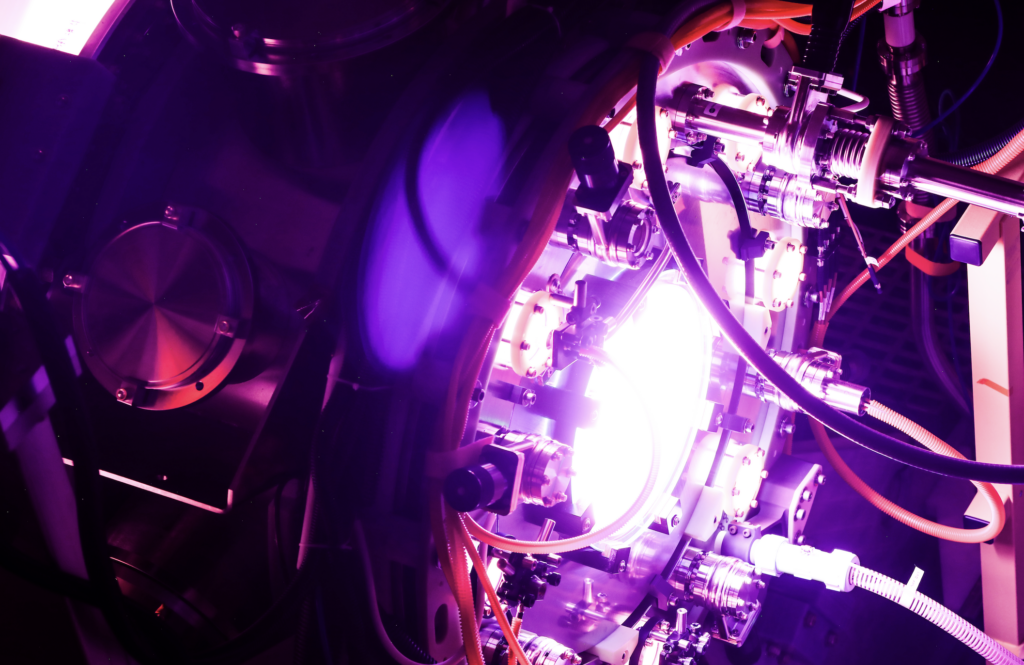
In February, Helion announced that its Polaris prototype has set new industry benchmarks.
It became the first privately developed fusion energy machine to demonstrate measurable deuterium-tritium (DT) fusion.
The company also achieved plasma temperatures of 150 million degrees Celsius, as reported by POWER Magazine.
These achievements mark significant breakthroughs in Helion's vision to make commercially viable fusion energy a reality.
According to Axios, Helion believes it is on the cusp of 'scientific breakeven' - generating more energy than it consumes.
No private company has yet achieved this scientific breakeven milestone.
The company has raised over $1 billion in total funding, with a $425 million Series F in January 2025 valuing it at $5.425 billion.
Helion is backed by notable investors including SoftBank, Peter Thiel's Mithril Capital and Facebook co-founder Dustin Moskovitz.
AI Energy Strategy Shift
The proposed deal reflects a broader trend of AI companies seeking to secure long-term energy solutions.
As Siddardha Vangala from MasTec Advanced Technologies told POWER Magazine, this deal 'reframes AI as an energy-intensive industrial system rather than just a software platform.'
The reported talks show how quickly AI labs are moving from software narratives to hard energy procurement.
Microsoft in 2023 signed a power purchase agreement with Helion to buy electricity as soon as 2028.
Google has several agreements with Helion rival Commonwealth Fusion Systems, including a deal to buy 200 megawatts worth of power.
These partnerships indicate that AI companies are recognizing the critical importance of securing reliable, clean energy sources.
As large-scale AI models grow, data center demand is rising rapidly according to POWER Magazine.
Companies are beginning to secure dedicated power sources years in advance to support their growth.
Timeline Challenges
Despite the ambitious energy commitments outlined in the potential OpenAI deal, significant challenges remain regarding Helion's ability to deliver on its promised timeline.
“OpenAI CEO Sam Altman is stepping down as board chair of the Helion — the fusion startup he backs — amid reported talks between the two companies”
The framework involves many conditions that have not yet been fulfilled, including selection of a site for Helion to produce power.
Axios notes that the key question is whether Helion can hit scientific breakeven on a timeline that makes those 2030 and 2035 power commitments a reality.
The fusion energy industry faces substantial technical and regulatory hurdles before it can become commercially viable on the scale being discussed.
However, the potential partnerships with major tech companies provide both financial support and market validation for the fusion energy sector.
If Helion can successfully achieve scientific breakeven and scale its technology, partnerships like this could define the long-term infrastructure strategy of the AI industry.
The outcome of these negotiations and Helion's technical progress will be closely watched as they could reshape both the AI and energy landscapes in the coming decades.
More on Technology and Science

UN Says 2025 Heat Will Last Thousands of Years
11 sources compared

UN Warns 2025 Heat Record Will Endure for Thousands of Years
14 sources compared

Hawaii Suffers Its Worst Floods in Over 20 Years, Prompting Thousands to Evacuate
46 sources compared

Kona Low Storms Strike Oʻahu and Maui, Hawaii Faces Worst Flooding in 20 Years
24 sources compared