Full story
Open models take share
Chinese open-weight models accounted for 41% of downloads on Hugging Face this spring, surpassing U.S. models, while on OpenRouter the six most popular models as of late June were all open models from Chinese firms including Tencent, Xiaomi, DeepSeek, MiniMax, and Z.ai.
“Chinese open-weight models accounted for 41% of downloads on Hugging Face this spring”
Vercel data showed open-weight models handled nearly a third of AI requests on its platform in June, with closed models operating as a higher-cost, premium layer.
The Vercel AI Gateway’s Production Index, published in July, said open-weight models accounted for 29 percent of all tokens in June 2026, up from 11 percent in April, and that open models handled nearly a third of tokens while accounting for less than 4 percent of spend.
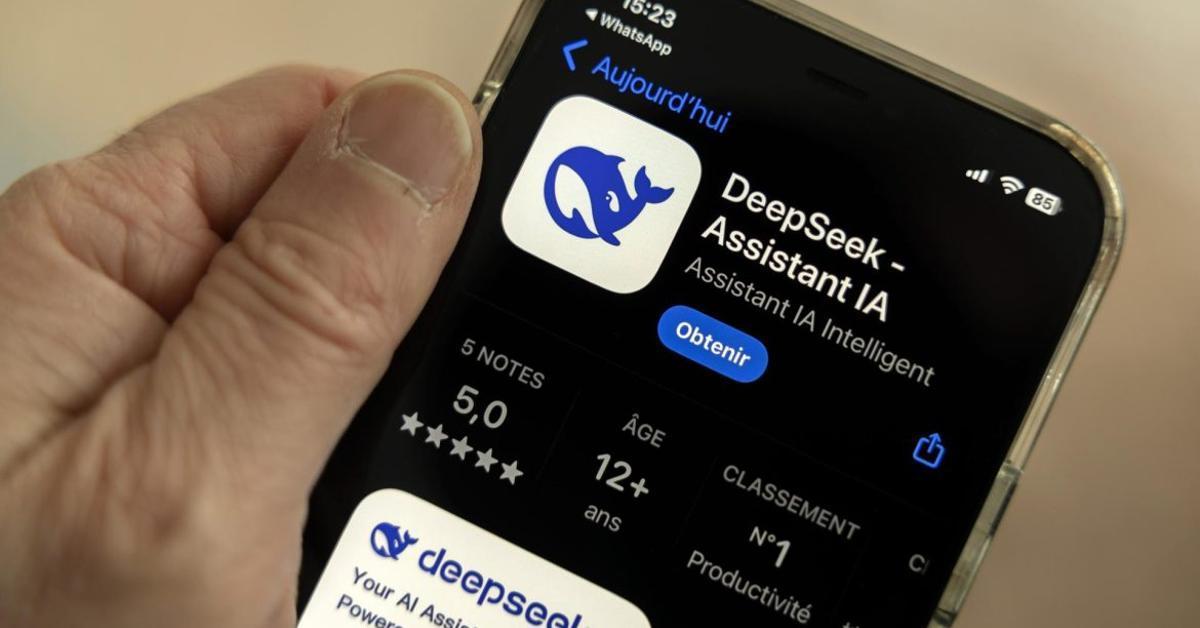
The same Vercel index said the biggest driver was DeepSeek, which accounted for 22.6 percent of token volume on the gateway, putting it in third place behind Google at 24 percent.
On OpenRouter, analyses of usage data reported that US models fell from around 70 percent of token share in June 2025 to roughly 30 percent in June 2026, with DeepSeek at 16.3 percent by token volume.
Executives debate lock-in
Hugging Face CEO Clem Delangue argued that enterprises increasingly prefer owning their AI models rather than renting them, saying, "If you’re an AI company or a technology company, you don’t want to outsource your core capabilities to another company, to a black box API that you don’t control."
Delangue also said the activity on Hugging Face reflects that shift, noting that "A new repository is created every seven seconds on the platform" and that the site hosts almost three million public models and one million public datasets.
Microsoft CEO Satya Nadella warned against single-provider lock-in, arguing that control of data should be a primary concern and saying, "If learning flows in only one direction, economic value converges toward the owners of the learning infrastructure."
Nadella advocated distributing learning infrastructure so firms can control their own learning loops, while the debate over open-weight models also included Anthropic CEO Dario Amodei’s warning that scaling powerful open-weight models could become dangerous due to loss of control.
The Vercel AI Gateway analysis described a pattern in which high-volume, low-stakes work moves to cheap open models while high-risk work stays on expensive frontier models, and it said Anthropic alone took 61 percent of spend on 32 percent of tokens.
New releases and risks
Moonshot-developed Chinese AI Kimi released Kimi K2.6 with sustained autonomous execution, and a demonstration described the system optimizing local inference of the Qwen3.5-0.8B model on a Mac for 12 hours straight while chaining more than 4,000 tool calls.
“Kimi K2.6 runs without human help for 12 hours”
In benchmarks, Kimi K2.6 scored 58.6 on SWE-Bench Pro, ahead of 57.7 for GPT-5.4 and 53.4 for Claude Opus 4.6, and it scored 50.0 in Toolathlon, surpassing Claude (47.2) and Gemini 3.1 Pro (48.8).
DeepSeek unveiled the preliminary open-source version of its new AI model V4, saying it is divided into V4-Pro and V4-Flash and that its top-reasoning version achieves global leadership positions.
DeepSeek said V4 includes a context window of up to one million tokens and that it was optimized for agent frameworks such as Claude Code, OpenClaw, OpenCode, or CodeBuddy, while it also claimed that R1 had been trained in 55 days with a budget of $5.57 million.
The stakes of the shift were framed as a question of how much frontier models still matter if most production AI ends up running on cheaper, customizable alternatives, and TechCrunch quoted Clem Delangue saying, "Maybe in a few years, the frontier models will be for experimenting and [for] some really high-value tasks".