Full Analysis Summary
Marseille shooting reactions
On Nov. 13, a 20-year-old Marseille resident, Mehdi Kessaci, was shot dead in what investigators initially described as an assassination carried out by an organized gang, according to Le Monde.fr.
Le Monde reports that Interior Minister Laurent Nuñez called the killing around Mehdi's Nov. 18 funeral a crime of intimidation, underscoring fears that traffickers are targeting those who oppose them.
The Times of India's headline coverage, though limited to a nav/headline snippet, highlights the immediate aftermath from the victim's family's perspective by noting a French activist says they will not be silenced after the brother's murder.
These combined details present the killing both as a criminal act attributed to organized gangs and as a catalyst for activist resolve in public reporting.
Coverage Differences
Tone and focus
Le Monde.fr (Western Mainstream) frames the event as part of organized-gang violence and emphasizes official reactions and policy implications, quoting investigators and the interior minister; The Times of India (Asian) provides only a headline-level human-interest angle focusing on the activist's vow to continue speaking out rather than policy or structural context.
Media coverage of Marseille
Le Monde situates Mehdi’s killing within a broader pattern of mounting violence in Marseille, citing prior victims such as Socayna and Nessim Ramdane.
The paper criticizes what it describes as largely symbolic state responses and reports that President Macron called a meeting that critics view as an insufficient ministerial gesture.
Le Monde notes recent anti-narcotics legislation that will create a National Anti-Organized Crime Prosecutor’s Office from Jan. 1, 2026, and will tighten penalties.
The article also criticizes Macron’s dismantling of the Marseille police prefect post and highlights the absence of a sustained long-term strategy.
The Times of India, by contrast, does not convey these structural or legislative details in its visible headlines and instead runs a human-interest angle about the activist’s determination, leaving policy context unaddressed.
Coverage Differences
Missed information / Omissions
Le Monde.fr (Western Mainstream) provides legislative context and critique of government moves—mentioning new anti‑narcotics laws and specific institutional changes—while The Times of India (Asian) headline coverage omits those policy details, presenting only the activist’s vow and therefore missing the larger policy debate reported by Le Monde.fr.
Media framing of drug trade
Le Monde foregrounds socio-economic dimensions and responses beyond policing.
It cites authors and critics saying the drug economy in France employs 200,000 people, turns over about €5.5 billion a year and supplies 1.1 million users.
The paper argues that tackling the problem will require health, social and school prevention, anti-corruption measures, and international diplomacy addressing partners like Morocco and hubs such as Dubai.
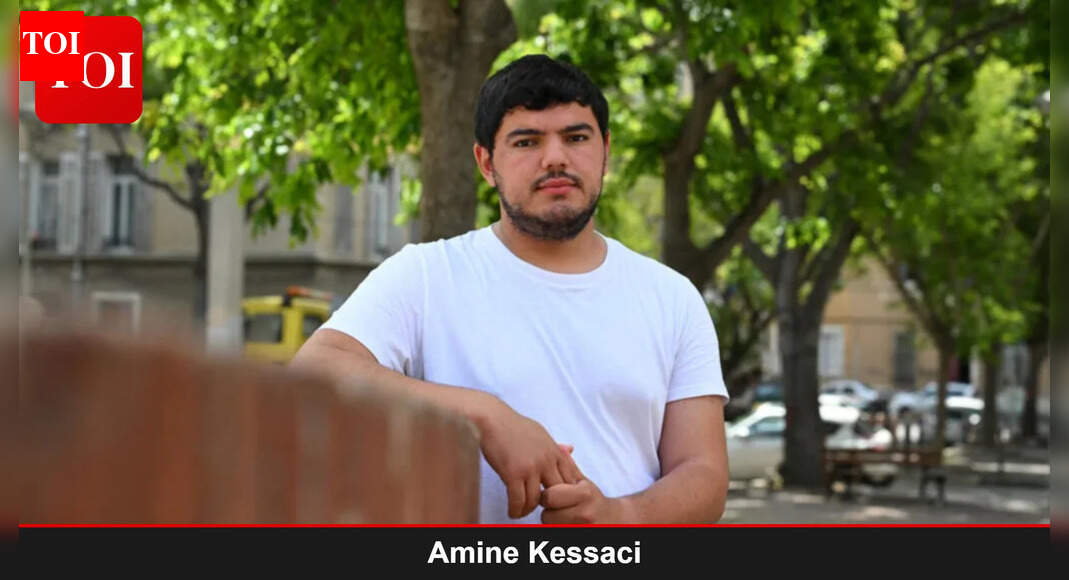
Le Monde also quotes Amine Kessaci, Mehdi's brother and an anti-narcotics activist, who warns that 'a fight to the death has been engaged,' signalling both the personal stakes and broader societal risks.
The Times of India’s visible headline emphasizes the activist’s determination but does not expand on the structural economic figures or policy prescriptions present in Le Monde’s reporting.
Coverage Differences
Narrative and depth
Le Monde.fr (Western Mainstream) provides in-depth socio-economic data and a multi-sectoral prescription (health, prevention, anti‑corruption, diplomacy), while The Times of India (Asian) offers headline-level human-interest coverage without the economic figures or policy prescriptions, leading to different impressions of the scale and proposed responses to the problem.
Contrast in news coverage
Le Monde.fr supplies investigative framing, policy detail, socioeconomic context, and voices both critics and the bereaved activist family.
The Times of India, in the excerpt provided, foregrounds an activist's vow but offers little structural detail.
That difference reflects source type and editorial focus, with one outlet pursuing systemic causes, metrics, and critique of government action while the other highlights the personal and immediate reaction.
Important caveats: only two source snippets were provided for this synthesis, so broader international or alternative perspectives are absent from this analysis.
The limited Times of India text appears as a headline-only summary rather than a full article and cannot be taken as comprehensive coverage of the incident.
Coverage Differences
Source scope and limitations
Le Monde.fr (Western Mainstream) presents systemic analysis and policy critique; The Times of India (Asian) excerpt is a headline-level human-interest item without expanded policy or contextual reporting. The analysis is constrained because only two source snippets were provided, so cross-type comparisons beyond these two cannot be made.