Gaza Genocide18 February, 20262 min read
Over 80 UN Member States Condemn Israel's Unilateral Expansion in Occupied West Bank
This article is an automated aggregation of coverage from news outlets. Our editorials offer in-depth analysis curated by the NewsCord team.
UN missions from 85 member states issued joint condemnation; other reports say over 80. Over 80 UN states condemned Israel’s unilateral measures tightening control in the occupied West Bank.
5 outlets told this the same way.
Outlets did split on Thousands March in London Calling for Britain to Stop Arming Israel and Impose Sanctions →
Condemnation of West Bank measures
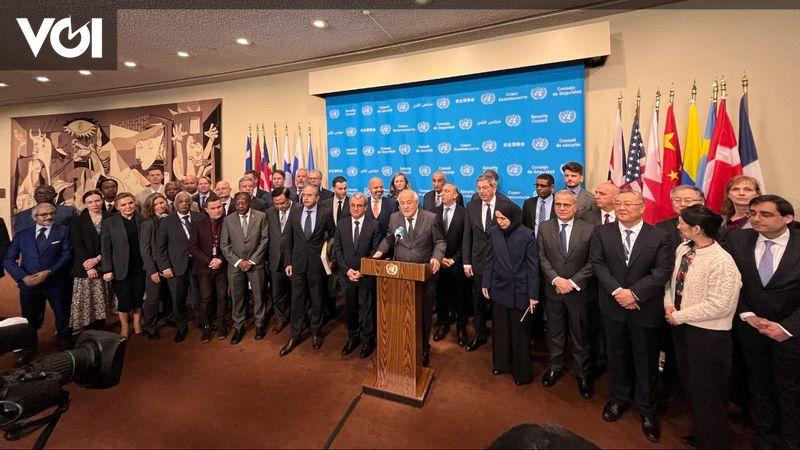
Ambassadors and UN missions representing more than 80 UN member states publicly condemned Israel’s recent unilateral measures to expand control over the occupied West Bank, calling the moves unlawful and amounting to de facto annexation. France 24 reports that “UN missions representing 85 member states on Tuesday condemned Israel’s expanding control over the West Bank, warning the measures could amount to de facto annexation and urging an immediate reversal as they violate international law.” PressTV likewise says “More than 80 countries and several international organizations have condemned Israel’s recent moves to expand settlements and authorize settler land purchases in the occupied West Bank as unlawful and in violation of international law.”
“UN missions representing 85 member states on Tuesday condemned Israel’s expanding control over the West Bank, warning the measures could amount to de facto annexation and urging an immediate reversal as they violate international law.”
Al Jazeera notes that “Ambassadors from more than 80 UN member states have condemned recent Israeli measures that tighten control over the occupied West Bank.” These statements were issued on behalf of groups that include the EU, the League of Arab States and the OIC, and were presented at a UN press conference read by the Palestinian UN envoy.

Measures on West Bank land
Israel’s security cabinet—backed by far-right ministers—decided to tighten control over areas nominally administered by the Palestinian Authority and to begin registering West Bank land as "state property." France 24 reports these moves and quotes UN Secretary‑General António Guterres calling the policy "destabilising" and "unlawful."
PressTV says the statement specifically singled out plans to register large areas of Area C as "state property," adding that this establishes permanent ownership and risks changing the status and demographics of Palestinian territories. Al Jazeera likewise reports that the measures tighten Israeli control over the occupied West Bank.

Reactions to settlement measures
Sources squarely frame the actions as violations of international law and a threat to a negotiated settlement. France 24 records that the joint statement "strongly opposes any form of annexation or steps that alter the demographic composition, character or status of territory occupied since 1967, including East Jerusalem."
“The joint statement—issued on behalf of countries including Saudi Arabia, China and Russia and bodies such as the EU, the League of Arab States and the OIC—said it strongly opposes any form of annexation or steps that alter the demographic composition, character or status of territory occupied since 1967, including East Jerusalem.”
PressTV connects the measures to the 2024 International Court of Justice advisory opinion, saying the registrations "contradict the 2024 ICJ advisory opinion that found the occupation unlawful and called for settlement evacuation," and warns the moves undermine the two-state solution. Al Jazeera conveys Palestinians' direct accusation that the measures are a de facto annexation.
Media coverage emphases
The three outlets differ in what they emphasize about consequences and context. PressTV places the condemnations amid 'rising violence in the West Bank, where Palestinian authorities say thousands have been killed or wounded since October 2023.' PressTV stresses that much territory remains under direct Israeli military control with limited Palestinian self‑rule.
France 24 highlights scale and demographics, noting 'more than 500,000 Israelis live in West Bank settlements deemed illegal under international law, alongside about three million Palestinians in the occupied territory.' Al Jazeera focuses on the diplomatic action and the Palestinian claim of annexation. Together the sources document widespread international alarm, but they diverge on whether to foreground legal precedent, human casualties, or diplomatic and political framing.
