Pakistan04 January, 20262 min read
Pakistan Air Force Tests Indigenous 600-km Taimoor Cruise Missile
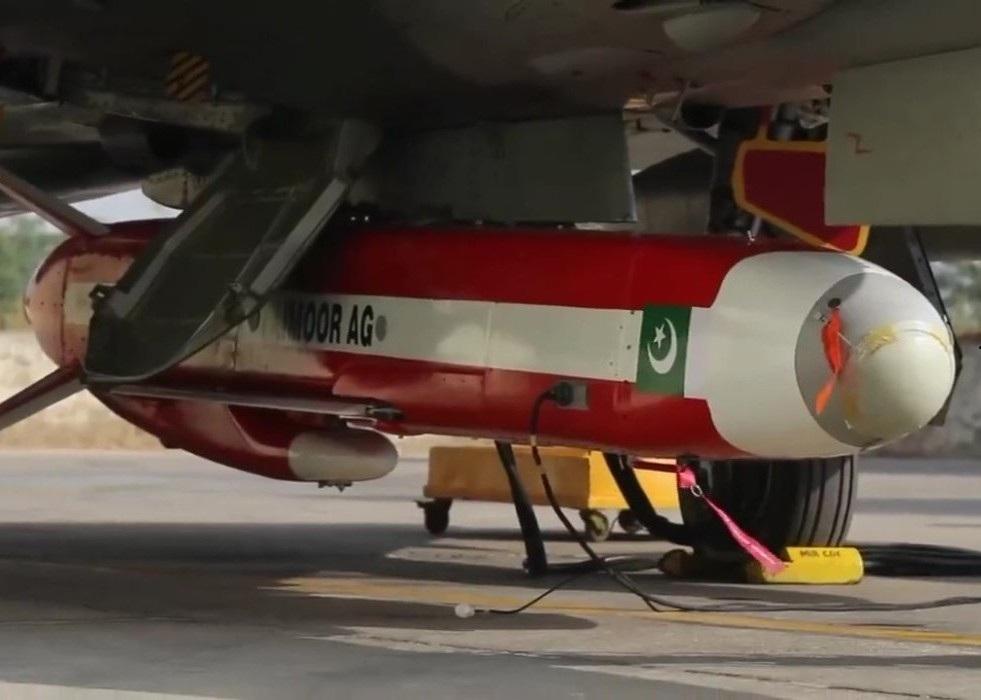
PAF successfully flight-tested an indigenously developed air-launched cruise missile Missile demonstrated 600-kilometer range and high-precision strikes against land and sea targets
10 outlets told this the same way.
Outlets did split on Tehrik-E-Taliban Pakistan Suicide Attack Kills At Least 27 in Kohat Mosque Blast →
Pakistan Taimoor missile test
Pakistan’s Air Force carried out the first publicly acknowledged flight test of the domestically developed Taimoor air-launched cruise missile. Official and open sources report the missile was launched from a Mirage platform and completed a strike on a designated target, and Pakistani outlets presented the test as a move from prototype toward an operationally integrated system. Statements emphasise validation of navigation, guidance and terminal accuracy, and the weapon’s advertised stand-off range of up to 600 km.
“The Pakistan Air Force tested the Taimoor air‑launched cruise missile, launching it from a Mirage‑V fighter jet.”
Taimoor missile profile
Multiple sources place Taimoor as a 600 km-class air-launched cruise missile designed for modern navigation and precision strike. TURDEF and Gulf News report integrated advanced navigation, guidance, and terminal accuracy; RBC-Ukraine adds deeper technical claims including an approximately 1,200 kg launch weight, inertial plus satellite navigation, DSMAC and TERCOM guidance, and a thermal-imaging terminal seeker, directly comparing it to European Storm Shadow/SCALP-class ALCMs. Defense Express identifies GIDS as the developer and notes a mock-up was first shown in 2022, indicating continuity from exhibition to flight trial.
Aircraft integration and constraints
Coverage highlights the practical choice of launch aircraft for early trials and the diplomatic and technical constraints on wider integration. RBC‑Ukraine explicitly notes integration challenges, saying JF‑17 and J‑10CE integration would need Chinese cooperation while F‑16 integration requires US approval, which explains why initial launches have been from Mirage jets. TURDEF and Defense Express confirm Mirages were used for the publicly visible test, while Gulf News emphasizes the test and capability message rather than the diplomacy of integration.
“A major challenge will be integrating the missile on different aircraft: JF-17 and J-10CE variants would need Chinese cooperation, F-16 integration would require U.S. approval, so initial launches have been carried out from Mirage III jets.”
Media framing differences
Reporting frames vary by outlet type. Gulf News (West Asian) and TURDEF (Other) present the test as strengthening Pakistan’s conventional deterrence, operational flexibility, and technological self‑reliance. Meyka (Other) treats the event as a market risk input, advising caution, hedging, and watching for follow‑on events.
RBC‑Ukraine (Local Western) emphasises capability comparisons to European ALCMs and the political constraints on wider deployment. These tone differences reflect national and regional perspectives and target audiences, with local and regional outlets stressing deterrent signaling, specialist analysts focusing on technical parity and integration hurdles, and investor‑facing coverage stressing risk management.
