Full Analysis Summary
Pakistan violence prevention plan
Pakistan’s Ministry of Human Rights, together with the World Health Organization (WHO), has launched nationwide consultations to draft a Strategic Action Plan on Violence Against Children intended to protect roughly 112 million children across the country.
Officials describe the initiative as a coordinated, national effort to prevent killings, sexual and physical violence, and other forms of abuse by drawing on international frameworks and mobilizing multiple sectors.
The consultations and the proposed plan are being presented as a practical, measurable roadmap to tackle what WHO and Pakistani officials call a global public‑health crisis affecting children.
Coverage Differences
Tone and emphasis
Both sources report the same initiative and largely the same facts, but Arab News (West Asian) emphasizes the breadth of violence types and institutional responsibilities in one continuous narrative, while Arab News PK (West Asian) presents the information in a concise key‑points bullet style that stresses prevention and protection and frames the plan explicitly as a 'practical roadmap'. Neither source offers viewpoints from non‑regional (e.g., Western Mainstream or Western Alternative) outlets, so cross‑type perspective is absent.
National child protection plan
The proposed Strategic Action Plan will be grounded in the UN Convention on the Rights of the Child and WHO's INSPIRE framework, which groups seven evidence-based strategies to prevent and respond to violence against children.
Authorities say the approach will be multi-sectoral, mobilizing education, health, law enforcement, and community systems, and will include measurable targets, defined institutional responsibilities, and robust monitoring and evaluation to ensure accountability.
Consultations were held across major cities and regions, from Karachi to Islamabad, with participation from all provinces and self-governed areas, indicating an intent to make the plan nationally representative.
Coverage Differences
Detailing of framework
Arab News explicitly lists the INSPIRE components (laws, norms, safe environments, caregiver support, economic security, response services and life skills) in a flowing narrative, while Arab News PK presents the same elements in a compact 'Key points' format, highlighting the technical design (measurable targets, institutional responsibilities, monitoring) as central. Both attribute the framework to WHO rather than presenting it as a domestic invention.
Child protection gaps in Pakistan
Both reports highlight large protection gaps for children in Pakistan.
Only about one in three children under five are registered at birth.
More than 12.5 million children are engaged in child labour.
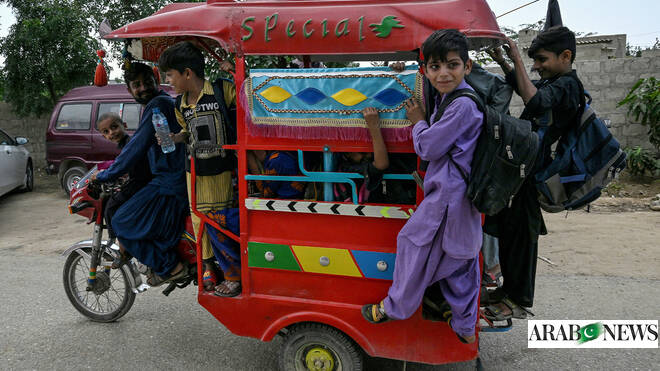
Displaced, migrant, and informal‑settlement children are particularly vulnerable to exploitation, trafficking, and early marriage.
The media statements list multiple forms of violence affecting children, including killings and physical, sexual, and psychological abuse, as well as neglect.
They cite WHO figures that roughly one billion children suffer violence each year.
They note that a child dies from violence about every five minutes.
Coverage Differences
Specificity of harms
Arab News explicitly lists 'killing, physical, sexual and psychological violence and neglect' in one sentence, while Arab News PK summarizes the global WHO estimate and the same national protection gaps in bullet form. Both relay WHO’s global public‑health framing; neither introduces dissenting statistical estimates or outside critical perspectives.
Strategic Action Plan overview
The government and the World Health Organization present the Strategic Action Plan as a measurable, accountable pathway that mobilizes education, health, law enforcement, and community systems to prevent violence and support survivors.
Both sources emphasize defined institutional responsibilities and monitoring and evaluation, but neither includes independent expert critique, opposition viewpoints, donor commitments, detailed timelines, nor budget figures in the published excerpts.
As a result, the reports do not clarify how the plan will be funded, the exact timelines for adoption, or which agencies will lead implementation.
Notably, available reporting comes exclusively from West Asian outlets (Arab News and Arab News PK), so perspectives common to Western mainstream or alternative sources are absent.
Coverage Differences
Missed information / omissions
Both Arab News and Arab News PK emphasize institutional design and multisectoral coordination but omit financing, timelines and external perspectives; because both are regionally aligned (West Asian), there is no cross‑type variance to compare—this is an absence of source diversity rather than a direct contradiction.