24NewsHD
Afghan military installations in ruins as Pakistan declares 'open war'
 Al Jazeera
‘Open war’: Pakistan and Afghanistan’s Taliban claim major casualties
 Al Jazeera
Afghanistan’s Taliban says open to talks after Pakistan bombs major cities - Al Jazeera
 Al Jazeera
Air attacks on Kabul push Pakistan-Taliban crisis into uncharted territory
 Atalayar
Pakistan declares open war on Afghanistan and bombs Kabul in an unprecedented escalation since 2021 - Atalayar
 Australian Broadcasting Corporation
Pakistan declares 'open war' against Afghanistan as Kabul is hit by airstrikes
 AzerNews
Pakistan declares 'open war' on the Taliban as jets bomb Kabul
 BBC
BBCWhat we know after latest escalation in Pakistan-Afghanistan tensions - BBC
 CBC
CBCPakistan and Afghanistan: How we got here and what might happen next
 CBS News
Pakistan declares "open war" with Afghanistan amid unprecedented escalation between the neighbors - CBS News
 CNA
CNAPakistan bombs Kabul in 'open war' on Afghanistan's Taliban government
 CNBC TV18
Pakistan Afghanistan war: Timeline of the conflict and reason behind latest tensions
 CNN
CNNPakistan’s defense minister says latest clashes with Taliban mean ‘open war.’ What’s happening?
 ColombiaOne
Pakistan Declares ‘Open War’ on Afghanistan and Bombs Kabul - ColombiaOne.com
 Cricket Addictor
Rahmanullah Gurbaz breaks silence as Pakistan declares ‘open war’ on Afghanistan, launches attacks
 Daily Kos
Pakistan Declares 'Open War' Against Taliban - Daily Kos
 Daily Post Nigeria
Pakistan declares war on Afghanistan, bombs Kabul, other cities
 Daily Record
Pakistan declares 'open war' on Afghanistan launching overnight strikes
 Daily Sabah
Pakistan pounds Kabul, declares ‘open war’ on Taliban govt | Daily Sabah
 Dainik Jagran MP CG
'Open War': Pakistan Declares Full-Blown Conflict with Afghanistan After Deadly Border Clashes
 Deccan Herald
Pakistan Taliban War: Airstrikes hit Kabul and Kandahar after vows of 'open war'
 Democracy Now!
Pakistan Launches Cross-Border Strikes on Afghanistan, Declaring “Open War” on Taliban
 Dhaka Tribune
Pakistan bombs Kabul in open war on Afghanistan’s Taliban government
 Dhaka Tribune
Pakistan bombs Kabul, declares ‘open war’ with Afghanistan after months of border clashes
 Diari ARA
Pakistan bombs Kabul and declares war on Afghanistan
 DNA India
Pakistan-Afghanistan War: Taliban launches 'large-scale offensive' along Durand Line after Kabul bombing; what we know so far
 DNA India
Pakistan declares 'open war' against Afghan Taliban after deadly border clashes, launches strikes on Kabul, Kandahar
 dy365live
Pakistan Declares ‘Open War’ as Border Clashes With Afghan Taliban Escalate
 El Mundo
Pakistan-Afghanistan war, live breaking news | The Taliban report new bombings of military targets in Pakistan
 El País
Pakistan: From playing both sides to direct confrontation with the Taliban
 Euronews
Pakistan declares 'open war' with Afghanistan and strikes Kabul
 Firstpost
Pakistan bombards Kabul, other cities as clashes with Afghanistan intensify
 Folha de S.Paulo
Pakistan declares war on Afghanistan; mutual attacks kill nearly 300 people
 Fox News
Taliban unleash 'extensive' offensive on Pakistan as deadly border strikes erupt - Fox News
 foxbangor
Pakistan bombs Kabul in 'open war' on Afghanistan's Taliban govt
 France 24
Pakistan-Afghanistan 'open war': How and why we got here?
 G Plus News
Pakistan Declares ‘Open War’ With Afghanistan After Cross-Border Strikes; Airstrikes in Several Cities
 GB News
Pakistan declares 'open war' against Afghanistan as massive explosions rock capital Kabul
 GKToday
Pakistan Declares Open War After Kabul Airstrikes
 Greater Kashmir
Pakistan launches airstrikes on Kabul as border clashes escalate
 GreekReporter
Pakistan Declares War on Afghanistan After Border Escalation
 Harici
Pakistan declares ‘open war’ on Afghanistan following cross-border strikes
 Helsinki Times
Pakistan launches Kabul strikes and declares open war on Taliban
 Herald Malaysia Online
Pakistan bombs Kabul in 'open war' on Afghanistan
 Heraldo USA
Pakistan Bombs Kabul and Declares 'Open War' with Afghanistan
 Hindustan Times
Pakistan declares ‘open war’ against Afghanistan, kills 130 Taliban fighters under Operation 'Ghazab lil Haq' | World News - Hindustan Times
 Hiru News
Pakistan declares open war on Afghanistan
 Hürriyet Daily News
Pakistan bombs Kabul in 'open war' against Afghanistan's Taliban government
 iHeart
Pakistan Declares 'Open War' On Afghanistan
 Just News BD
Pakistan declares ‘open war’ on Afghanistan, fighter jets bomb Kabul
 Kashmir Life
Pakistan, Afghanistan Exchange Airstrikes as Islamabad Declares 'Open War'
 KFBK
KFBKPakistan Declares 'Open War' On Afghanistan
 KFI AM 640
Pakistan Declares 'Open War' On Afghanistan
 Khaleej Times
Pakistan declares 'open war' with Afghan Taliban, strikes major cities overnight
 Khoj Samachar
Pakistan Declares Open War on Afghan Taliban After Escalating Border Airstrikes
 KOHA.net
"Open war", Pakistan bombs Kabul after escalation in Afghanistan
 kurdistan24.net
Pakistan Declares ‘Open War’ with Afghanistan After Cross-Border Strikes
 Kuwait Times
Pakistan bombs Kabul in 'open war' against Afghanistan's Taliban government.
 lagatar24
Taliban Threatens Suicide Operations as Pakistan Declares “Open War”
 LatestLY
Pakistan Afghanistan War: Airstrikes Hit Kabul and Kandahar, Hours After Afghan Forces Attack Pakistani Army
 LatestLY
Pakistan-Afghanistan War: Islamabad Declares "Open War" on Taliban, Bombs Kabul and Kandahar
 Live India
Pakistan Declares ‘Open War’ on Afghanistan After Deadly Border Clashes, Airstrikes Hit Kabul and Kandahar
 London Business News
Pakistan declares ‘open war’ after airstrikes on Kabul
 Mathrubhumi English
Pakistan declares 'open war' on Afghan Taliban after border clashes; several killed on both sides
 Mathrubhumi English
Pakistan bombs Afghan cities over border clashes; airstrike videos emerge
 Mint
MintPakistan vs Afghanistan: How global media reported conflict? Several captured, military strength and more
 Mint
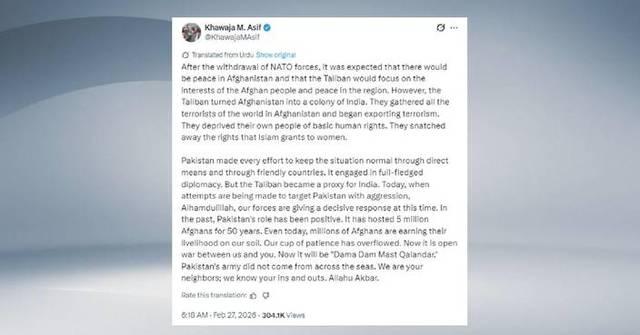
MintPakistan Defence Minister Khawaja Asif declares ‘open war’ with Afghan Taliban: ‘Our patience reached its limit’
 Modern Diplomacy
Pakistan Declares “Open War” After Strikes on Afghan Cities
 Moneycontrol
'India is strong enough to...': Afghan MP-in-exile urges denuclearisation of Pakistan after Kabul strikes
 Myanmar International TV
Pakistan bombs Kabul in open war on Afghanistan's Taliban government
 NaijaNews
Blasts Rock Kabul As Pakistan Declares ‘Open War’ On Afghanistan
 NBC 6 South Florida
Pakistan declares ‘open war' with Afghanistan as they trade deadly strikes
 NBC News
Pakistan declares ‘open war’ on neighboring Afghanistan
 News Ghana
Pakistan Bombs Kabul as Both Nations Trade Strikes in Open War
 News Vibes of India
Major military confrontation between Afghanistan and Pakistan
 news.cgtn
Pakistan declares 'open war' on Afghanistan after border attacks
 News18
Pakistan Declares ‘Open War’ On Afghanistan, Internet Wonders If US President Donald Trump Will ‘Save The D
 News18
Pakistan Declares 'Open War,' Bombs Kabul and Kandahar After Afghanistan Attacks Border
 News9live
Pakistan declares 'open war' on Afghanistan, bombs capital Kabul
 NewsBytes
Pakistan declares 'open war' against Taliban after border clashes
 Newser
Pakistan Declares 'Open War' With Afghanistan
 newslivetv
Pakistan Declares ‘Open War’ With Afghanistan After Airstrikes And Deadly Border Clashes
 Newswire
Pakistan bombs Kabul, declares ‘open war’ with Afghanistan
 Open Magazine
Durand Line Tensions Explained: How Did Kabul and Islamabad Reach “Open War”?
 Outlook India
Pakistan Declares 'Open War' With Afghanistan After Airstrikes Kill Over 130 Taliban Fighters
 PGurus
Pakistan bombs Kabul, declares ‘open war’ after Afghan retaliation
 Punch Newspapers
Pakistan bombs capital of Afghanistan, declares ‘open war’
 RBC-Ukraine
Fighter jets bomb Kabul as Pakistan issues statement to Afghanistan
 Republic World
Kabul Counterpunch Shatters Islamabad, Shehbaz Declares Open War Ghazab Lil Haq: Here’s How Pak-Afghan Tensions Spiralled
 RNZ
RNZPakistan bombs Kabul in 'open war' on Afghanistan's Taliban government
 RTE.ie
Pakistan declares 'open war' on Taliban in Afghanistan
 RTHK News
Pakistan bombs Kabul, declares 'open war' with Taliban
 RTL Today
Following months of tit-for-tat clashes: Pakistan bombs Kabul in 'open war' on Afghanistan's Taliban government
 SBS Australia
Pakistan says it's in 'open war' with Afghanistan after launching airstrikes in multiple cities
 Scripps News
Pakistan, Afghanistan in ‘open war’ after deadly retaliatory strikes
 South China Morning Post
China seeks to mediate after Pakistan declares ‘open war’ on Afghanistan
 South China Morning Post
China seeks to mediate after Pakistan declares ‘open war’ on Afghanistan
 South China Morning Post
Pakistan declares 'open war' against the Afghan Taliban, attacks Kabul and Kandahar.
 South China Morning Post
Afghanistan’s Taliban open to talks with Pakistan as ‘open war’ continues - South China Morning Post
 SSBCrack
Pakistan Declares 'Open War' on Afghanistan, Launches Airstrikes on Kabul and Other Cities; Taliban Claims Multiple Fighter Jets Downed
 surfcoastnews.au
Pakistan conducts bombings in Afghan cities, minister declares it as open conflict
 Swarajyamag
Pakistan Launches Airstrikes On Kabul And Taliban Positions, Calls Conflict ‘Open War’ With Afghanistan
 Tampa Bay 28
Pakistan, Afghanistan in ‘open war’ after deadly retaliatory strikes
 The Assam Tribune
Pakistan declares ‘open war’ with Afghanistan after cross-border strikes
 The Canberra Times
Pakistan declares 'open war' as it bombs Afghan cities
 The Daily Jagran
Pakistan-Afghanistan Tensions: Islamabad Releases Video Of Airstrike On Kabul; Watch
 The Economic Times
Pakistan Afghanistan News: Defense Minister declares 'open war' after cross-border strikes
 The Economic Times
Pakistan Afghanistan News: Defense Minister declares 'open war' after cross-border strikes
 The Federal
Why Pakistan-Afghanistan tension has escalated into ‘open war’
 The Financial Express
Pakistan-Afghanistan war: Nexus between Afghan Taliban regime and terrorism ‘clear as daylight’, Pak Information minister says
 The Globe and Mail
Pakistan declares ‘open war’ on Afghanistan, strikes major cities
 The Guardian
Pakistan declares state of ‘open war’ after bombing major Afghan cities
 The Guardian
US backs Pakistan’s ‘right to defend itself’ against Taliban after strikes on Afghanistan - The Guardian
 The Hindu
Pakistan bombs Kabul in 'open war' on Afghanistan's Taliban government
 The Hindu
Watch: 'Open war': Pakistan launches airstrikes on Kabul, Kandahar
 The Hindu BusinessLine
Pakistan bombs targets in Afghan cities, minister calls it 'open war'
 The Independent
Pakistan declares ‘open war’ on Taliban after bombing cities across Afghanistan - The Independent
 The Killeen Daily Herald
Pakistan bombs Kabul in 'open war' on Afghanistan's Taliban government
 The Logical Indian
Pakistan Declares Open War, Conducts Airstrikes Killing Over 130 Taliban Fighters Amid Border Escalation
 The Mirror
Pakistan-Afghanistan war: Why the Taliban hate the blood-soaked border explained
 The Mirror
Pakistan declares 'open war' on Afghanistan and unleashes bomb fury on Taliban
 The Mountaineer
Pakistan bombs Kabul in 'open war' on Afghanistan's Taliban government
 The New York Times
Pakistan Strikes Afghanistan in ‘Open War’ Against Taliban Regime - The New York Times - The New York Times
 The Quint
Bombs Rain Down on Kabul as Pakistan Declares 'Open War' Against Afghanistan
 The Sun
Pakistan bombs Taliban targets killing 264 militants after declaring 'open war'
 The Sunday Guardian
Pakistan Afghanistan War: What is Operation 'Ghazab lil Haq'? Full Details of Pakistan’s Large-Scale Military Offensive After Declaring ‘Open War’ on Afghanistan
 The Times Of Central Asia
Pakistan Declares “Open War” with Afghanistan’s Taliban as Cross-Border Attacks Escalate
 The Times of India
‘Our cup of patience has overflowed’: Why Pakistan launched strikes on Afghanistan's major cities
 The Times of India
'Open war' declared: Pakistan strikes Kabul, Kandahar — 10 things to know about Operation Ghazab Lil Haq - The Times of India
 The Times of India
'Now it is open war': Taliban military posts, HQs, ammo depots hit; details of Pakistan strikes on Afghan
 the-sun
Pakistan bombs Taliban targets, killing 264 militants after declaring 'open war'.
 thecanary.co
‘Open war’: fighting has intensified on the Afghanistan-Pakistan border
 thecradle.co
Clashes rage on Afghanistan–Pakistan border after Islamabad declares ‘open war’ against Taliban
 thenationalnews
Civilians endure sleepless night amid fears of long war between Afghanistan and Pakistan
 thenationalnews
'There will be chaos': Pakistan declares 'open war' on Afghanistan after deadly strikes - thenationalnews.com
 ThePrint
‘Our cup of patience has overflowed’: Pakistan declares ‘open war’ on Taliban-led Afghanistan
 theqldr.au
Pakistan declares ‘open war’ as it bombs Afghan cities
 Time Magazine
Pakistan-Afghanistan at ‘Open War’: What to Know - Time Magazine
 Times Kuwait
Pakistan declares ‘Open War’ after airstrikes on Afghanistan amid escalating border conflict
 TODAY
TODAYPakistan Declares ‘Open War’ on Afghanistan After Taliban Attack
 townhall
Pakistan Declares 'Open War' on Taliban in Afghanistan
 Turkish Minute
Pakistan bombs Kabul, declares ‘open war’ on Afghanistan after Turkey-brokered talks fail
 Türkiye Today
Pakistan declares war on Afghanistan; dozens killed in Kabul
 USA TODAY
Pakistan declares 'open war' against Afghanistan after target strikes
 voz.us
Pakistan declares 'open war' on Taliban authorities in Afghanistan and attacks Kabul
 WION
WION'Dama Dam Mast Qalandar': Pakistan declares 'open war' against Afghanistan Taliban, says 'patience has reached its limit'
 Yass Tribune
Pakistan declares 'open war' as it bombs Afghan cities
 Zee News
pakistan afghanistan war news live conflict clash tensions islamabad air strike kabul shehbaz sharif
 Мілітарний
Pakistan Declares ‘Open War’ on Afghan Taliban
 الصحيفة
Pakistan Declares "Open War" After Bombing Kabul and Kandahar
 تسنیم
تسنیمPakistan Declares 'Open War' with Afghan Taliban as Border Clashes Escalate
 شفق نيوز
Pakistan declares ‘open war’ on Afghanistan
 شفق نيوز
Pakistan declares ‘open war’ on Afghanistan
 巴士的報
巴士的報Pakistan declares "open war" with Afghanistan after cross-border strikes