
Pakistan Facilitated Transfer of 22 Crew From US-Seized Iranian Ship MV Touska
Key Takeaways
- Twenty-two crew members of the seized MV Touska were evacuated to Pakistan.
- Pakistan described the transfer as a confidence-building measure coordinated with the US and Iran.
- Fifteen crew members were repatriated to Iran after the transfer.
Crew Evacuated to Pakistan
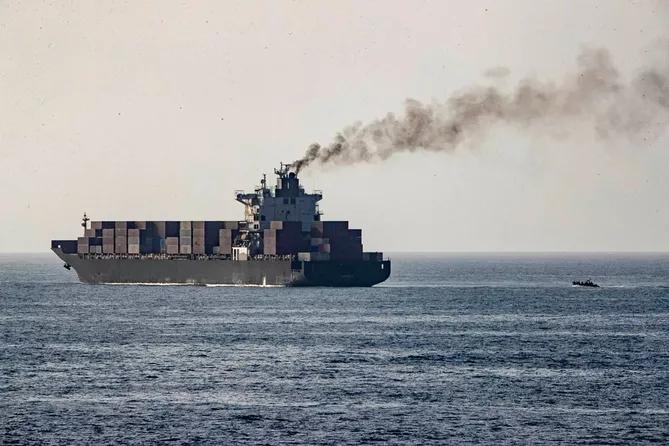
Pakistan facilitated the transfer of 22 crew members from an Iranian container ship seized by the United States, and the men were flown to Pakistan on Sunday night, Pakistan’s Ministry of Foreign Affairs said in a statement on Monday.
“The crew members of an Iranian ship that was seized by the United States after it “failed to comply” with the US blockade on Iranian ports were transferred to Pakistan, and 15 of the crew were later repatriated to Iran”
The ministry said the evacuation was “As a confidence-building measure by the United States of America, twenty-two crew members held aboard the seized Iranian container ship, ‘MV Touska’, have been evacuated to Pakistan,” and it added that the individuals had been flown to Pakistan on Sunday night.

The Foreign Ministry said the “Iranian ship will also be backloaded to Pakistani territorial waters for return to its original owners after necessary repairs,” and it said the returns were being coordinated with the support of both the Iranian and US sides.
The statement also said, “Pakistan welcomes such confidence-building measures and will continue to facilitate dialogue and diplomacy while pursuing ongoing mediation efforts for regional peace and security.”
U.S. Central Command spokesperson Captain Tim Hawkins confirmed to ABC News that “US forces completed the transfer of 22 crew members of MV Touska to Pakistan for repatriation,” and he said “Six other passengers were already transferred to a regional country for repatriation last week.”
Iran’s Fars news agency reported that 15 crew members had arrived in Iran, after the Pakistan transfer, while the sources also describe that the ship was boarded and seized by U.S. forces on April 19 off the coast of Iran’s Chabahar port in the Gulf of Oman.
Strait Tensions and Project Freedom
The Pakistan-mediated crew transfer unfolded as the Strait of Hormuz crisis intensified, with multiple outlets describing new U.S. efforts to restore shipping traffic and Iran’s warnings about interference.
NewsNation reported that Iran warned U.S. forces not to enter the Strait of Hormuz after Trump said the U.S. military would help escort ships stranded in the Persian Gulf, and it said Iran’s unified military command instructed commercial ships and oil tankers not to move unless coordinated with its forces.

It also quoted the UAE condemning what it called “renewed treacherous Iranian aggression” and said the UAE foreign ministry called the attacks “These attacks represent a dangerous escalation and an unacceptable violation,” while adding that the UAE reserves the right to respond to protect its sovereignty and security.
CBC described the U.S. military as saying it sank six small boats from Iran as it moved to reopen the Strait of Hormuz, and it said the UAE Defence Ministry reported Iran launched four cruise missiles, with three shot down and one falling into the sea.
Al Jazeera’s account tied the Pakistan transfer to a broader ceasefire dynamic, saying the U.S.-Israeli war on Iran began in February and was partly halted four weeks ago after a fragile ceasefire mediated by Pakistan, but that Washington and Tehran have since engaged in naval confrontations and seizures of commercial vessels.
PBS said the U.S. military announced that two American-flagged merchant ships had successfully transited the Strait of Hormuz and that Navy guided-missile destroyers were helping restore shipping traffic, while it separately denied Iran’s claims to have struck a U.S. Navy vessel.
In the same reporting stream, DW said the operation was dubbed “Project Freedom” by President Donald Trump to try to get merchant vessels moving through the Strait of Hormuz despite Iran’s efforts to control the passage, and it quoted Admiral Brad Cooper saying, “Over the last 12 hours, we've reached out to dozens of ships and shipping companies to encourage traffic flow through the [Strait of Hormuz].”
Competing Claims and Statements
The reporting also shows competing claims about what happened in the Strait of Hormuz and how the U.S. and Iran interpret the ceasefire.
NewsNation said the U.S. military denied Iranian claims that it struck a U.S. warship, quoting U.S. Central Command as saying, “No U.S. Navy ships have been struck. U.S. forces are supporting Project Freedom and enforcing the naval blockade on Iranian ports,” and it contrasted that with Fars’s account that a U.S. vessel was hit by two missiles while accusing it of “violating maritime security and navigation norms.”
CBC similarly described Iran’s Revolutionary Guard Corps denial that any commercial vessels or tankers had crossed the strait in the last few hours, saying via Tasnim that such “claims by U.S. officials are baseless and complete lies.”
PBS reported that Iranian news agencies including Fars and the Iranian Labour News Agency earlier claimed Iran struck a U.S. vessel near an Iranian port southeast of the strait and accused it of “violating maritime security and navigation norms,” while it said U.S. Central Command responded on social media with “no U.S. Navy ships have been struck.”
Iran’s Foreign Minister Abbas Aragchi told CBC that events in the Strait of Hormuz showed there was “no military solution to the crisis,” and it said he added that talks were making progress with Pakistan’s mediation while warning the United States and the United Arab Emirates against being drawn into a “quagmire by ill-wishers.”
DW added a separate Iranian warning through Tasnim, quoting an “informed Iranian military source” saying that if the UAE sides with Israel and takes action against Iran, “they will learn a lesson they will never forget.”
On the U.S. side, DW quoted Admiral Brad Cooper saying the vessels stranded in the Persian Gulf represented 87 countries and were “merely neutral and innocent bystanders,” and it said Cooper alleged Iran “initiated aggressive behavior” in the Strait of Hormuz on Monday.
In the same thread, PBS quoted Maj. Gen. Pilot Ali Abdollahi warning that “We warn that any foreign military force — especially the aggressive U.S. military — that intends to approach or enter the Strait of Hormuz will be targeted,” as Iran’s military command insisted ships passing must coordinate with it.
Pakistan’s Mediation Role
Across the coverage, Pakistan is portrayed as a mediator linking the MV Touska crew transfer to broader U.S.-Iran diplomacy and ceasefire efforts.
GV Wire said Pakistan described the transfer as a “confidence-building measure” coordinated with the United States and Iran, and it reported that the crew were flown to Pakistan on Sunday and would be handed over to Iranian authorities Monday.
It also said Capt. Tim Hawkins confirmed that the United States transferred the 22 crew members on Sunday, and it described that “six other passengers were already transferred to a regional country for repatriation last week.”
GV Wire further said the Touska was seized by U.S. forces in the Arabian Sea on April 19 and that Trump said the ship had tried to evade the U.S. blockade on Iranian ports that had gone into effect the previous week.
The same outlet said Iran’s military condemned the seizure as an act of “armed piracy” and vowed to retaliate, but that it said it was waiting to protect the ship’s crew and some of their family members.
Al Jazeera tied Pakistan’s role to the fragile ceasefire, saying it was mediated by Pakistan four weeks earlier, and it described that Washington and Tehran have since engaged in naval confrontations and seizures of commercial vessels.
Washington Examiner also described Pakistan as a “key moderator” and said Pakistan helped broker the ceasefire agreement, which it said remains intact, while it quoted the U.S. transfer details and said the ship “will be backloaded to Pakistani territorial waters for return to its original powers after necessary repairs.”
In the same thread, Al Jazeera said the Iranian ship would be backloaded to Pakistani territorial waters for repairs and return to original owners, with returns coordinated with both the Iranian and US sides, reinforcing that Pakistan’s facilitation is presented as part of a confidence-building sequence rather than a final resolution.
What Comes Next for Shipping
The sources also lay out immediate operational consequences for shipping and the risk that the Strait of Hormuz reopening effort could collide with Iran’s stated red lines.
PBS said the U.S.-led Joint Maritime Information Center advised ships to cross the strait in Oman's waters and that it set up an “enhanced security area,” while it warned that passing close to usual routes “should be considered extremely hazardous due to the presence of mines that have not been fully surveyed and mitigated.”

PBS also said the U.S. military has said the initiative might involve guided-missile destroyers, more than 100 aircraft and 15,000 service members, and it described that the U.S. had enacted a naval blockade on Iranian ports since April 13, telling 49 commercial ships to turn back.
DW added that Cooper said the stranded vessels represented 87 countries and that CENTCOM had reached out to dozens of ships and shipping companies to encourage traffic flow through the strait, while it said Cooper declined to say whether CENTCOM deemed the ceasefire to be over.
NewsNation described the UAE’s first three missile alerts since the ceasefire took hold and said the attacks appeared to be in response to Trump’s effort to reopen the Strait of Hormuz, while it also reported that U.S. helicopters sank six Iranian small boats targeting civilian vessels.
Al Jazeera said Iran’s military said on Monday it will attack U.S. forces if they attempt to approach or enter the vital waterway, after Trump announced a naval mission dubbed Project Freedom to “guide” stranded ships out of the strait.
In parallel, PBS quoted Iran’s Maj. Gen. Pilot Ali Abdollahi warning that any foreign military force intending to approach or enter the Strait of Hormuz “will be targeted,” and it described that Iran’s military command on Monday said ships passing must coordinate with them.
The same reporting also shows that the MV Touska transfer is being framed as part of ongoing mediation while tensions remain high, with Pakistan saying the ship will be backloaded for repairs and returns coordinated with both the Iranian and US sides.
More on Pakistan

Gianni Infantino Fails To Orchestrate Handshake Between Israel And Palestine Football Chiefs
12 sources compared

Pakistan Opens Six Overland Routes to Iran, Bypassing U.S. Blockade of Iranian Ports
23 sources compared

Pakistan Strikes Kunar University, Killing Seven And Wounding 85 In Asadabad
16 sources compared

Baloch Liberation Army Kills 21 Hostages in Pakistan Jaffar Express Siege
10 sources compared