Full Analysis Summary
Pakistan's Maritime Development Plan
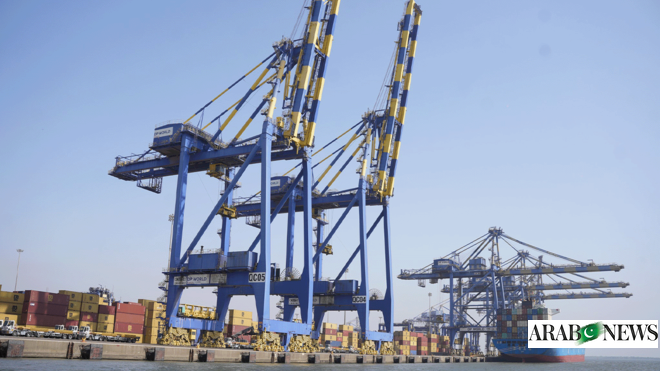
Pakistan has unveiled a $100 billion “Maritime @100” plan to transform its underdeveloped maritime economy by 2047.
The plan centers on a larger national fleet, modern repair and recycling capacity, upgraded fisheries, and stronger maritime education.
Both West Asian sources describe the same strategic pillars and timeline.
They emphasize leveraging the country’s 1,046‑km coastline along a major trade route to drive growth, energy security, food security, and climate resilience.
While the tone across both sources is development-forward and promotional, Arab News frames the initiative as unlocking economic growth, energy security, and climate resilience.
Arab News PK expands that to explicitly include food security within the vision narrative.
Coverage Differences
Tone/Narrative emphasis
Arab News (West Asian) highlights growth, energy security, and climate resilience as the plan’s overarching objectives, while Arab News PK (West Asian) frames the broader vision to also include food security alongside trade and energy. Both describe the plan as transformational by 2047, but Arab News PK explicitly stresses the food security angle as part of the national vision.
Pakistan's Fleet Expansion Plans
A central plank is rapid fleet expansion.
Pakistan aims to grow the Pakistan National Shipping Corporation (PNSC) from 12 to around 60 ships within three years.
This expansion is paired with the country’s first private ferry operator license to spur coastal trade and passenger movement.
Both sources present the same numbers and timeline for PNSC, underscoring a push to capture more seaborne trade with national tonnage.
The plan also aims to improve domestic connectivity via ferries.
The narrative across both West Asian sources frames these steps as near‑term, measurable outputs intended to accelerate trade and mobility.
Coverage Differences
Precision/wording
Arab News (West Asian) describes the PNSC goal as “from 12 to a targeted 60 ships within three years,” whereas Arab News PK (West Asian) states “from 12 to 60 ships within three years” without the qualifier “targeted.” Both report the first private ferry operator license, aligning on the policy signal to boost coastal trade and passengers.
Green Shipyard Development Projects
Infrastructure build‑out features a first‑of‑its‑kind Green Ship Repair and Recycling Yard at Port Qasim, explicitly linked to reviving Pakistan Steel Mills.
This development is accompanied by a $43 million upgrade of the Gaddani ship‑breaking yard to improve safety and environmental standards.
Both West Asian sources agree on these anchor projects and their environmental framing, describing them as capacity‑building steps to repair, recycle, and safely dismantle vessels while cleaning up legacy practices at Gaddani.
The Port Qasim yard is presented as a keystone industrial node connected to steel‑making revival.
The plan positions ship repair and recycling as a green industrial opportunity.
Coverage Differences
Detail/attribution nuance
Arab News (West Asian) specifies “the state-owned Pakistan Steel Mills,” while Arab News PK (West Asian) says “the Pakistan Steel Mills,” omitting the ownership descriptor. Both report the same linkage to reviving the mill via the new green yard and concur on the $43 million modernization push at Gaddani focused on safety and environmental standards.
Fisheries Policy and Export Goals
A finalized National Fisheries and Aquaculture Policy aims to double seafood exports within a year by improving logistics and certification while strengthening offshore capacity.
Arab News PK specifies a policy horizon from 2025 to 2035 and refers to boosting fishing capacity.
Arab News highlights the enhancement of deep-sea fishing capabilities.
Together, these sources depict fisheries modernization as a fast-tracked export-earning pillar within the broader maritime development strategy.
Coverage Differences
Specificity/terminology
Arab News PK (West Asian) specifies the “National Fisheries and Aquaculture Policy 2025–2035” and uses the phrase “fishing capacity,” while Arab News (West Asian) does not date the policy and refers to enhancing “deep‑sea fishing capabilities.” Both report the ambition to double seafood exports within a year through better logistics and certification.