Pakistan Opens Six Land Routes to Iran Amid United States Blockade of Iranian Ports
Key Takeaways
- Pakistan opened six overland routes to Iran to bypass Hormuz blockade.
- Backlog of thousands of Iran-bound containers stranded at Pakistani ports due to US blockade.
- Order formalizing the routes took effect April 25, 2026.
Six routes, one corridor
Pakistan opened six overland transit routes for goods destined for Iran, formalising a road corridor through its territory as thousands of containers remained stranded at Karachi port amid the United States blockade of Iranian ports and ships trying to pass through the Strait of Hormuz.
“Islamabad, Pakistan – Pakistan has opened six overland transit routes for goods destined for Iran, formalising a road corridor through its territory as thousands of containers remain stranded at Karachi port because of the United States blockade of Iranian ports and ships trying to pass through the Strait of Hormuz”
The Ministry of Commerce issued the “Transit of Goods through Territory of Pakistan Order 2026” on April 25, bringing it into immediate effect, and the order allows goods originating from third countries to be transported through Pakistan and delivered to Iran by road.

Al Jazeera reported that the announcement coincided with Iranian Foreign Minister Abbas Araghchi’s visit to Islamabad for talks with Prime Minister Shehbaz Sharif and army chief Asim Munir, as Pakistan sought to mediate an end to the two-month war between Washington and Tehran.
Times Kuwait similarly tied the timing to Araghchi’s talks with Shehbaz Sharif and Pakistan Army Chief Asim Munir, while also noting that Iran had not officially commented and that reports said queries sent to the Iranian embassy in Islamabad remained unanswered.
The Reuters-based framing in Times Kuwait also stated that the new transit arrangement does not apply to Indian-origin goods, and that a separate order issued in May 2025 continues to prohibit the transit of Indian goods through Pakistan by any mode.
Across outlets, the six corridors were described as linking Pakistan’s main ports—Karachi, Port Qasim and Gwadar—with two Iranian border crossings, Gabd and Taftan, passing through Balochistan via Turbat, Panjgur, Khuzdar, Quetta and Dalbandin.
Firstpost added that the shortest Gwadar–Gabd route was expected to reduce transit time by up to 87 per cent, while NDTV Profit described the order as taking effect immediately and applying to transit goods consigned from the territory of a third country and destined to a place in Iran through Pakistan’s territory.
Why now, what broke
The decision to open the routes was presented as a response to disruption in maritime trade caused by the US-Iran conflict and the blockade of Iranian ports, leaving containers stranded at Pakistani ports.
Al Jazeera said the corridor was opened as “thousands of containers remain stranded at Karachi port because of the United States blockade of Iranian ports and ships trying to pass through the Strait of Hormuz,” and it described the US-Iran war as beginning on February 28 when US and Israeli forces launched attacks on Iran.

It then traced escalation: Iran restricted commercial navigation through the Strait of Hormuz, Pakistan brokered a ceasefire on April 8, hosted the first round of direct US-Iran talks on April 11 in Islamabad, and Washington imposed a naval blockade on Iranian ports two days later.
Arab News focused on the immediate logistics pressure, saying “around 3,000 Iranian containers have been lying at Karachi and Port Qasim since the crisis began,” and it described the Strait of Hormuz as effectively shut by Iran since the Iran war began in February.
Firstpost similarly said the order followed a weeks-long naval standoff in the Strait of Hormuz that left “more than 3,000 Iran-bound containers” stuck at Karachi Port and Port Qasim due to the ongoing US naval blockade and the closure of the Strait.
Several outlets also described the cost and insurance pressures that made sea routes difficult, with Al Jazeera reporting that war-risk insurance premiums surged from about 0.12 percent of a vessel’s value before the conflict to roughly 5 percent.
Arab News added that Pakistan’s Karachi Port and Port Qasim together handle more than 90 percent of Pakistan’s maritime trade, and that the ports had become temporary holding points for Iran-bound cargo as shipping lines rerouted vessels.
Officials, diplomats, and ports
Pakistan’s commerce ministry and senior officials framed the routes as a way to clear a backlog rather than expand bilateral trade, while diplomats and political leaders linked the move to mediation efforts.
“PiCK Pakistan Opens Six Land Routes to Iran as Trade Detour Amid Hormuz Pressure Summary - Pakistan opened six land routes to Iran, creating an alternative trade corridor”
Arab News quoted a senior Pakistani official familiar with the development saying the commerce ministry’s notification was based on “a 2008 agreement between Islamabad and Tehran that allows the transport of goods and passengers by road,” and the official said Iran had not used the facility because it relied on its own ports for trade.
The same report quoted the official describing the container situation, saying “around 3,000 Iranian containers have been lying at Karachi and Port Qasim since the crisis began,” and it added that shipping companies could not wait for the crisis to end to drop the cargo at Iranian ports.
Arab News also included a caution from Tariq M. Rangoonwala, chair of the Pakistan National Committee of the International Chamber of Commerce, who told the outlet: “This has nothing to do with bilateral trade between the two countries,” and he explained that sanctions on Iran continue to restrict financial transactions and formal trade channels.
Al Jazeera reported that Federal Minister for Commerce Jam Kamal Khan described the initiative as “a significant step toward promoting regional trade and enhancing Pakistan’s role as a key trade corridor,” and it said Iran had not publicly commented while a query to the Iranian embassy in Islamabad went unanswered.
NDTV Profit, citing Dawn, described the order as issued by Pakistan’s Ministry of Commerce and said shipments would be regulated under Pakistan’s Customs Act, 1969, with traders required to submit an encashable financial guarantee equivalent to Pakistan’s applicable import levies before goods could move.
On the port side, Arab News quoted a port official on condition of anonymity saying authorities were considering using small vessels to move containers to Gwadar port, adding that “This move would help clear the backlog and reduce the cost,” and that using small vessels would save “about Rs50 million ($180,000) in transport charges.”
Route math and border links
The six corridors were laid out as a network connecting Pakistan’s deep-sea ports to Iranian border crossings, with multiple outlets giving different emphasis on speed, geography, and operational mechanics.
Al Jazeera said the six designated routes link Pakistan’s main ports, Karachi, Port Qasim and Gwadar, with two Iranian border crossings, Gabd and Taftan, passing through Balochistan via Turbat, Panjgur, Khuzdar, Quetta and Dalbandin.
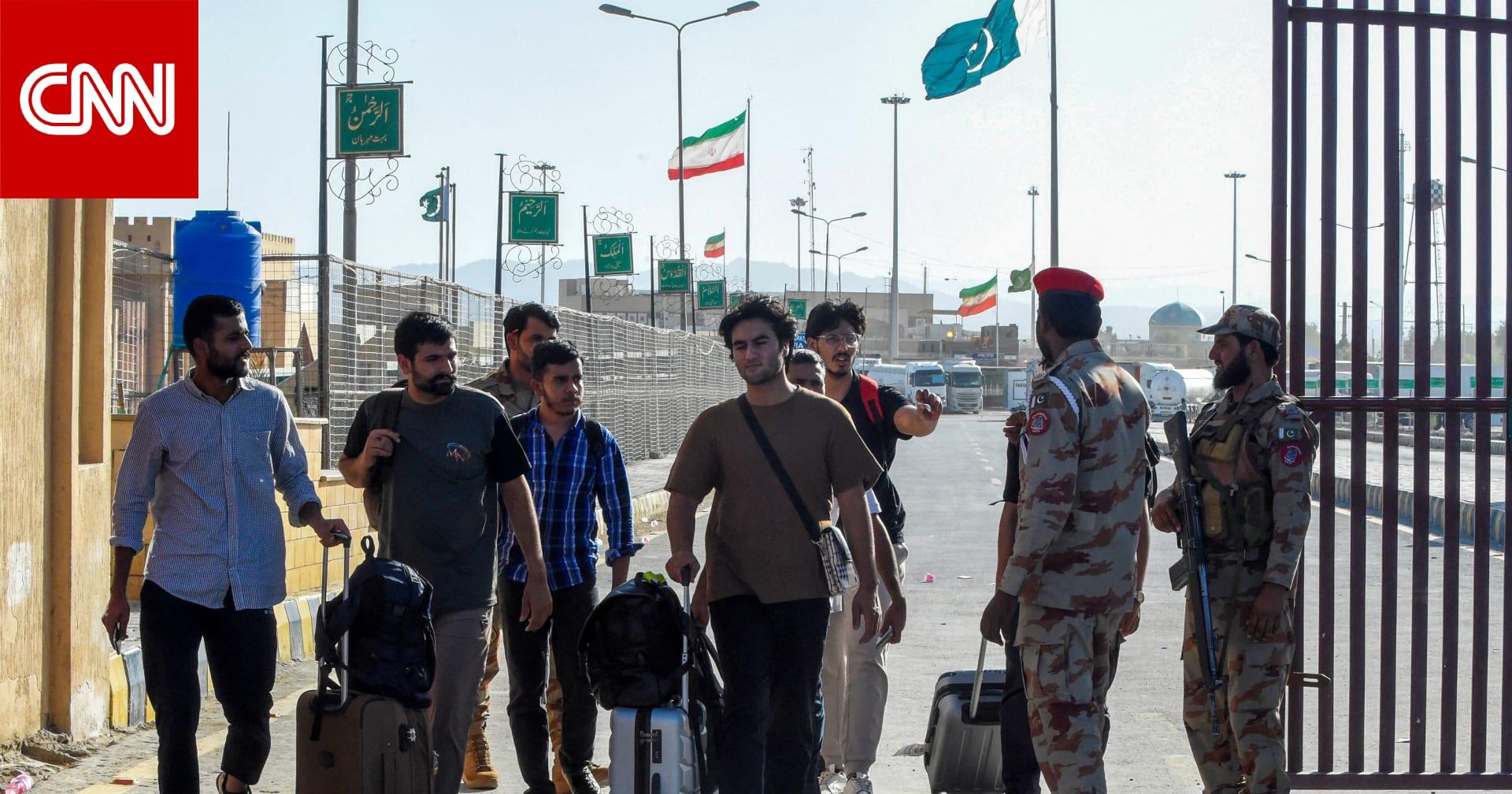
It also highlighted the shortest route, the Gwadar-Gabd corridor, saying it reduces travel time to the Iranian border to between two and three hours, compared with the 16 to 18 hours it takes from Karachi to the Iranian border.
Firstpost described the shortest Gwadar–Gabd route as expected to reduce transit time by up to 87 per cent, and it listed multiple longer corridors, including “Karachi/Port Qasim – Lyari – Ormara – Pasni – Gabd” and “Gwadar – Turbat – Panjgur – Quetta – Taftan.”
PTC News repeated the same set of six routes and framed them as a land bridge, stating “Gwadar to Gabd: The shortest route, expected to reduce transit time by up to 87 per cent,” and it described the routes as allowing goods to be transported into Iran by road.
NDTV Profit, citing Dawn, described the order as designating six corridors connecting Pakistani ports to Iranian border crossings and said the order applied to transit goods consigned from the territory of a third country and destined to a place in Iran through Pakistan’s territory.
Firstpost added that traders are required to provide encashable bank guarantees matching the value of Pakistan’s import duties on the goods being transported, and it said the policy also allows “cross-stuffing,” meaning goods can be shifted from sea containers to trucks or other land transport under supervision of the Federal Board of Revenue (FBR).
Different frames, shared pressure
While the underlying facts of the order and the container backlog were consistent, the coverage diverged in how it framed the political meaning of Pakistan’s move and what it implied for Washington and Tehran.
“Pakistan has activated multiple overland trade corridors linking its ports to Iran, introducing a significant development in regional trade dynamics amid ongoing tensions over maritime restrictions”
Al Jazeera described the corridor as a “direct economic response to that impasse,” tying it to stalled US-Iran talks and Pakistan’s mediation, and it reported that Araghchi told Pakistani officials that Tehran would continue engaging with Islamabad’s mediation efforts “until a result is achieved.”
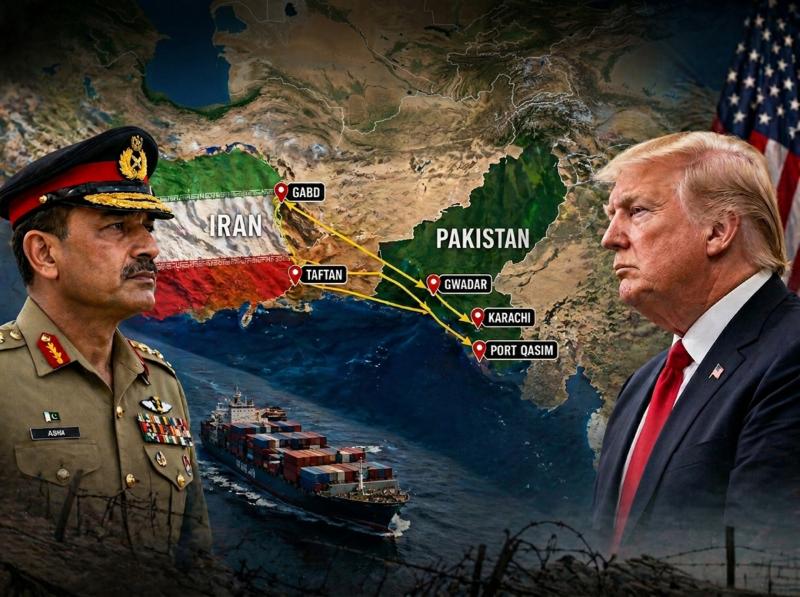
Arab News emphasized the practical purpose and included a business warning that the decision should not be misconstrued as enhancing bilateral trade, quoting Tariq M. Rangoonwala: “This has nothing to do with bilateral trade between the two countries,” and it also described sanctions constraints on financial transactions and formal trade channels.
India TV News framed the move as a geopolitical challenge, saying Pakistan “double crosses America” and describing it as undermining US sanctions and complicating the Washington-Tehran standoff, while PTC News used a similar tone in its headline “Double-crossing US?” and described the routes as a way around the Strait of Hormuz closure.
Bloomingbit and other outlets added a longer-horizon US angle, citing a Wall Street Journal report that President Donald Trump told officials to prepare for a “long-term blockade of Iran,” described as a “high-risk gamble aimed at cutting off Iran's funding sources.”
Al Jazeera, by contrast, focused on the regional logistics shift away from Afghanistan, stating that “The corridor also signals a shift away from Afghanistan” and quoting Iftikhar Firdous, cofounder of The Khorasan Diary, saying “Kabul has been diversifying away from Pakistan towards Iran and Central Asia, but this move flips the equation.”
Across outlets, the operational pressure remained central: multiple reports cited “more than 3,000” or “around 3,000” containers stuck at Karachi and Port Qasim, and Firstpost described the need for strict customs protocols including encashable bank guarantees and supervision by the Federal Board of Revenue (FBR).
What comes next
The sources describe the immediate next steps as customs implementation, port logistics decisions, and continued diplomatic mediation, all under the pressure of the ongoing US-Iran conflict.
Arab News said implementation of the alternative small-vessel plan hinged on Pakistan Customs, stating that “Customs has to notify policy about handling this cargo and then it will be implemented,” and it quoted the port official saying the decision would be taken within a few days.
Firstpost described the regulatory framework as requiring encashable bank guarantees and “cross-stuffing” under Federal Board of Revenue supervision, and it specified that the framework applies to goods coming from third countries routed through Pakistan on their way to Iran.
NDTV Profit, citing Dawn, said shipments would be regulated under Pakistan’s Customs Act, 1969, and that traders must submit an encashable financial guarantee equivalent to Pakistan’s applicable import levies before goods can move.
Al Jazeera reported that the notification does not extend to Indian-origin goods and that a separate Commerce Ministry order issued in May 2025 bans the transit of goods from India through Pakistan by any mode and remains in force, which sets a boundary for how the corridor can be used.
On the diplomatic front, Al Jazeera said Pakistan brokered a ceasefire on April 8 and hosted the first round of direct US-Iran talks on April 11 in Islamabad, and it added that a second round of talks has since stalled, with Iran ruling out direct negotiations with Washington while the blockade remains in place.
Finally, the coverage tied the routes to broader regional shifts, with Al Jazeera quoting Iftikhar Firdous saying the move flips the equation by allowing Pakistan to bypass Afghanistan entirely for westbound trade, while also describing the corridor as a strategic impact on Kabul’s transit relevance and revenue.
More on Pakistan

Pakistan Strikes Kunar University, Killing Seven And Wounding 85 In Asadabad
16 sources compared

Baloch Liberation Army Kills 21 Hostages in Pakistan Jaffar Express Siege
10 sources compared

Ben Stokes Recovers After Major Facial Injury From Cricket Ball Impact
10 sources compared

Pakistan Deploys Fighter Jets to Saudi Arabia While Mediating US-Iran Talks
17 sources compared